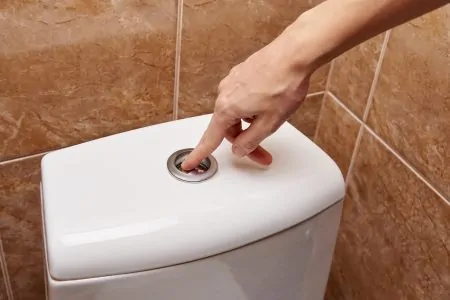
Do you have a clogged toilet but can’t wait for a plumber to come and fix the problem? If you learn how to snake a toilet, you can fix this issue quickly by yourself.
Less time waiting for professionals to help solve the problem means less time spent without access to a toilet. We’ll explain exactly how to do it.
Key Takeaways
- Use a toilet snake to unclog toilets by inserting the tip into the toilet bowl and rotating the handle clockwise.
- Remove the blockage by gently pulling back the snake and turning the crank counter-clockwise.
- Test and flush the toilet to ensure the clog has been removed.
- Prevent clogged toilets by not using too much toilet paper, closing the lid, and avoiding flushing non-toilet paper items.
What is a Toilet Snake?
Just as the name suggests, a toilet snake (or a toilet auger, as it is officially called) is very similar to a drain snake. It uses a rotating handle to help unclog the toilet.
It has a hollow tube connected to an elbow fitting. And it’s designed with a rubber sleeve that doesn’t allow you to scratch the toilet while trying to unclog it.
You can also use a regular drain snake to unclog the toilet. But you are more likely to scratch the toilet when doing so.
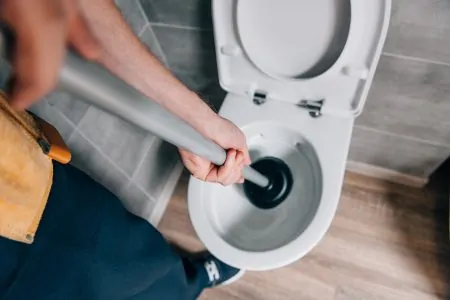
First, try to unclog a clogged toilet using a toilet plunger when the situation arises. This tool looks and functions similarly to a typical cup-style plunger used on a regular tub, shower drain, or sink. But it’s designed with a center flange that is meant to cover the toilet drain when using it.
Dealing With A Large Blockage
You can also purchase an electric auger with drill force if you have clogs deep within the plumbing.
How to Snake a Toilet
Without further ado, here are step-by-step instructions on how to use a toilet snake to deal with a clogged toilet.
What You’ll Need
- Toilet snake.
- Toilet plunger.
- Bleach.
- Protective gloves.
- Bucket.
1. Insert the Snake
Hygiene First
Use rubber gloves when snaking a toilet since you’ll not be working in a sanitary environment.
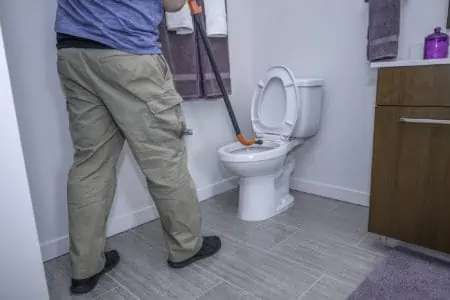
Place the bucket next to the toilet. Insert the snake tip into the toilet bowl and gently push it towards the back drain.
Rotate the handle clockwise to allow the cable to reach inside the drain. Stop turning the crank when you reach the clog.
2. Remove the Blockage
Gently pull back the snake. If pulling back feels difficult, the snake likely caught whatever was clogging the toilet. Turn the crank counter-clockwise to pull the arm towards the exit.
Grab whatever the snake pulls out and throw it in the empty bucket. Repeat the process if the toilet is still clogged.
In certain situations, you might not be able to pull out the clogged object because it might be too big. If that’s the case, aim for breaking it.
Once the snake reaches the clog, jiggle it for a bit, retract, and repeat the process a couple of times. This should allow you to move the snake further each time; as you slowly break down the blockage.
3. Test and Flush
The last step requires flushing the toilet to see if it’s completely unclogged.
Take Note
There is a risk of the toilet overflowing if the clog is not completely removed, so carefully follow this step.
Remove the lid on the toilet tank and stop the flapper manually. The flapper is a rubber disc that measures 2 or 3 inches and is attached to the tank’s chain. Flush the toilet using one hand and close the flapper with the other.
This will prevent the tank from releasing too much water into the bowl. If the clog is removed, the toilet bowl shouldn’t fill with too high water.
What Size Snake is Needed for a Toilet?
A toilet snake is meant to clear a clog in the toilet situated deeper down the bowl. To get the best results, you need to ensure you choose an appropriate size.
Toilets typically need a snake between three and six feet long and between half an inch and ⅝ inches in diameter. The J-shape of these augers will allow you to feed them through the bowl.
How to Snake a Toilet With a Hanger
It’s not ideal because the wire could scratch the toilet bowl, but it works, especially if you’re in a pinch.
What You’ll Need
- Clothes hanger.
- Linesman pliers.
- Toilet plunger.
- Bucket.
1. Bend the Hanger
Grab a coat hanger and use the pliers to cut off the hook. Unbend the hanger to form a straight rod. Using the pliers, bend one end of the hangers to create a hook that’s about one inch long.
2. Unclog the Toilet
You can scoop out as much water from the bowl as you can. It’s not essential; it just makes things less messy.
Gently push the hook into the toilet until you reach the clog, twist a little bit, and try to pull. If you manage to remove any waste, put it into the bucket to throw it away.
Once you break up the waste and remove at least part of it, you can proceed to use the plunger.
Place the plunger over the toilet bowl and rotate the handle as the plunger cup creates suction. Pump by holding the plunger handle straight down. It should be easy to feel the suction at this point.
When Should I Call a Plumber for a Clogged Toilet?
You should call a plumber if you tried unclogging the toilet as a DIY project but had no success. Call in a plumber if your toilet seems to end up clogged regularly. Professionals can see down the sewer line to check for potential causes that might need more advanced repairs.
Also consider calling a plumber if your toilet is gurgling or if you detect an odor that could be caused by a hidden leak. Never neglect these leaks because they can lead to damage around the bathroom and could also impact the structural integrity of your home.
Preventing a Clogged Toilet
If you constantly end up with a clogged toilet or you want to make sure this never happens, here are a few tips and best practices:
- Don’t use too much toilet paper at once because your toilet flush might not be able to handle it, and this could cause clogs.
- Close the toilet lid to prevent anything from falling inside the toilet bowl.
- Toilets are made only for special toilet paper. Avoid throwing anything else down the bowl (including wet paper towels).
- Be sure the tank is always properly filled with water to have a good volume every time you flush.
- Be on the lookout for hard water as this can cause build-up in the pipes.
FAQs

Why Does My Toilet Keep Getting Clogged?
There could be several reasons.
- Your toilet might be getting closed because the plumbing vents are clogged.
- The main sewer lines could also be damaged or restricted.
- The low-flow toilet might not be very effective.
- You could be flushing items that are not meant for the toilet.

How Much Do Toilet Snakes Cost?
Prices for toilet snakes can be very versatile. They can be as cheap as $30, but some models could cost $100 or more.

What Happens If You Flush a Snake Down the Toilet?
It’s very unlikely for this to happen. If the toilet is already clogged, the snake won’t be able to flush. However, if it does somehow happen, definitely call a plumber.

Will a Toilet Eventually Unclog Itself?
It depends on what it’s clogged with. When a toilet is clogged with water-soluble things (like normal toilet paper or human waste), it could eventually unclog itself. But if you throw wet tissues or other objects that aren’t meant to be inside a toilet, it most likely won’t unclog itself.
The Verdict
Congratulations, you now know how to snake a toilet. However, constantly dealing with a clogged toilet could be a sign of a deeper problem. If that’s the case, contact professionals in your area to help identify the problem.