If you notice wet patches or pooling water at your toilet’s base, it could be time for a toilet wax ring replacement. Wax rings can last as long as your toilet, but sometimes they dry out, crack, and fail.
We show you how to replace a wax ring on a toilet and tell you the leak symptoms to look for.
Key Takeaways
- Identify toilet wax ring leak symptoms: Water leaking from the base, wobbly toilet, and uneven toilet are common signs of a failing wax ring.
- Find the right size wax ring: Measure the “elbow neck” at the base of your toilet to determine the appropriate size, which is commonly 3/4 to one inch thick.
- Replace the wax ring: Drain the toilet, remove it, scrape away old wax, and install a new wax ring following the manufacturer’s instructions.
- Cost comparison: A DIY wax ring replacement costs around $5 to $15, while hiring a professional can cost upwards of $200.
Toilet Wax Ring Leak Symptoms
So, water is leaking from the base of your toilet, and you want to know why. We need to understand what could be causing the issue if we are to fix it.
Water Leaking from the Base
We’ve already touched on this symptom because it is the most common. When a wax ring fails, the seal between your waste pipe and the toilet is broken. The good news is your wax ring is unlikely to malfunction, but that doesn’t mean it never happens.
Wobbly Toilet
Does your toilet leave you feeling seasick when you sit down to pee? A wobbly toilet could be a symptom of an old and worn wax ring gasket. A wax ring has a 30-year lifespan, but sometimes they malfunction and need to be replaced.
Uneven Toilet
An uneven toilet could be another sign that your wax ring needs replacing. It’s better to deal with the problem straight away because leaving it only makes things worse.
It could lead to more significant issues further down the line, costing you more money. You can pick up a wax ring for less than $10, and they are available from hardware stores and online websites.
What Size Wax Ring is Needed for a Toilet?
When the time comes to replace your wax ring, you need to know what size you should buy. While some wax rings are universal, others come in differing thicknesses.
The most common size is 3/4 to one inch thick. However, you can buy wax rings (also called toilet bowl gaskets and wax seals) up to two inches thick for recessed flanges. The flange seals the waste pipe and anchors the toilet to the floor.
To find out what size wax seal you require, you will need to remove your toilet and measure the “elbow neck” at the base of your toilet.
Other things to consider when buying a new wax ring:
Wax Ring With a Funnel
Some wax rings feature a tapered funnel that sits in the waste pipe to direct the water. They come in standard sizes to cater to universal toilets, but they cost a little more than standard wax rings.
Felt-Lined Wax Ring
Choose a wax ring with a felt lining when fitting a toilet on a wall. It creates a better seal against the wall and holds the ring firm once installed.
Top Tip
Many modern toilets use a rubber gasket rather than a wax ring. To find out which one you have, you will have to remove your toilet first before purchasing a replacement.
How to Replace a Wax Ring on a Toilet
As you can see from the diagram, getting to your old wax ring involves draining the toilet and removing it. Before we delve deep into the fascinating world of wax ring removal, you’ll need the right tools and materials.
What You’ll Need
- Adjustable wrench.
- Putty knife.
- Bucket.
- Sponge.
- Towels.
- Wet and dry vac (optional).
- Old newspapers.
- Additional help (optional).
1. Drain the Toilet
Isolate the water supply at the valve located behind the toilet. Disconnect the water supply line and flush the toilet to drain the tank. You may need to do this a couple of times to get all the water out.
Take Note
There will be water in the supply pipe, so keep the bucket handy.
Lay the towels around the toilet’s base to catch any drips. Lift the lid on the tank and mop up water residue at the tank’s base with the sponge and bucket. Do the same for the toilet bowl, but don rubber gloves because the water is contaminated.
If you want to speed up the drainage process, use a wet and dry vac. It sucks the water out in double-quick time, and you don’t have to put your hands in dirty toilet water.
2. Remove the Toilet
Open the plastic caps protecting the bolts that anchor the toilet to the flange. Using the adjustable wrench, unscrew the bolts. Once the bolts and washers are off, the toilet is now free-standing.
Gently rock and twist the toilet to break the seal between the wax ring and the flange. It might be better to get help when you remove a toilet because they can weigh between 60 and 120 pounds.
Lift the toilet off the flange and place it onto the old newspapers to protect your floor.
3. Remove Old Wax
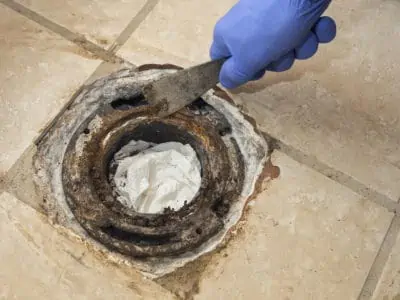
Grab the putty knife and scrape away the old wax from the bottom of your toilet. You’ll need to get as much off as possible to install the new wax gasket.
Do the same with the flange, removing the remnants of the old wax ring. Check the flange condition because you will have to replace it if it is misshaped or cracked.
How to Install a New Wax Ring
Once you are satisfied that the old wax ring is sufficiently removed, you must install the new wax seal. Take care when handling the wax gasket because it could misshape.
What You’ll Need
- New wax ring.
- Adjustable wrench.
- Flashlight.
1. Install the New Wax Ring
Most wax rings are self-adhesive, and you can choose whether to place them on the bottom of your toilet or over the gasket. It’s best to refer to your specific manufacturer’s instructions for the appropriate method.
Getting help makes this task much easier. With the wax ring attached to the elbow neck at the toilet’s base, lift it and place it over the gasket. Ensure that the mounting bolts line up before lowering the toilet.
2. Sit on the Toilet
Once you are satisfied with the positioning, push it onto the flange. You may need to sit down on the toilet and wiggle it into position. Ensure that the anchor bolts align with the toilet.
3. Secure the Toilet
Reattach the bolts and washers and tighten them using the adjustable wrench. Now, reconnect the water supply line and switch the water back on.
Wait while the tank fills, and then flush the toilet. Shine the flashlight at the toilet’s base to check for leaks. Water glistens in bright light, making pooling easier to spot. Also, reach behind the toilet and feel around the base.
Toilet Wax Ring Replacement Costs
The amount it costs you depends on whether you get someone to do the work or you take the DIY approach. A new wax seal will only set you back $5 to $15.
Removing a toilet is a simple process, but it will take a plumber a couple of hours to complete the work. However, are you really prepared to pay upward of $200 for a job that could cost less than a burger meal for two?
Do You Have to Replace the Wax Ring When You Remove the Toilet?
You should always consider changing the wax ring whenever you remove a toilet. It is designed to mold to the shape of your toilet and flange, so when you dislodge the toilet, you disturb the wax ring.
You could try and reuse it, but given that they only cost $5 to $10, why take the risk?
FAQs

What is the Lifespan of a Toilet Wax Ring?
A wax toilet ring should last for 30 years if left undisturbed. They do fail occasionally, but luckily it is a rarity.

How Do I Know If My Toilet Has a Wax Ring?
All flushing toilets have a ring seal to stop gasses and water from leaking out of your sewer pipe. However, not all toilets have a wax ring. Some have a heavy-duty rubber gasket.
The only way to tell which one you have is to remove the toilet and inspect the base.

Are Rubber Toilet Rings Better Than Wax Rings?
It comes down to personal preference, although modern toilets are increasingly moving towards rubber gaskets. The advantage of rubber is it is more durable and less likely to misshape from frequent handling.
The downside of rubber is it perishes and goes brittle with age and exposure to water.

How Long Do Rubber Toilet Rings Last?
A rubber toilet ring should last for 20 years or more, although it does depend on how hard the water is in your area. Mineral deposits coat the rubber and make it brittle.
How to Replace a Wax Ring on a Toilet
While replacing a wax ring on a toilet is a simple concept, in practice, it takes a lot of effort. The wax ring sits at the base of the toilet, so the water will need to be drained, and it’s that part that puts most people off.
However, when you compare a $10 DIY outlay with the cost of calling in a pro, it makes sense to give it a go.