Whether you purposely painted your wheels or have accidental paint splashes, knowing how to remove spray paint from rims is a useful skill. It could save you a lot of money in professional fees and leave your wheels looking as good as new.
We show you how to remove paint from rims, including the best products and how to avoid tire damage.
Key Takeaways
- Removing spray paint from rims requires the correct paint stripper and tools to avoid damaging the rim or tire.
- Products like Goof Off, Goo Gone, and Aircraft Remover can effectively remove paint from rims.
- Protect your tires during the process by testing the paint remover first, covering the tire, or removing it entirely.
- Professional services like sandblasting can be a faster and more efficient option, but at a higher cost.
Is It Possible to Remove Spray Paint from Wheels Without Damaging the Paint Underneath?
The simple truth is you cannot remove spray paint from your wheels without removing the original paint underneath. Paint remover doesn’t recognize paint layers and will remove everything it touches.
Plus, it’s better to take the rims back to bare metal, or you will have to repaint them.
You will need the correct paint stripper, or you risk damaging the aluminum or steel rims permanently. You could also perish the rubber tires if you use the wrong product.
How to Remove Spray Paint from Rims
The time has come to get that paint off your favorite alloy wheels. Before starting, there are some tools and supplies you’ll need.
What You’ll Need
- Paint remover (Goof Off).
- Old rags and towels.
- Toothbrush.
- Sandpaper.
- Electric drill with a buffing attachment.
- Water.
- Pressure washer (optional).
- Face mask.
- Goggles.
- Rubber gloves.
1. Coat Wheels with Goof Off
Dowse old rags in Goof Off and wipe them over the surface of your paint. If the tire is still attached to the rim, take care to avoid splashes. If you’ve removed the tire, you can be as liberal as you like.
If you’re unsure whether the paint remover will damage the tire, apply a tiny amount and watch what happens. If there is a reaction, wipe off the remover and proceed cautiously.
Safety First
Whenever you work with strong chemicals, don a face mask, gloves, and goggles for protection.
2. Wipe Paint Off with a Rag
The top layer of paint should start to lift after it makes contact with the paint stripper. Use old rags to wipe the paint from the surface. Work quickly before the Goof Off dries.
You will need a lot of rags because the paint becomes very thick. Don’t be too fussy at this stage. You can deal with the fiddly bits later. What you are looking for is the majority of paint to lift.
3. Use the Toothbrush
Dip the toothbrush in Goof Off and scrub the hard-to-reach areas. You will need to cover the same ground several times because the paint will be so awkward to reach. Again, most of these places won’t even be visible, so don’t stress too much.
Top Tip
For stubborn paint, try using sandpaper to scrape it off; just be aware that you risk scratching the chrome coating on your rims.
4. Rinse Clean
You can wash the wheels in two ways: with a bucket and sponge or with a pressure washer. A bucket and sponge remove the paint residue and highlights the parts you’ve missed.
A pressure washer will remove paint remnants as well as clean the rims at the same time.
5. Polish the Wheels
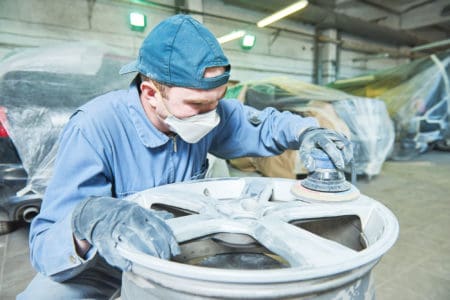
The paint may have lifted off, but your rims’ surface will look dirty and need a clean. Use the drill with the buffing attachment, like this IPELY 6-Piece set to polish the surface of your alloy wheels. It also helps to remove any lingering spray paint stains.
Best Paint Remover for Rims
So, now you know how to remove paint from your rims, but what products should command your attention? Here’s a rundown of our favorites:
Acetone
Acetone is a colorless organic solvent that is effective at removing paint from rims. It is most commonly used as nail polish remover but cleans up the paint just as well. It is highly volatile and flammable, so be careful when using it.
This Pronto Nail Polish Remover is cheap, easy to buy, and popular because it sells in the thousands.
Goo Gone
Goo Gone is a firm favorite with American homeowners, but did you know it removes spray paint from car wheels? This Goo Gone Pro Strength solution comes in 950ml bottles and is safe to use on metals, alloys, and aluminum rims.
Goof Off
We’ve already mentioned Goof Off in our how-to section above, but it really is a powerful paint stripper. It comes in liquid or spray, including an aerosol can. We’ve chosen their Pro Strength solution for getting black paint off your rims.
You can buy different strengths of Goof Off, from carpet cleaner to red wine stain remover, but you will want the strongest you can get for spray paint and car rims.
Simply daub the formula on your wheels with an old rag and wait while the paint starts to bubble and lift.
Aircraft Remover
Aircraft remover is a professional-grade paint stripper designed to lift a 2K automotive coating (paint that needs a hardener) like epoxy and urethane. It removes paint from metal, aluminum, fiberglass, and most plastics.
You can buy trusted brands like Rust-oleum online or from hardware stores in spray and liquid form. Brush or spray it on and wait 15 minutes while the paint blisters. Use a flexible plastic scraper, like this set of Bates Putty Knives, to get into the tiniest crevices.
Smart Strip
Smart Strip is an environmentally-friendly, non-toxic paint remover. It’s a water-based formula, so it is 100 percent biodegradable and doesn’t contain chlorides or other caustic elements.
So, not only is it kind to the planet, it removes the toughest paint stains from metal, aluminum, alloy, and plastic.
Once you paint the gel onto your wheels, you should let it stand for three to 24 hours, depending on the thickness of the paint. The formula is designed to stay wet for the duration, so there is no need for additional Peel Away paper.
Peel away paper helps to remove stubborn or dried-on paint stains. It comes in sheets that you press onto the surface and peel. The paint adheres to the paper and lifts off.
Mineral Spirits
No self-respecting decorator would be seen dead without a bottle of mineral spirits. Mineral spirits are distilled from petroleum to create a solvent-based stripper. It is typically used as a brush cleaner for painting tasks, but it also removes spray paint from car rims.
The easiest method is to dab it on with a cloth and rub at the paintwork. You should see the color lift off as it stains the fabric.
Mineral spirits are sometimes called paint thinner because the formula breaks down the pigments, making the paint appear more translucent. The good news is that you can pick up mineral spirits from almost every hardware store and online, and it is affordable.
Adhesive Remover
Adhesive remover is a stalwart of home cleaning because it dissolves tape residue and other sticky substances. This RapidTac is a great example of an adhesive remover with natural, water-based ingredients.
Simply dab it onto your painted rims with an old rag and rub it in. Eventually, the paint will start to lift.
Lacquer Thinner
Lacquer thinner, like this Sunnyside product, is ideal for removing paint from metal, plastic, concrete, masonry, and glass. It even thins epoxy and nitrocellulose lacquers used on guitars! It degreases tools and equipment and is fast drying.
Take Note
You cannot buy this product in California. It contains high levels of volatile organic compounds (VOCs) that are bad for the ozone layer. When the thinner dries, it releases low-level ozone into the atmosphere. It also releases high odor levels, so you may want to don a face mask.
Gasoline
Every car owner has gasoline, so why not use it to remove spray paint from your car rims. It works in the same way as mineral spirits by thinning the paint pigment so that it lifts off.
You will need some elbow grease for this method. Dab it on with a cloth and rub in small circular motions. Eventually, the paint will break down and transfer onto the fabric.
Cautionary Note
While all paint thinners are flammable, dowsing a cloth in gasoline is particularly incendiary. Don’t work near naked flames.
How to Avoid Damaging the Tire
Rubber is perishable, especially when in contact with some caustic paint thinners. So, how do you avoid tire damage when using paint remover? Let’s share a few tips.
Test the Tire First
Dab a small amount of the thinner onto the tire first to see what effect it has. If the rubber starts to degrade, wipe it off immediately. If you see zero reaction, you are probably safe to proceed within reason.
Cover the Tire
Cover it for protection if you insist on removing spray paint from your rims with the tire in situ. You can use old plastic shopping bags secured with masking tape.
Failing that, cut up a black trash bag and wrap the tire for protection. Another great technique is to cut out a cardboard ring that measures the same diameter as your rims. This is especially useful when using aerosol paint strippers.
Remove the Tire
Removing the tire is the obvious answer to avoiding damage when working with a caustic paint stripper. It will make your task harder and slow you down, but at least you preserve your tires.
Paint Rather than Spray
Using a brush is a more precise way of applying paint remover. That way, you don’t need to make contact with the rubber tire at all. However, some thinners come in aerosol cans that are harder to direct when spraying.
Consider Hiring a Professional
Sometimes you have to admit defeat and call in the pros. A professional will have the tools and knowledge to help you shift that stubborn spray paint. Sandblasting is one of the best ways of stripping paint from car wheels, but the tools are specialized.
A pro paint shop will have all the gear, including a sandblaster, and will strip your rims in no time. However, it does come at a cost. It can cost $25 per wheel, but if you opt for blasting and powder coating, that price leaps to $70 per wheel.
FAQs

What is the Fastest Way to Remove Paint From Rims?
The fastest way to remove paint from your rims is to sandblast. It strips the paint clean off, leaving you with shiny wheels in seconds. However, sandblasting is a specialized professional service, so it will come at a cost.

Does Vinegar Remove Spray Paint?
Vinegar does remove paint from wheels because it is an acid. Pour it on neat, wait while it dissolves the paint, and wipe it clean with a rag. Test the surface first because some alloys may react when applying the acid.
Final Thoughts
We all know the difference a smart set of rims makes to your car. Whether it’s the jet black look or shiny chrome, removing old spray paint is crucial if you want the best results.
Knowing how to remove paint from rims will not only keep your wheels looking their best, but it will also save you a lot of money.