Is it time to switch your existing shower door for a new one? Then measuring the existing one is the first step before ordering a new door. But not all shower doors are created the same.
We’ll show you how to measure for a new shower door based on the different options available.
Key Takeaways
- Measure shower door height and width accurately from finished walls.
- Consider the specific type of shower door enclosure (e.g., neo-angle, quarter round, or right angle).
- Choose the right type of shower door (e.g., sliding, hinged, pivot, folding, framed, or frameless).
- Ensure proper installation by following tips and guidelines, and complying with local building codes.
How to Measure for a Shower Door

When you measure for a shower door, it’s important to do so from the finished walls. If you measure an unfinished area, then your door won’t fit after drywall and tile go in. The following shower door measuring guide might come in handy.
What You’ll Need
- Pen and paper.
- Tape measure.
1. Measure the Height
To get the shower’s height, you first need to measure from the top of the doors to the bottom. Ensure you include the height of the threshold in your measurement. The threshold is the line you cross when stepping from the floor to inside the shower.
This step is essential if you have a shower door with a bottom threshold and you plan to install a new one without this threshold.
2. Measure the Width
Simply take three measurements (top, middle, and bottom) from one end of the shower wall to the other. Use the smallest measurement to be sure the door will fit.
How to Measure Different Shower Door Enclosures
Not all shower doors are created equally in size and design. So, make sure you understand the type you’re getting.
Neo-Angle Doors
Neo-angle doors, or new angle doors, are perfect for the corner of the bathroom and are diamond-shaped. The two wall enclosures are at a 90-degree angle, and three glass panels placed at 135-degree angles finish it off.
Grab your tape measure and check the distance between the corner of the finished wall to the threshold end. For the width, measure along the threshold exterior from the finished wall to the first angle’s end. For the height, measure from the base to the wall’s top.
Quarter Round Doors
Quarter round shower doors are similar to neo-angle doors, but instead of being angular, they are curved. The doors are usually on sliding tracks rather than hinges.
Grab your tape measure and note the distance between the corner of the wall and the threshold’s end. To get the height, note the distance between the top of the wall and the top of the base. For the width, measure the threshold’s exterior from the finished wall to the wall’s top.
Right Angle Doors
Right angle showers refer to the glass and walls meeting at 90-degree angles.
Take your tape measure and note the distance from the finished wall to the threshold’s end. To get the height, measure the distance from the top of the wall to the top of the base.
Standard Shower Door Sizes
The below is applicable for standard door sizes. You can get custom shower door sizes upon request from a local builder or supplier.
Sliding Doors
Shower doors with sliding tracks typically range from 45 to 47 inches. But wider sliding shower doors are also available and measure between 57 and 59 inches in width. Most shower doors are 79 inches in height.
Pivot Doors
The usual measurements for pivot shower doors range from 39 inches to 48 inches in width.
Frameless Doors
Shower enclosures that don’t have a frame are popular in modern bathrooms because of their sleek look. Plus, they allow more light inside the shower.
Another advantage of frameless showers is that they allow for greater customization in terms of size. Doors typically range between 22 and 36 inches wide but can’t be wider than this, or it will be too heavy for the hinges to bear.
Types of Shower Doors
Before you buy, make sure you know the type you want and that it will actually work in your space.
Sliding Shower Doors
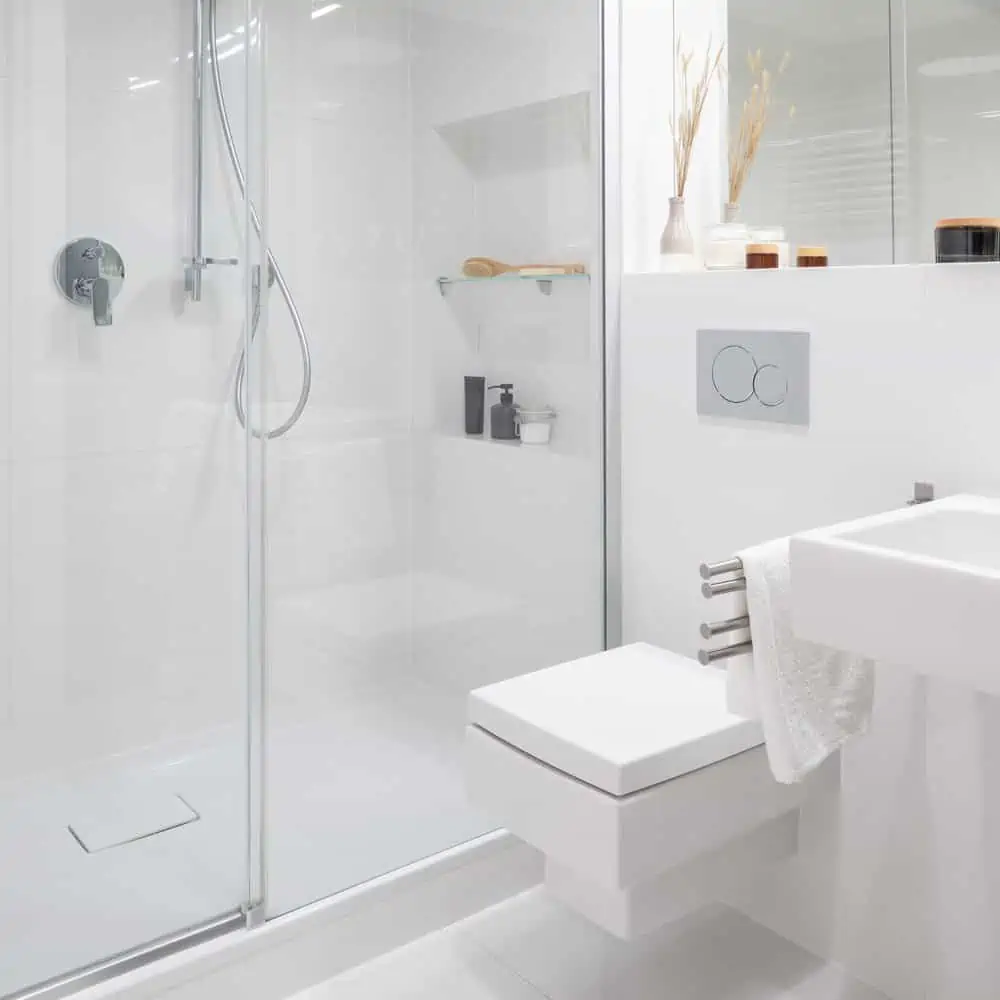
If you know how a sliding patio door works, you can pretty much figure out how a sliding shower door works as well. These doors are mounted on a track frame and are moved in one direction when opened. They use a roller system to transport the door on the tracks.
Hinged Shower Doors
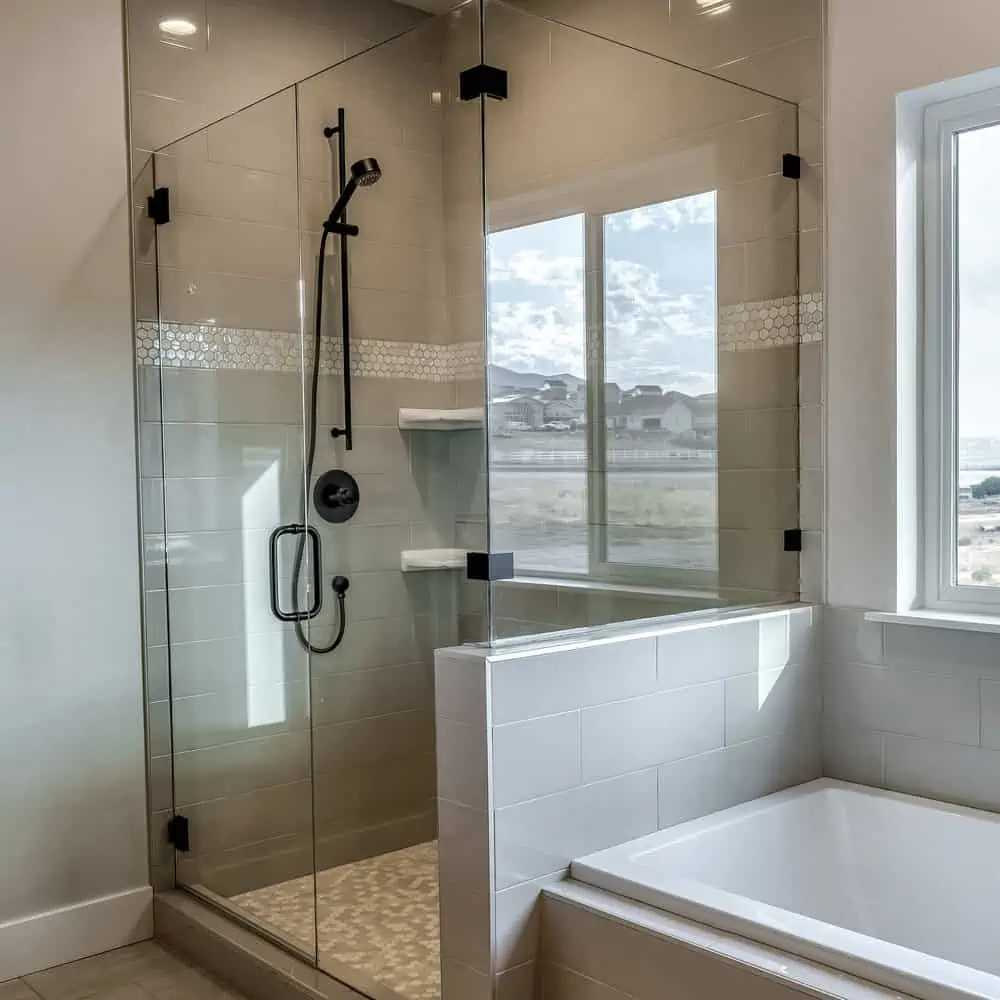
These shower doors are designed to swing open. They tend to occupy more space in the bathroom because they need room to open. They are suitable for large shower openings.
Pivot Shower Doors
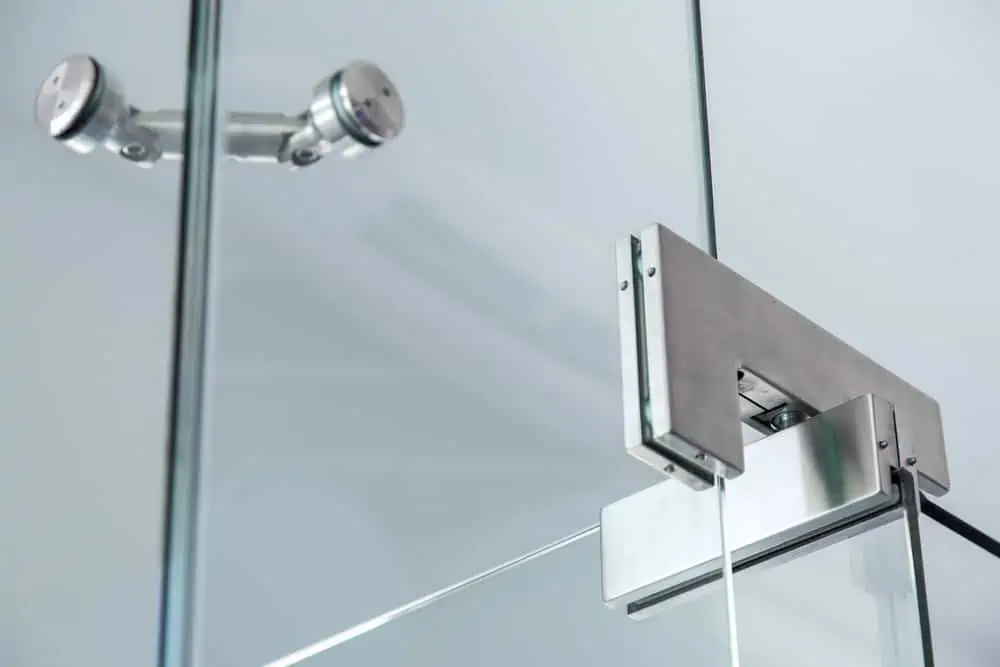
As the name suggests, pivot shower doors have a hinge mechanism that allows them to swing both inside and out. These types tend to be more expensive and are available in frameless and framed versions.
Folding Shower Doors
Folding glass doors are made with a series of panels. They do not have the usual swing feature you see in most shower doors, making them an excellent choice for smaller bathrooms.
Framed Shower Doors
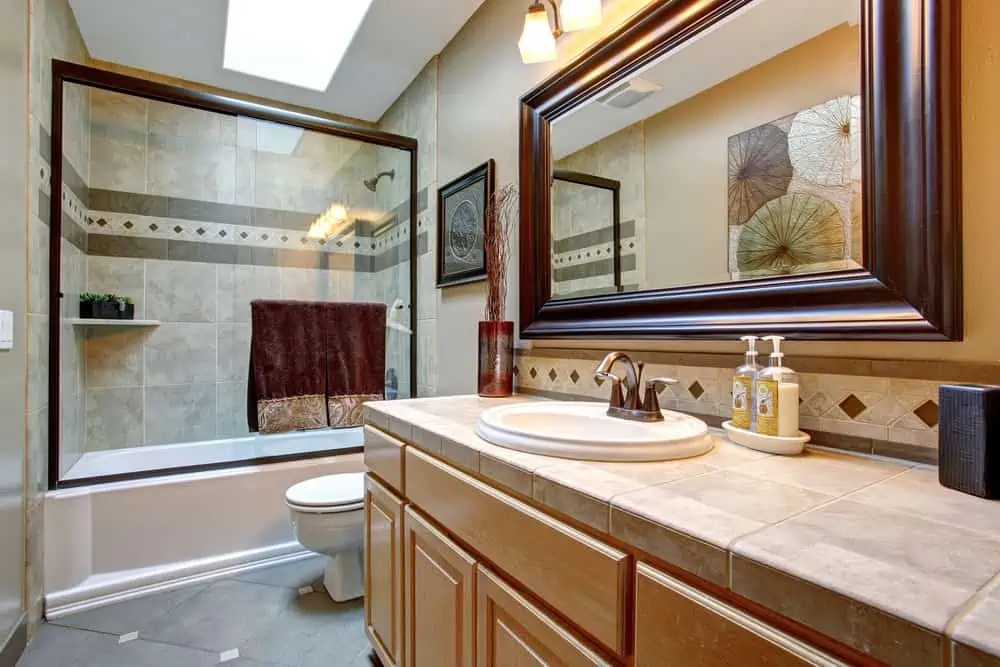
These are the most common shower doors encountered in households across the US. They are easy to install and quite cost-effective, but the metal frame tends to feel quite bulky and isn’t easy on the eye.
Shower doors with metal frames are strong and stable because they are supported by a metal frame that goes around the entire perimeter.
Frameless Shower Doors
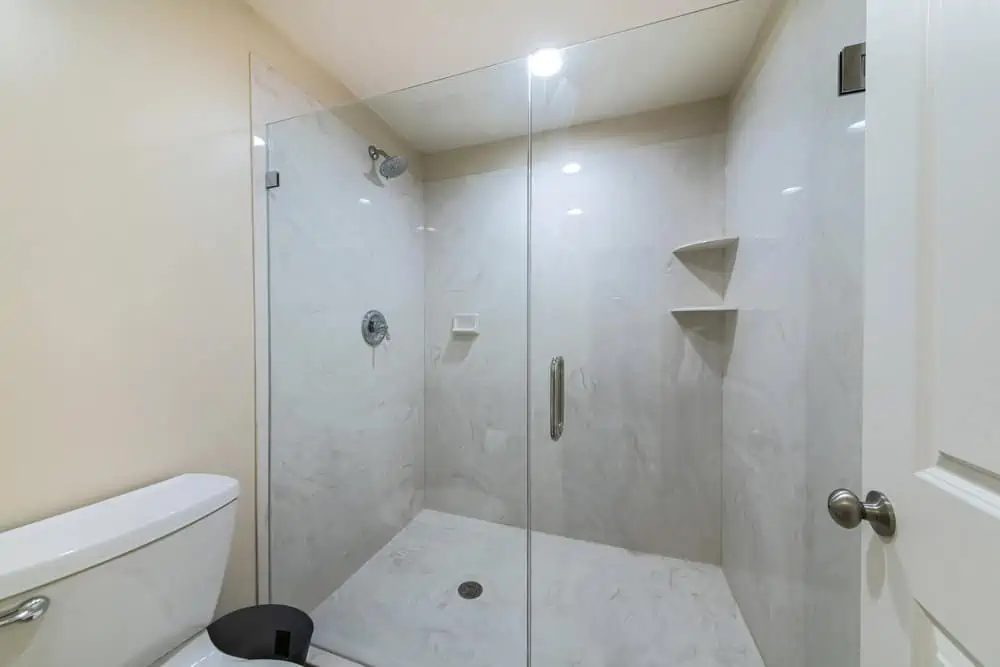
Shower doors without frames are almost entirely made of glass, making them both simple and stylish. While they are more visually appealing compared to their framed counterparts, they are rather difficult to install.
Due to the lack of a frame, the glass utilized in these doors is extremely thick and, therefore, extremely heavy. Not only does this make them more expensive, it also makes installation more complicated because the mounting system needs to withstand the weight of the heavy glass.
Tips For Installing a New Shower Door
When you’re finally all set to install a new shower door, here are some tips that are bound to come in handy:
- Make sure that you have all the correct measurements before buying a new door.
- If you’re installing a glass door, be careful because it’s very heavy.
- Leave the corner protectors on the shower door during the installation process.
- Ask someone for help during the installation process.
FAQs

What is the Minimum Width of a Glass Shower Door?
Shower doors need to be a minimum of 22 inches in width. If it’s narrower than that, it’s likely not in line with local building codes.

How Much Space Should be Between the Shower Door and Ceiling?
You should leave about 10 to 12 inches of clearance between the shower and the ceiling to allow for proper top ventilation.

Do Shower Doors Swing In or Out?
Shower doors need to swing outwards. However, pivot doors can swing both ways, which is also allowed.

Do Shower Doors Need Studs?
Glass shower doors and walls that surround enclosures are typically very hefty. As a result, they must be supported by bolts that are inserted into wall studs rather than just through the drywall.
A glass shower enclosure can come out of the drywall if it is not supported by a stud, which would completely damage the installation.
The Verdict
Once you know how to measure for a shower door based on the enclosure you have, it’s time to go shopping. Note that shower door measurements aren’t standard because they vary based on the type of shower in question.