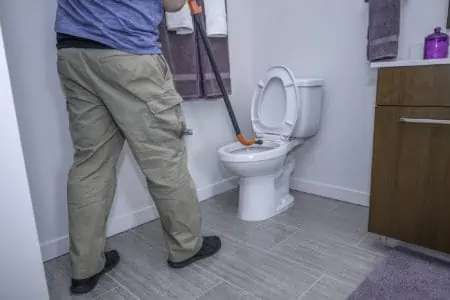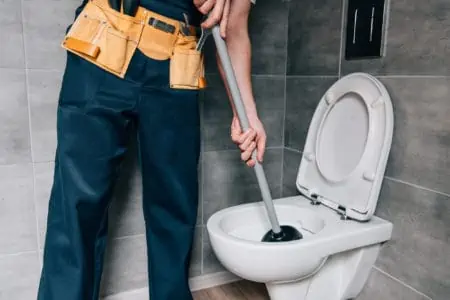
Learning how to flush the toilet when the water is off is crucial, especially since some emergencies or repairs might turn off the water supply. We’ll give you tips on how to flush your toilet with the water off, so you don’t have to let your waste accumulate.
Key Takeaways
- Fill a bucket with water and pour it into the toilet tank until it reaches the overflow tube, then flush as usual.
- For tankless toilets, pour 30-40% of a bucket of water slowly into the bowl, then pour the rest quickly to create pressure and flush the waste.
- Use melted snow as an alternative water source by heating it on the stove and pouring it into the toilet bowl following the steps above.
- Manually flushing a toilet usually requires a couple of gallons of water, but older toilets might need up to five gallons.
How to Flush a Toilet with a Bucket of Water
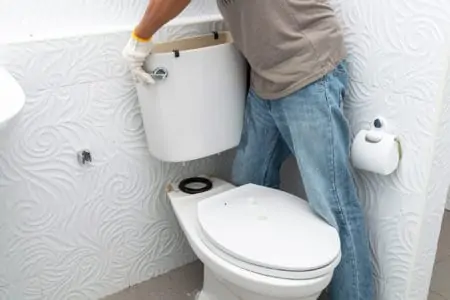
You can force flush a toilet if you add water manually to the tank. This method will tell you how to flush a toilet when the water is off and requires having water from another source.
- Fill a bucket with water.
- Remove the lid of the toilet tank.
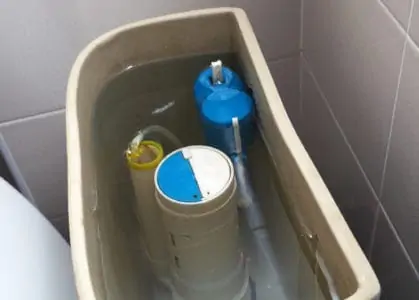
- Slowly pour the water inside until it reaches the overflow line.
- Flush the toilet using the handle as you usually do (if you have a toilet without a handle, then push the flush button).
How to Flush a Tankless Toilet Without Water
You don’t always need a tank to flush the toilet. You can get around this if you have another water source.
- Take an empty bucket and fill it with water. It can be water from a faucet, your outdoor hose, or even a pool or a pond.
- Slowly add the water to the bowl until you’ve used about 30 to 40 percent of it.
- Pour the rest of the water quickly into the bowl to create pressure that pushes waste through the piper.
- If there’s still water in the bowl, repeat the process by refilling the bucket with water.
How to Use Snow to Flush a Toilet
There are certain emergencies where you might be left without any running water. So, you need to learn how to flush a toilet without running water. If you get snow where you live, you can use snow to flush the toilet.
Using snow to flush the toilet will take longer because you have to melt the snow first. Simply putting snow in the tank without water pressure won’t be effective.
- Collect a bucket of snow.
- Place the snow in a big pot on the stove and start to heat it until it melts.
- Put the melted snow back in the bucket and repeat the process until you have a couple of gallons of water ready.
- Pour water down the toilet bowl following the steps above.
Safety Note
Be careful with how much you heat the water. Avoid pouring boiling water into the toilet as it could negatively affect the plumbing.
How Much Water Does It Take to Flush a Toilet Manually?
In most cases, you can get away with manually flushing a toilet by using a couple of gallons of water. However, older toilets might need up to five gallons to initiate a flushing cycle.
FAQs

How Do You Manually Flush an Automatic Toilet?
First of all, it’s important to note that most automatic toilets have a manual flush button, but people often have difficulty locating it. You can usually find it directly behind the toilet, and it looks like a simple button.
If your toilet doesn’t have it, you can flush it manually by pouring water down the toilet bowl.
Another way is to hold your hand against the flushing sensor before taking it away to activate the flush mechanism.

Can You Flush a Toilet with Pool Water?
Yes. Because you’ll pour this water down the bowl, you want to avoid water with debris in it or with anything. If you’re adding water into the tank, make sure it’s as clean as possible.
If pool water is not clean or is too rich in chlorine, it’s best to avoid adding it to the tank and use it in the bowl instead.

What Happens If You Flush the Toilet When the Water is Off?
If the water is off but the toilet tank is full, you can flush the toilet once. However, if the water is turned off and the tank is empty, you can’t refill it without an alternative water supply. If you have another source of water, like a pool, you can manually add water to the tank using a bucket.
Bottom Line
Did that clear up any questions you had about how to flush a toilet when the water is off? Now you are covered in case of an emergency water supply cut-off. However, it’s always a good idea to have a few gallons of water prepared in a bucket or some bottles for such emergencies.