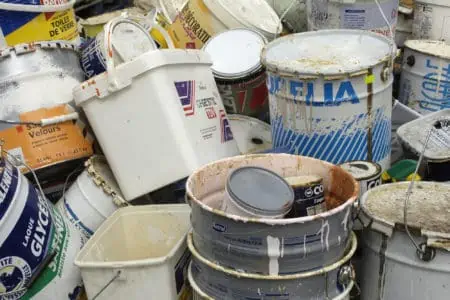
Most oil-based paints are hazardous and should be disposed of at a Household Hazardous Waste (HHW) collection site. Check with your local hardware store for info. If not done properly, oil paints and products can leak into the ground, contaminating soil, septic tanks, wells, and more.
Do you have some old paint cans that have been in the garage for years, and you’re not sure what to do? Paint isn’t something you can throw away in the trash, as it requires proper disposal.
The chemicals can leech into groundwater or gunk up your drains. So, learn how to dispose of paint with these pro tips and save yourself the trouble.
Key Takeaways
- Identify paint type: Latex or oil-based paint should be treated differently for disposal.
- Proper disposal: Latex paint can be dried and thrown away, while oil-based paint must be taken to a hazardous waste facility.
- Alternative methods: Consider donating or recycling leftover paint, or check with local hardware stores for disposal options.
- Dispose of paint water: Allow paint water to evaporate or separate from paint solids, then dispose of the residue properly.
Can You Just Throw Away Paint?
Paint is a product that contains many different chemicals. Even those without volatile compounds have a consistency that can be problematic when you don’t dispose of them safely. You can’t just dump paint anywhere you want.
Pouring any type of paint down the drain pollutes groundwater, lakes, and streams. It can also wreak havoc on your plumbing system, particularly if you have a septic tank. Many garbage collection services also prohibit the disposal of wet paint in trash cans.
When to Throw Away Old Paint
Have some paint cans that have been lying in the garage for what appears to be an eternity? Even if paint lasts a long time, yours might not be usable.
Check the Smell

Pop open the lid and smell your paint. If it still smells like paint, it’s likely still usable. If the smell feels a bit rotten, like a pungent, sour stench, it’s time to get rid of it.
Look for Dried Paint
If you notice dried paint layers or chunks inside, try to remove any large pieces and then stir the contents using a brush or stick. Then strain the paint using a pair of stockings or pantyhose.
Dip your paintbrush in the paint and brush it over a piece of cardboard. If you notice a nice glide and the color isn’t off, you can still use it.
How to Dispose of Paint
If you want to know how to dispose of paint the right way, you first have to identify the type of paint in question. The two main categories that you have to tell apart are latex and oil-based paint.
Latex Vs. Oil-Based Paint
You can tell these two apart by reading the label on the product. If the information doesn’t exist, or the label has been damaged, there’s another way to see this.
Grab a clean paintbrush and dip it inside the paint can. Try to rinse the brush with water. It should come off the brush if you’re dealing with latex paint. If it stays there, it’s oil-based paint.
Latex Paint
If your paint container doesn’t have much latex paint left inside it, remove the lid on the can and allow it to air dry. Put some cat litter inside the paint and stir it for larger paint quantities. Allow the litter to dry inside the can.
Once the contents are dry, throw them away for regular pickup.
Keep In Mind
Local regulations likely won’t approve of throwing away latex paint that’s been solidified. So, it’s up to you to take care of the job.
Oil-Based Paint
Paints with an oil or alkyd base are classified as hazardous waste. When incorrectly disposed of, they may contaminate sources of drinking water.
Rather than discarding oil- or alkyd-based paints in conventional garbage, contact your local waste authority. They’ll help you determine how to properly dispose of oil-based paints. Typically, you’ll take expired paints to a nearby hazardous trash drop-off location.
There are two ways to find hazardous waste management facilities in your area.
1. Use RCRAInfo Search
The RCRAInfo Search database will help you find hazardous waste handlers in your area. You can identify a facility by combining its name, geographic location, and industry classification.
2. Read the Biennial Hazardous Waste Report
If you have to get rid of substantial quantities of oil-based paint, this is an important step to follow.
Conduct a search in Hazardous Waste Report to obtain data on minimizing hazardous waste. The report includes information on hazardous waste from big volume generators and information on waste management techniques.
Spray Paint
Spray cans are usually made of recyclable parts. Meaning you can dispose of them properly if you take them apart first.
1. Empty the Can
Before you take the can apart, you have to ensure it’s empty. Use whatever spray paint is left in there. If you have nothing to paint, grab a piece of cardboard and start spraying it.
Continue to do so until the can is all out of paint and stops making a hissing noise. Dispose of the cardboard once the paint is dry.
2. Dismantle the Can
Take off the plastic nozzle that’s on top of the spray can. The nozzle and the lid are made from plastic and should be recycled accordingly. The can is made from metal, so you can also recycle that one.
Take Safety Measures
When dealing with spray cans, there are a few safety measures to consider. You should wear a respirator mask and work in a well-ventilated room. If possible, proceed with emptying the can outside.
Alternative Paint Disposal Methods
When it comes to getting rid of paint properly, there are some other methods to consider as well.
Donate
Even if you have no use for whatever paint is left in your can, someone else might need it. Ask around to see if your family or friends are currently working on some DIY projects that might require paint. Your donation might help someone out.
Recycle
Check to see if companies in your area accept paint. They have the means necessary to dispose of it properly. Just perform a Google search with your location and zip code to see where to recycle paint in your area.
Hardware Store
If you don’t know where to dispose of paint, the answer might be close to your home. Try to see if your local hardware stores accept cans of used paint for the same reason as above.
How to Dispose of Paint Water
Even if you know how to dispose of old paint, there is also the dirty paint water to deal with. No, you can’t throw it down the drain either, so here is what you can do.
Waiting for the Paint to Dry
Put the container with dirty paint water in a warm and dry place. Wait for it to evaporate naturally. As the paint solidifies, peel out the residue and place the peeled paint in a trash bag.
Rinsing the Container
Lack the time to wait for the water to evaporate? Then set the water bucket aside and allow the paint solid to settle on the bottom. Tip the container slowly to let the clear water pour out of the bucket at the top. Make sure you do this as far away from sewers and storm drains as possible.
When you’re done, leave the paint residue inside the bucket in a warm, dry place and allow it to harden. Dispose of it properly when it’s dry.
How to Throw Away Empty Paint Cans
Metal paint cans that are empty are accepted for recycling at most household waste recycling centers. Additional information should be available on the website of your local council.
Generally speaking, a recycling center will only take in metal cans that are empty and dry. Plastic cans aren’t usually accepted, and you have to check local regulations to see whether or not they are.
FAQs
Still unsure? Here are some extra tips and info to help you out.

What Can I Do with Leftover Paint?
You have the choice to either dispose of it properly or use it for a project around the house. Got an outdated piece of furniture that could be repurposed or needs a new coat of paint? Now is your chance.

How Long Does Paint Last?
Unused paint cans last longer than those already used. If you store an opened can of paint properly and avoid exposing it to air, it may also last for several years.
When properly storing a can of oil-based paint, it can last up to 15 years. Latex paints can last up to 10 years.

How Long Does It Take for a Paint Can to Dry Out?
It depends on whether or not the can has been opened and how much paint is inside it. For example, an opened can with just one inch of paint inside it will dry in a few days.

How Do You Properly Store Old Paint?
To preserve paint for as long as possible, make sure to store it in a cool and dry place. Always store your paint cans away from direct sunlight.
All Wrapped Up
Now that you know how to dispose of paint correctly, you have to determine what type of paint you have. You need to make sure that any cans you want to recycle are made from metal and are clean and dry. Proper paint disposal is crucial because it is labeled as hazardous waste.