Do you have a doorway you want to cover with anything else but a door? Do you live in a temporary rental place and need door alternatives?
I’ve got some awesome and creative ways of how to cover a doorway without a door. Some of them are quite unconventional and can be done with things you already have lying around the house. But you’ll save time and money and get to show off your creative side!
Key Takeaways
- Beaded curtains: Stylish and affordable, but offer limited privacy.
- Ropes or macrame curtains: Fashionable and cheap, great for open-concept living rooms.
- Screen dividers: Provide privacy while allowing light, suitable for a modern vibe.
- Heavy curtains: Cost-effective and enhance privacy, visually expand the room.
20 Creative Ways to Cover a Doorway Without a Door
Making modifications in a rental home is often prohibited by the contract. So you might be interested in how to block a doorway without a door.
Quick Tip
If you’re unsure, always check with your landlord or condo community.
1. Beaded Curtains
You may choose the perfect form and color for your interior from a variety of beads. The lack of privacy is a drawback of this door cover. Beads are frequently clear and do not block sound.
Stylish beaded curtains will adorn your environment without costing more. Use them to divide your living and eating areas, but not your bathroom. This is one of the cheapest door cover ideas out there.
I just love these HSYLYM beaded curtains because they’re a simple black color and pretty much go with everything.
2. Ropes
To separate a vast space without a door, use some ropes as a fashionable but cheap alternative. A DIY rope drape, a coffee table with tiny ornaments, and plants are all you need.
You can also use macrame curtains that are easy to make or available for purchase online. The perfect idea if you want to create a valance in an open-concept living room.
3. Screen Dividers
Screen dividers are a great, original way of covering a doorway without a door. Throughout Japan’s history, screen dividers have been a common method of providing privacy through entryways.
Unsurprisingly, their ability to provide privacy while allowing in light has made them extremely popular among today’s leading designers. This is an easy method to infuse any area with a hypermodern vibe.
These plain wood screen dividers by ECOMEX are great because you can leave them as is. Or you can stain or paint them to match your decor.
4. Heavy Curtains
Heavy curtains are frequently the most cost-effective and privacy-enhancing option on this list. They help absorb sound and keep away prying eyes. A nice pair of curtains can help conceal doorways and visually expand the room.
Use white or light-colored drapes rather than dark-colored ones to enlarge a tiny room. Curtains are a nearly universally stylish solution. Whatever aesthetic you ultimately choose, you will be able to discover a certain style that fits you.
5. Accordion Dividers
Accordion dividers are a throwback to the 1960s and 1970s. They are typically constructed of wood, plastic, or paper-like material, but you can occasionally see them made of solid fabric as well.
Their frequently rustic appearance makes them ideal for those who adore mid-century modern aesthetics and earthy-toned decor.
You can move them around easily and install them without drilling, making them a great makeshift alternative for a conventional door.
6. Panel Dividers
Decorative panels are usually set up to separate different areas in a large room. However, they can also be used in doorways, especially if you’re looking for something a little more elegant than beaded curtains.
They’re made from all kinds of materials (such as this one, with an intricate floral design and made from wood). So, you can surely find panel dividers that suit your tastes.
7. Bookcase
If you prefer to avoid constructing a door between your rooms, you can use an exquisite bookcase to divide them. In this manner, you may change your doorway into a functional and distinctive space.
Apart from gaining additional storage space, you will improve the aesthetics of your area. Simultaneously, you will retain the existing aperture in order to install the door as needed.
It is entirely up to you whether to set the bookcase in front of the room or to take a step further and add hinges to one side to convert it into a door.
8. Barn Door
If you don’t want a traditional hinged door but don’t fancy an empty doorway either, how about a barn door? One of the advantages of this idea is its ease of installation but also its rustic appeal.
Be creative and personalize your barn door by decorating and painting it according to your preferences. Barn doors don’t require installing a door frame since they hang from a top-mounted track.
If you’re going this route, I recommend grabbing this barn door hardware from SMARTSTANDARD.
9. Textiles
When the space does not require complete seclusion and stillness, any hanging material can be used in place of a door.
Choose an exquisite, vibrant handmade item to infuse your home with more individuality than any door can supply. If you have any large pieces of unused textiles that would fit this purpose, feel free to use them.
10. Textile Doors
Some doors are actually made from textiles and hang from tracks, just like office curtains. They are pretty good for offering privacy in terms of sound and visuals. However, you will still have to install a track to hang these from, so they might not be suitable for a rental apartment.
11.Quilts
Handmade quilts are typically very good at offering visual privacy because of their thick and opaque nature. Since they can have a variety of designs, they could basically double as some very interesting thick curtains.
You can use hooks to hang them if need be. You can get really creative with the style and design of the quilt and have it match your room’s decor. These would look great in a bedroom doorway since they have a cozy look.
12. Saloon Doors
If you want to bring some of that Western vibe into your home, saloon doors are the way to go. Be careful since they don’t match just any type of room decor. Thankfully, if you’re a DIY enthusiast, you can easily make a pair of such doors all by yourself.
They aren’t that great at offering privacy, so going for these is mostly a matter of aesthetics.
13. Tinsel
Tinsel is a space-saving and elegant alternative to doors. They can be purchased at a local store and hung over your entryway.
It’s an attractive approach to enhance your home while also providing some essential solitude. Plus, if you love vivid colors, you’ll get a bang from the many options available.
14. Rugs
Hoping to add some color and texture to your home but dislike the idea of a curtain? You can be distinctive and place a rug over your entryway. It will absorb sound from adjacent rooms and add a sense of quality and elegance to the home’s decor.
15. Shoji Sliding Doors
If you enjoy the Japanese way of life, you may incorporate it into your home by installing a Shoji sliding door.
It will provide adequate privacy, beautify your space, and allow for some natural light to enter. Because these doors are constructed of rice paper, they are lightweight and easily glide in and out as needed.
16. Roman Shades
Roman shades are primarily used to conceal window openings. They are often crafted from bamboo or a variety of materials. The good news is that roman shades can also be used to cover your doorway.
This is a great idea if you do not intend to use that doorway frequently. In addition, roman blinds for doorways can be used to block out sunlight or any other undesirable view from the outside. Most of them are machine washable and simple to maintain.
17. Tassels
Go for tassels if tinsel or beaded curtains don’t feel stylish enough. They are a great idea for those who love a magic spark in the home. Depending on what you choose, they could look quite elegant.
They can definitely give your room a more glam appeal, but they won’t block sound very much.
18. Furniture Pieces
Aside from bookcases, there are other furniture pieces that you can use in a doorway. However, it really depends on whether you want to block the doorway partially or entirely.
If we’re talking about a high-traffic area, furniture blocking the path might not be a good idea. If you still want to try it, opt for something like a console table or an armchair.
19.Plants
Plants are awesome if you want some oxygen, greenery, and feng shui inside your home. You can choose to place some large potted plants in the doorway. Some of them grow tall and could cover the height of the doorway if that’s the way you like it.
If you’re looking for something easy to move and don’t want a permanent solution, this is an excellent solution.
20. Empty Doorway
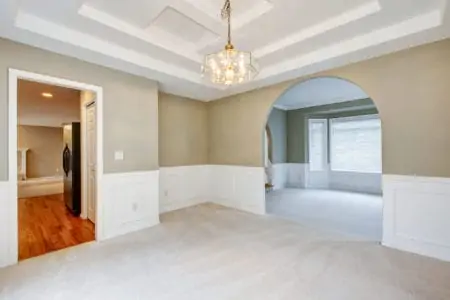
In some instances, leaving the doorway open is the best option. Select the desired shape for the arch and frame it with wood or plaster embellishments.
This creates the sense of a large, light area with plenty of additional space. Empty doorways aren’t quite as bland when you have an arched top.
FAQs
If you’re still on the fence about what to do with your doorway, here are some common questions to help you out.

How Do You Hide a Door In a Wall?
There are a lot of different ways to do this, from turning the door into a work of art to using the same materials for the wall and door.

How Do You Cover a Door Opening With Drywall?
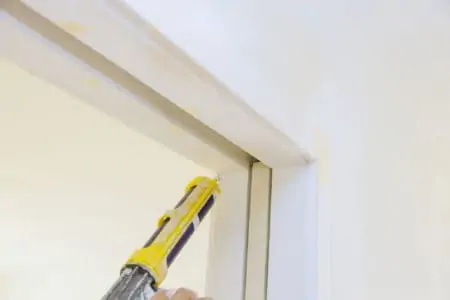
You have to remove the trim and casing on the door frame if there is any. Then cut the surrounding drywall to expose the existing studs. Then add some new studs, cut and install the drywall, and tape and patch the drywall.

How to Soundproof a Doorway if There Is No Door?
You will need some thick materials instead, like blankets, heavy and thick curtains, or even use acoustic room dividers.
Wrapping Up
These are a few ideas on how to cover a doorway without a door, but you can get as creative as you like. I know that people living in rentals aren’t exactly allowed to install doors as they please, so some of these alternatives are good for them.