Nothing makes a glass shower door look dirty more than grime and soap scum. It stains and sets hard, so it can be tricky to remove if left uncleaned. And the longer you leave it, the more it builds up.
We show you how to clean glass shower doors, offering you 10 methods that include vinegar, Borax, and even Magic Eraser.
Key Takeaways
- Use white vinegar and dish soap mixture to clean glass shower doors effectively.
- Try baking soda paste to remove stubborn stains and soap scum.
- Ammonia and lemon juice can also be used to clean glass shower doors, but ensure proper ventilation.
- Other methods include using Borax, Magic Eraser, and dryer sheets for a sparkling clean finish.
How To Clean Glass Shower Doors
There are so many ways to get your glass shower doors back to their sparkling best, but which method is the best? Let’s take a look at your options.
White Vinegar
White vinegar is a cheap and readily available solution to cleaning glass shower doors. It’s also a great alternative to damaging and expensive chemical cleaning products. Vinegar is all-natural and leaves no impact on the environment.
However, if you have natural stone in or near your shower, you might want to avoid using vinegar because it can cause damage.
You can add a couple of undiluted drops of white vinegar to tea tree oil and wipe it onto the surface of the glass. The vinegar lifts the dirt, and the tea tree oil has antibacterial qualities.
How To Use
- Mix equal parts of warm white vinegar with dish soap and pour it into a spray bottle.
- Spray the mixture onto the shower door and wipe it clean using a soft cloth.
- Reapply the solution if you feel that the grime is stubborn and won’t shift the first time.
- Block up the drain hole with a couple of paper towels.
- Pour neat vinegar into the door runners and leave overnight.
- The next day, remove the paper towels and wipe away the residue with a damp sponge.
Baking Soda Paste
Baking soda is another method that has been tried and tested for generations. Sodium Bicarbonate is a chemical with salt as the main ingredient. When mixed with small amounts of water or vinegar, it creates a thick paste.
Baking soda is cheap, easy to get, and perfectly safe for the environment. Every home should have some baking soda in case of emergencies. You can even use it to unblock sinks.
How To Use
- Pour enough baking soda to fill half a cup.
- Now add just enough water to make the powder into a thick paste.
- Rub the paste onto the shower door using a soft cloth.
- Now rinse it off using vinegar, making sure the grime has gone.
- For stubborn stains, leave the paste on for 20 minutes.
- Add vinegar instead of water to make a thick paste.
Ammonia
If you can stand the smell, ammonia is a great alternative to household cleaning detergents. It is a chemical compound containing nitrogen and hydrogen, and it is incredibly stable.
You will have to ventilate the bathroom by opening the windows and doors to allow a free flow of air. You should also wear rubber gloves just in case you get splashed. And never mix ammonia with bleach because it creates harmful vapors.
When you mix ammonia with distilled water, it removes the chances of streaking and smearing.
How To Use
- For heavy staining, combine 1 part of ammonia to 3 parts of water and pour into a spray bottle.
- Spray onto the dirty surface of the glass.
- Wipe clean using a cloth while the ammonia solution is still wet.
- For light staining, mix 2 quarts of distilled water with 2 tablespoons of ammonia.
- Spray onto the glass surface and leave for 5 minutes.
- Now wipe dry with a microfiber cloth.
Lemon Juice
Lemon juice works similarly to white vinegar, but it smells a hell of a lot more fragrant. The natural acids in the juice work to eat away at the soap scum to lift it off the surface of the shower glass.
You can even use lemons to descale your kettle, especially if you live in a hard water area.
How To Use
- Squeeze the juice of 3 lemons into a cup of distilled water.
- Pour the formula into a spray bottle.
- Spray the glass doors and leave it for 5 minutes.
- Wipe clean with a microfiber cloth, making sure the glass is dry.
- For stubborn stains, dip the cut side of the lemon into baking soda.
- Rub the lemon onto the glass and wait 5 minutes.
- Rinse the surface of the glass with distilled water.
- Dry thoroughly with a clean cloth.
Borax
Borax is a naturally occurring mineral compound that contains high levels of sodium. It is colorless and comes as soluble crystals. Because it is natural, it’s also kind to the environment. It reacts similarly to baking soda, although it is a different compound.
It works by converting water molecules into hydrogen peroxide (bleach) to lift stubborn grime and staining from the surface of your glass shower doors.
Borax is another favorite household cleaning item with so many uses. It acts as a detergent, cleans, goes into your washing as a softener, and helps to unblock drains.
How To Use
- Mix half a cup of Borax with enough water to make it a thick paste.
- Use a damp sponge and rub the paste onto the glass.
- Leave it to work for 5 minutes, especially on stubborn marks.
- Rinse it off with distilled water to reduce watermarks.
Magic Eraser
Magic Eraser is a sponge with cleaning properties that removes the most stubborn staining without using detergents and other household cleaning products. Magic eraser has been around for years and was first used as insulation and soundproofing foam.
The sponge is made from melamine resin, which then cures into foam, causing a sandpaper-like material to remove stains from various surfaces.
You should wear gloves when using a Magic Eraser, and you have to be careful that you don’t rub too vigorously and scratch the glass.
How To Use
- Run the Magic Eraser under the tap.
- Gently rub the inside of your shower door.
- Rinse off with distilled water.
- For stubborn stains, perform the clean after a shower.
- Hot water reacts better with the Magic Sponge.
Bar Keeper’s Friend
Bar Keeper’s Friend is an acidic cleanser that was first introduced to the world in 1882. It has oxalic acid as the active ingredient, so it works really well on stubborn stains. It is cheap and widely sold, so getting hold of it is a breeze.
Because this is an acid, you will need to wear gloves and make sure the room is well-ventilated.
How To Use
- Wet the shower door. Maybe do this straight after a shower.
- Apply a small amount of the cleaner to a wet sponge.
- Spread the cleaner evenly over the surface of the glass door.
- Only leave it to work for one minute before wiping it off.
- Gently scrub the door, taking care not to rub too hard.
- Rinse away with warm water.
- You may need to repeat these steps for ground on dirt.
Dryer Sheets
We already know that dryer sheets are excellent for keeping our laundry smelling scented and fresh, but did you know they are also perfect for cleaning grime off glass shower doors.
They are embedded with chemicals that get released when wet to remove the dirt. It is an excellent way of tackling the most stubborn, dried-in staining.
How To Use
- Grab a dryer sheet and moisten it under warm water.
- Rub the dryer sheet on the glass in the areas where the staining is more prominent.
- Keep rubbing until you see the soap scum start to peel off.
- Rinse with water to remove the residue.
Peppermint and Vodka
Vodka is alcohol and, as such, reacts with dirt and grime. Peppermint oil helps to soften the grime while the vodka lifts it off the glass.
How To Use
- Mix half a cup of vodka with one cup of water and then drop in 10 peppermint oil drops.
- Mix them together and then pour it into a spray bottle.
- Spray the glass doors when you finish showering.
- For lighter cleaning, do this weekly.
- Leave the solution on for 15 minutes.
- Then rinse it off with water.
Tips To Keep Glass Shower Doors Sparkling
Spending hours scrubbing soap scum and limescale from your glass shower doors is no fun, so what if there was a way to make the task easier. Here are our top tips to help keep your cleaning regime to a minimum.
Use Commercial Products Daily
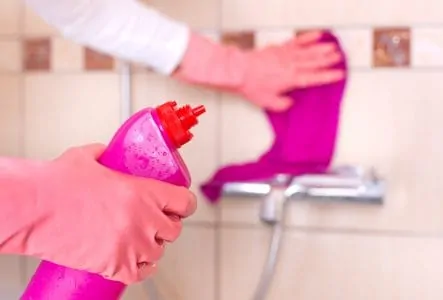
Spray your shower every day to prevent scum build-up using commercial products. These sprays reduce the chances of soap and limescale staining your shower doors. Make sure you follow the instructions on the packaging and always dry the shower thoroughly before using the spray.
Keep Some Homemade Shower Cleaner Handy
Keep a mixture of dish soap, white vinegar, and essential oils for fragrance next to your shower, and every time you use it, you can spray some over the glass doors. It is easy enough to make up:
- 1 cup of distilled water.
- Half a cup of white vinegar.
- A few drops of liquid dish soap.
- 10 to 20 drops of essential oils.
Use it after you shower, but make sure you dry the glass thoroughly before applying the spray, and as it dries it helps reduce scum settling on the surface of the glass.
Soften Your Water
If you live in a hard water area, it might be worth investing in a water softener. It may be an expensive option, but at least you can remove most of the mineral deposits from the water before they stain your shower doors.
Buy a Window Vacuum
Window vacuum cleaners are excellent hand-held devices that suck away the moisture to a reservoir in the handle. It leaves your shower doors very dry and removes the chances of mineral deposits.
Air It Out
A simple but effective way to reduce the chances of staining is to air out the shower after use. Leave the windows open, run the fan for 20 minutes and leave the shower doors open. The fan removes the moisture while the air circulates through the open window.
Waterproof Your Shower
You can use the same windshield products on your shower walls. These waterproofing treatments create a non-stick film that lets the water and soap run off without adhering to the surface.
Try and keep these products away from the chrome frame of your shower as they are corrosive to the metal.
FAQs

Can You Use CLR on Glass Shower Doors?
You can use calcium, lime, and rust remover on your shower doors; just be careful if you have any natural stone or metal elements nearby. Aluminum does not react well to CLR, and neither does chrome plating.

Can I Use Windex on a Glass Shower Door?
Windex is a great product to use on glass shower doors. Spray it on, leave for 10 minutes, and then wipe it off with a dry cloth. It protects the glass, cleans, and also helps to reduce soap and grime build-up on the surface of the doors.

How To Get Hard Water Stains Off Glass Shower Doors?
The best methods against hard water stains are to use white vinegar and distilled water or baking soda and white vinegar. Mix the two in a spray bottle and after every shower, dry the glass doors and then apply the solution.
The acidic effects of the vinegar and the sodium in the baking soda helps to reduce the build-up of grime and soap scum. You can mix the baking soda into a paste, coat the most stubborn staining and leave it for 20 minutes. Then wash it off using distilled water.