Have you ever experienced difficulty in trying to change a bulb in a room with a high ceiling? It takes effort, but it’s also viewed as a more dangerous household chore. But it doesn’t have to be this way.
I’m going to show you how to change a high ceiling light bulb safely.
Key Takeaways
- Turn off power and let the bulb cool before changing it.
- Use a ladder or light bulb changing pole to reach the high ceiling.
- Wear safety gloves and follow precautions to avoid accidents.
- Choose LED bulbs for longer lifespan and energy efficiency.
Safety Precautions
For most homeowners, numerous hands-on tasks are relatively simple to complete. But several things can go wrong with do-it-yourself lighting projects. So, before you learn how to change light bulbs in high ceilings, let’s look at some basic safety measures.
Allow the Bulb to Cool
When changing bulbs, always allow sufficient time for the lamp to cool. Certain bulbs, particularly incandescent, can generate more heat than they emit. So it’s critical to allow bulbs to cool before touching them.
Use the Correct Bulb Type
Utilize only the fixture’s specified bulb types. While some fixtures allow the use of multiple types of bulbs in the fixture socket, the majority will specify the most appropriate type.
For instance, you can’t plug an LED bulb into a fluorescent fixture that has not been retrofitted to accept LED bulbs.
Invest in GFCI
Install a ground fault circuit interrupter (GFCI) to provide additional outdoor and indoor lighting protection. A GFCI is a critical electrical shock prevention system.
If you’re attempting this on your own, read up on any safety precautions. Or consider hiring an experienced professional to assist you.
Use Protective Gloves
Never attempt to change a bulb using only your bare hands. Using your bare hands to handle a bulb can result in accidental burns if the unit has not cooled to a safe temperature.
I’d recommend these Klein Electrician Gloves, especially if you’re planning to do some regular electrical work around your house.
Occasionally, a bulb will shatter during replacement, which could hurt you. It’s a good idea to wear work gloves when changing a bulb. If you lack gloves, a towel or a cloth will suffice.
Never Exceed Wattage
Don’t use more wattage than the fixture says it can handle. For example, using a 200W bulb in a fixture that says it can only use 60W can cause the fixture to break. It can also cause the bulbs to shatter or damage the electrical system.
How to Change Light Bulbs in High Ceilings
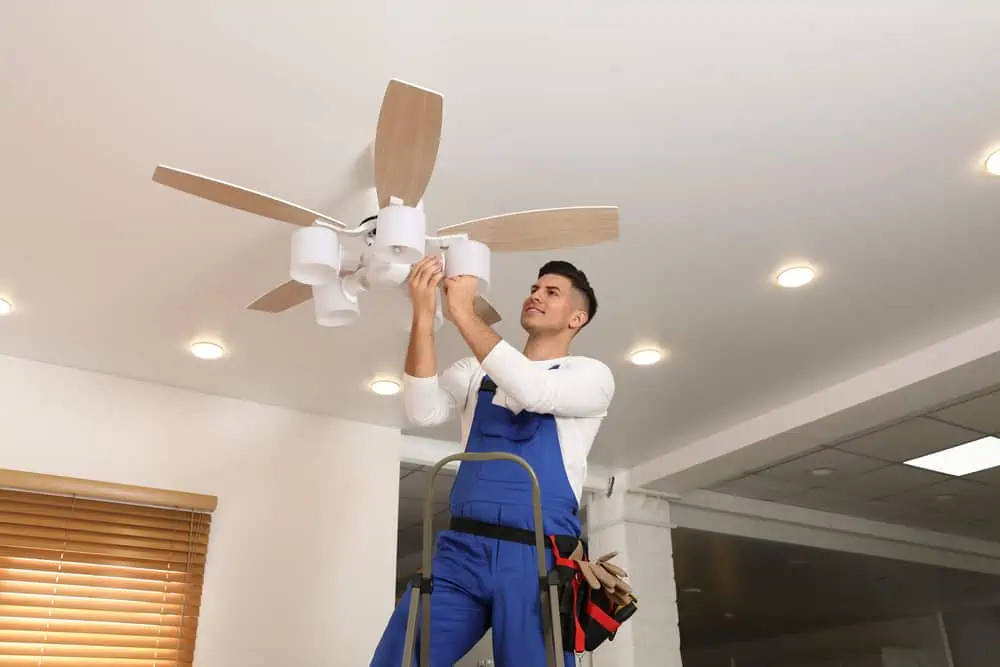
If you’ve got a ladder, this method is the simplest. Let’s first check you have the right tools for the job.
What You’ll Need
- A compatible light bulb.
- A step ladder.
- Workman’s apron.
- Safety gloves or a towel.
1. Let the Bulb Cool
Turn off the light and allow the light bulb to cool before you touch it. If you plan to change a hot light bulb, you have to wear heat-protective work gloves or kitchen oven mitts.
2. Climb Up the Ladder
Put on your safety gear and apron. Unfold the step ladder underneath the light fixture. If possible, ask someone to hold the latter at the bottom to ensure further stability.
3. Change the Bulb
When you’re up on the ladder, unscrew the light bulb by turning it counterclockwise. Either put the old bulb in your apron’s pocket or give it to someone else.
You want to have both hands free at all times. Put the new bulb back in the socket and turn it clockwise. Stop when the bulb doesn’t turn any further.
Getting Rid Of Old Bulbs
Make sure you properly dispose of the old bulb if it can be recycled. Recycling is the best way to go if it’s an option.
How to Change a High Light Bulb Without a Ladder
Don’t have access to a ladder? Or maybe the light fixture is in a place where a ladder won’t work? Then this is the method for you.
With a Changing Pole
This method is simple and safe, but requires a steady hand.
What You’ll Need
- Changing pole.
- Compatible new bulb.
A light bulb changer consists mostly of a long pole and a head capable of grasping and turning a light bulb.
Choose the head with the suction cup or the grabber depending on the bulb in question. Take hold of the pole and adjust its length as necessary. You carefully reach up and grasp or suction the bulb you wish to remove. Unscrew and remove the bulb.
To put in the new bulb, simply reverse the procedure. Screw the upward-facing bulb until it’s secure, then let it go.
With Scaffolding

If you have to change the bulb in really lofty rooms (with a 20-ft ceiling or even higher), ladders and changing poles won’t cut it. That’s where scaffolding comes in.
Consider scaffolding when dealing with high vaulted ceilings, tall rooms with a chandelier, and recessed ceilings. Or if you’re looking to reach just about any bulb placed way up high.
What You’ll Need
- Compatible replacement bulb.
- Scaffolding.
- Protective gear.
Take Note
The most complex part about changing a bulb is setting up the scaffolding.
1. Choose a Secure Foundation
The surface on which you install the scaffolding needs to be level and stable. Note that these structures usually have adjusting screws in case you need to level them.
2. Assemble the Frame
Arrange the scaffolding’s ends. Lift one end piece and connect it to the upper cross brace. This should support the end piece while you lift the second one and attach it as well. Attach the cross brace ends to the bottom of the opposite end frame.
3. Install the Planks
When the scaffolding is secure and stable, lift the planks through the scaffold bars and put them in place. Use the necessary hardware to ensure they are secured, and you can step on them safely.
4. Install the Guardrails
If you’re going to change a light bulb at a considerable height, you want guardrails for extra safety. They will protect you if you lose your balance.
5. Change the Bulb
When all the pieces are in place, get up on the scaffolding planks. Then change the light bulb as you normally would if you had climbed up a ladder.
High Ceiling Light Bulb Replacement Service
Electricians and firefighters often do not change light bulbs. But other specialists can do the job. Begin by contacting handyman services.
General contractors frequently have the tools necessary to replace stuck or extremely high-up light bulbs. While this is a relatively minor chore, they may be willing to visit for a few dollars and resolve your issue.
A handyman service typically charges between $50 and $75 per visit.
Another option is to request this task from any painters you hire, as they will certainly already be up on a ladder.
Tips to Make a Light Bulb Last Longer
Now that you know how to change a high ceiling light bulb, let’s look at some tips that help extend the lifespan of said bulbs.
Try Not to Move Them
Light bulbs generate heat. And when metal (which comprises the filament of a light bulb) becomes hot, it becomes brittle. Working with a bulb with a brittle filament increases vibration, leading to the filament snapping.
This is true not only for handling the bulb but also for positioning. You may have noticed special filament-reinforced bulbs sold as “ceiling fan bulbs” and “appliance bulbs.”
As you may have guessed, this restriction only applies to filament-based lights, such as incandescent and halogen lamps.
Use LED Bulbs
Compared to incandescent and compact fluorescent light bulbs, LED light bulbs are known for their longer lifespan and consume the least energy. Their initial cost might set you back, but they’re a great investment for your home. I’d recommend this pack of Sylvania LED bulbs.
Don’t Use Excessive Voltage
The voltage coming from your wall sockets should be approximately 240 volts. While some fluctuation is natural, exceeding this voltage frequently will decrease the life of your bulbs.
You can check your home’s voltage using a consumer-rated voltmeter or by contacting an electrician.
Check for Loose Wires
Another possible cause is improper installation or wiring. A damaged or loose wire can create significant current swings, rapidly destroying the filament of a bulb. Check your wiring connections with a skilled electrician to rule out the possibility of a problem.
The Final Say
Changing the light bulb on a high ceiling doesn’t have to be complicated. The most important part is knowing how to stay safe while doing so.
Learning how to change a high ceiling light bulb also means understanding the safety requirements and bulb compatibility-related concerns.