Thinking your home needs a new coat of exterior paint, but you’re worried about the costs involved? How much does it cost to paint a 2-story house exterior anyway?
Before starting a huge project like that, it’s important to have your budget in order. So, let’s break down the costs and give you an idea of what to expect.
Key Takeaways
- Expect to pay around $4000 for a professional painter to paint a 2-story house exterior.
- DIY painting can cost about $2000 for materials.
- Factors affecting cost include exterior square footage, type and quality of paint, and type of siding.
- Additional costs may include repairs, painting eaves, shutters, or trim, and painting the garage door.
How Much Does It Cost to Paint a 2-Story House Exterior?
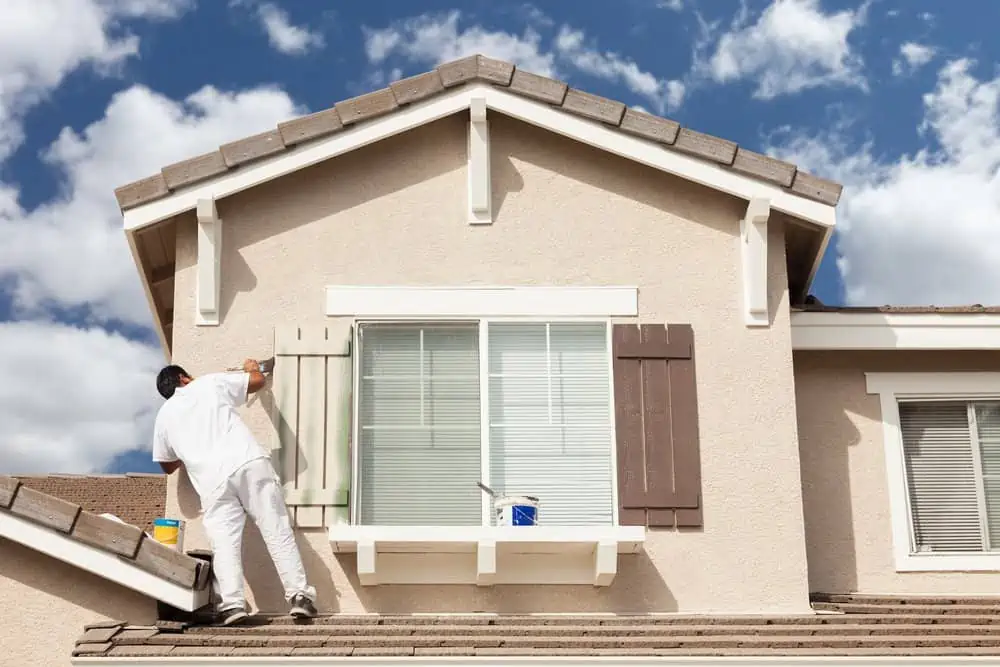
When estimating the costs of painting the exterior of the house, there are a lot of hidden costs that people fail to consider. So, how much is it to paint a two-story house? The answer is: it depends!
The size and type of the house will directly impact the end costs. Painting the interior of a small apartment isn’t the same as painting the exterior of a townhouse.
For instance, the cost of painting a townhouse ranges from $1,000 to $4,300 on average. The price fluctuates according to its square footage, siding material, and the number of stories.
Another factor that influences the price is the labor costs in your area. You can expect to pay between $1,900 and $6,900, with an average of $4,200 to paint a 2-story exterior.
Cost to Paint a House Exterior Calculator
Various factors influence the paint job’s cost. These include labor costs in your area, the quality and quantity of supplies needed, the equipment used, and the size of the property.
When painting a house’s exterior, the labor cost ranges from $0.80 to $2.80 per square foot, which accounts for 70 percent to 80 percent of the entire cost.
The hourly fees for a professional painter range from $20 to $50, plus the cost of materials, which can average $200 to $500 per day.
The cost of supplies and equipment varies based on how much you need for the size of your home. Here are some examples.
| Product | Average Cost per Product |
| Painter’s tape | $3 – $10 |
| Brushes | $2 – $15 |
| Paint roller kit | $10 – $25 |
| Ladder | $80 – $300 |
| Daily scaffolding rental | $50 – $100 |
Factors Affecting Exterior Painting Cost
Consider these points when figuring out a plan to paint the outside of your home. You could have a professional estimator come and give a basic price, but it’s easy to do it yourself.
Exterior Square Footage
One of the biggest factors influencing house painting costs is the exterior footage of the building. The cost per square foot varies between $1 and $4. Also, the paintable area is usually 200 sq ft less than the size of the house to allow for windows and doors.
| House Size | Average Cost | Paintable Area |
| 900 sq ft | $750 – $2,900 | 700 sq ft |
| 1,000 sq ft | $800 – $3,200 | 800 sq ft |
| 1,500 sq ft | $1,200 – $4,800 | 1,200 sq ft |
| 2,000 sq ft | $1,700 – $6,800 | 1,800 sq ft |
| 2,500 sq ft | $2,100 – $8,400 | 2,300 sq ft |
| 2,700 sq ft | $2,300 – $9,200 | 2,500 sq ft |
| 3,000 sq ft | $2,500 – $10,000 | 2,800 sq ft |
| 3,500 sq ft | $2,900 – $11,600 | 3,300 sq ft |
| 4,000 sq ft | $3,400 – $13,400 | 3,800 sq ft |
| 5,000 sq ft | $4,200 – $16,800 | 4,800 sq ft |
Type of Paint
When considering painting the exterior of your house, you usually pick one of two choices: oil-based paint or latex-based paint. Both usually cost between $20 to $70 per gallon.
Paints made by the most respectable and high-quality brands (like Sherwin-Williams, Dulux, or Benjamin Moore) fall on the higher end of the spectrum.
Paint Finish
There are different types of paint finish to choose from, so here are the costs you should expect.
| Type of Finish | Price Range (per gallon) |
| Flat/matte | $20 – $50 |
| Eggshell | $30 – $50 |
| Satin | $30 – $50 |
| Semi-gloss | $40 – $60 |
| High-gloss | $50 – $70 |
Quality of Paint and Primer
The price of a gallon of paint or primer can range anywhere from $15 to $80. The price of higher-quality paint, which contains more total solids and less solvent, is higher.
However, paints of a higher quality require fewer layers, have a longer lifespan, and are more durable overall. The material that your home’s siding is made of will determine the specific kind of paint that you need to use.
Type of Siding
The house siding will also influence the price of the paint job. Painting a house with stucco ranges from $1 to $5.50 per square foot, or an average of $1,700 to $9,400. The stucco must have more surface area and be painted multiple times if the texture is rough.
The cost of painting wood siding ranges from $1 to $4 per square foot or an average of $1,700 to $6,800. Since spot priming is all that is necessary, the cost to repaint wood siding is often on the lower price side.
Vinyl siding painting can cost anywhere from $1 to $3 per square foot, which translates to $1,700 to $5,100 for a 2,000 square-foot home. The appearance of weathered vinyl siding can be revitalized by painting.
Painting metal siding gives it a fresh new look and helps to disguise any minor flaws in its visual appeal. Before painting, performing the preparatory work necessary to eliminate the chalky powder residue is customarily necessary. Expect to pay between $1 and $4 per square foot to paint aluminum siding or an average of $1,500 to $7,000.
On average, painting concrete siding can cost anywhere from $1.50 to $3.50 per square foot, which is $1,700 to $6,000. The porous and absorbent nature of concrete or fiber-cement siding necessitates using a sealer, a primer, and many applications to achieve full coverage.
The old paint might need to be removed first for the new paint to adhere properly.
Additional Painting Costs
You’ll almost always come across extra costs when doing home reno projects.
Repairs
To prep the outside of a house for painting, the surface must first be scraped, sanded, caulked, and any holes or cracks must be repaired and filled.
Additionally, power washing and priming may be required. These jobs can cost anywhere from $25 to $50 per hour per painter, which translates to between $0.50 and $2.50 per square foot.
Painting the Eaves, Shutters, or Trim
Estimates for painting a house might not factor in the cost of painting the trim. And, in most cases, the trim must be painted by hand with a brush.
It costs between $1 and $4 per linear foot to paint the exterior trim. It costs between $2 and $6 per linear foot to paint the eaves, fascia, and soffits of a building.
Painting an outside pair of shutters ranges from $60 to $150. Depending on the size of the window, painting an external window can cost between $40 and $150. The price varies according to the window size, location, material, and shutter size.
Painting the Garage Door
The cost of painting a detached one-car garage door ranges from $350 to $1,900. It costs between $600 to $2,800 to paint a detached two-car garage door.
DIY vs. Hiring a Professional
To paint the outside of a 1,500-square-foot home on your own will cost between $400 and $1,800 for paint, equipment, and supplies. This includes renting a paint sprayer for up to five days during the project.
Hiring a professional will add considerable labor costs to this figure. But, if you do not have the necessary experience, materials, or abilities to do the task, it may be your best option. The risks that are associated with painting the exterior of a building are sufficient reasons to do so.
In these circumstances, seeking the advice of an expert can not only put to rest any lingering worries but can also assure that the task at hand will be carried out effectively.
How to Save Money When Painting a 2-Story House Exterior?
So, how much does it cost to paint a 2-story house exterior? Now that you know, you might be looking for some tips to save you money:
- Make all repairs yourself to cut down part of the labor cost.
- Don’t jump in and hire the first contractor you come across. Instead, get quotes from at least three contractors in your area.
- Make repairs in due time and don’t leave everything up until the next paint project.
- Buy paint when it’s on sale. When stored the right way, paint can last for years in its original can.
- Purchase paint in large five-gallon buckets.
- Buying cheap supplies doesn’t save you money. Instead, it leads to poorly-executed jobs that need redoing and end up costing you more.
FAQs

Does Painting a House Add Value?
Any home renovation project can add value to your home, and painting the exterior of the house can up its value by as much as two percent.

What is the Best Time to Paint House Exterior?
Early summer and autumn are the best times to paint the exterior of your house because of less precipitation and temperature variation. This will guarantee that the paint goes on smoothly and can dry and cure correctly.

How Much Does It Cost to Paint the Eaves of a House?
When thinking of a flat fee, painting the eaves can cost around $500 to $1,000 (or $2 to $6 per linear foot).

How Do You Paint a Two-Story House?
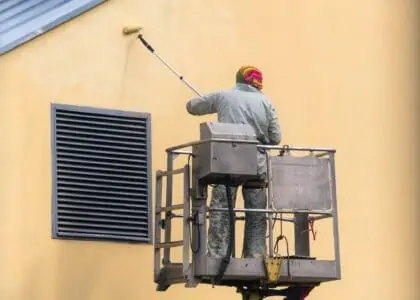
When painting high-up places, using a boom truck equipped with a lift bucket is the safest and most productive method. Putting up scaffolding is another helpful strategy, although it typically takes a lot more time.
Renting Equipment
Depending on where you live, you may have to rent a boom truck or hire someone to operate one.

How Much Exterior Paint Do I Need for a 2,500 Square Foot House?
One gallon of paint can typically cover 400 sq ft. So a house of this size usually needs around 12 to 14 gallons of paint for two coats of paint. The paint coverage differs between brands and paint types, so be sure to check the label on the can!
The Verdict
Hopefully, we’ve shed some light on the “how much does it cost to paint a 2-story house exterior” situation. Remember that no two houses have identical painting requirements, so the end costs will vary even from your next-door neighbor’s house to yours.