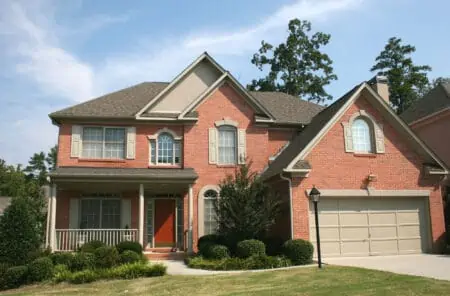
Paint your house if you want to increase curb appeal. It transforms the exterior of your home and creates an immediate impact. If you’re going to stand out from the crowd, you’ll need to know the cost to paint a brick house exterior.
So, how much does it cost to paint a brick house? Let’s explore further and ask whether painting your home’s exterior is a good idea.
Key Takeaways
- Average cost to paint a brick house is $7,000, with costs ranging from $3,500 to $10,500 depending on paint and size.
- Cost per square foot varies from $1.40 to $4.20, with location and number of paint coats affecting the price.
- Additional costs include labor, equipment, cleaning materials, and potential repairs.
- Consider factors like the size of the house, age and condition of bricks, and type of paint and primer when calculating costs.
- How Much Does It Cost to Paint a Brick House?
- Breakdown of Painting Costs
- Brick House Painted Before and After
- Factors Affecting the Cost to Paint a Brick House
- Average Cost to Limewash a Brick House
- Cost to Paint a Brick House Yourself
- Cost to Remove Painted Brick from a House
- Is Painting a Brick House a Good Idea?
- Best Color to Paint a Brick House
- How to Save Money When Painting Brick House
- FAQs
- The Trick With Brick
How Much Does It Cost to Paint a Brick House?
Several factors affect the overall cost of painting a brick house exterior. Where you live, the size of your home, and how many coats you need all play a role. Painting a 2,000 sq ft home will always be cheaper than painting a 3,000 sq ft property.
Average Cost
The average cost to paint a brick house is $7,000. This comprises a minimum of $3,500 and a maximum of $10,500 for a standard 2,500 sq ft home. Also, a two-story house is more expensive to paint than a single-story building.
Cost Per Square Foot
Employing a painting contractor in the city is more expensive than in rural areas. You can expect to pay $1.40 to $4.20 per square foot. Again, the number of paint coats needed and your Zip code affect the price.
Breakdown of Painting Costs
The actual cost of painting your home’s exterior involves more than just the paint. Several factors influence the price.
Labor
The cost of labor is the biggest price-increasing factor. Obviously, doing the work yourself is a lot cheaper, but you may have no choice if you don’t have the stomach for heights or the time.
Hiring a professional costs on average $2.80 per square foot. However, the prices range from $1.40 to $4.20, depending on where you live and the size of your home. That equates to $150 to $350 per hour.
Some painters charge by the day, quoting $200 to $500. The average 2,500 sq ft house will take a team of three workers between two and four days to complete (weather dependent).
Paint
You will need to factor in the cost of primer and paint. Primer costs between $7 and $15 per gallon, which gives about 250 sq ft of coverage. So, if you have a 2,000 sq ft house, that equates to between $56 and $120 on primer alone.
Topcoat is more expensive than a primer, costing $30 to $70 per gallon. You will get the same coverage as a primer, but the costs are far higher for the same 2,000 sq ft home. Expect to pay between $240 and $560, depending on the paint brand.
Keep In Mind
DIY-ers rarely save money on paint costs compared to the pros because decorators buy their paint in bulk at a discounted price.
Equipment
There are other costs to bear in mind when painting a house. You will need to hire a paint sprayer, which costs over $400 a week to rent. You could buy one like this Graco Magnum, which could save almost $200.
You may choose to use a ladder or rent scaffolding. Expect to pay $130 to $160 a week in rent. There are also sundry costs, like paint brushes, rollers, and paint trays, which should add another $100 to your final estimate.
Cleaning Materials
Before you apply a drop of primer and paint, you’ll need to clean the brickwork. You will need a pressure washer to achieve a clean facade, which will cost you $40 per day to rent. If you decide to buy one, set aside $100 to $400.
This Westinghouse Gas-Powered Pressure Washer is an excellent example of a powerful tool that will shift the most stubborn dirt.
Safety
Safety should be at the top of the list. You will need a painter’s mask ($20) and safety gloves ($10). You’ll also need safety goggles, which will set you back $20.
Brick House Painted Before and After
If you are trying to sell your property, the before image is easy to miss. You can see from the ranch-style home above that adding a lighter color makes the outside of the house stand out. The brick color makes the house blend into the environment.
But with a few simple colors, like cream and white, the building looks fresh and new. It has curb appeal and looks far more inviting as a living space.
Factors Affecting the Cost to Paint a Brick House
We’ve already discussed the costs of paint and materials, but what other factors affect the price?
Size of House
The size of your home is the single most significant factor in weighing up the costs of painting your home. Single-story houses are far cheaper to paint because they use less paint, and you don’t need scaffolding.
Two and three-story houses will cost you more for obvious reasons, as will a detached home because you have four sides to paint. Compare that to semi or terraced property with two or three facades, and you can see why it’s more expensive.
Age and Condition of the Bricks
The condition of your brickwork makes a huge difference to the costs. Crumbling walls need to be repaired, as does loose mortar between the bricks. If you paint straight onto an unprepared surface, the result will look patchy and amateurish.
Take the time to repair cracked bricks and remove loose mortar.
Take Note
The better the brick surface, the less paint, time, and prep work is needed.
Type of Paint and Primer
You can choose water or oil-based paints and primers for the exterior of your home. If your siding faces directly towards the sun, you might be better off using an oil-based product. Solvent-based paints cope better with the damaging effects of UV radiation.
Water-based paints, like this KILZ One-Part Epoxy Paint, are easier to clean up after use and better for the environment.
Choosing a primer like this Prime-All paint is crucial if you want to create a solid surface for the paint to adhere to. It also means you will use less topcoat because the color spreads better on a prepared surface.
Some people keep it simple and opt for a lime wash or white wash, like this Brick Transformations. It gives your home a traditional colonial-style look. Whitewash is a lot cheaper than paint because it doesn’t require primer.
You should expect to pay between $2,225 and $4,000 for a 2,500 sq ft home.
Permits
You will need a permit to paint the outside of your house. Some Zoning Departments will have a list of acceptable colors you can use, and you may get away without a permit if you paint your home in existing colors.
If you live in a historical home or an older building, you will fall foul of the planning laws if you paint your home in a non-traditional color.
Location
Believe it or not, your Zip code makes a difference to the price you pay. City living is more expensive than leading a rural life. Therefore, you are expected to pay more for services like house decorating.
Having said that, try getting a decorator to call on you in the middle of nowhere and see how you get on. The travel costs alone would increase the amount they charge you.
Repairs
Making repairs to your home’s exterior adds to your cost base. Removing mold, filling cracks, and generally upkeeping the brickwork is an added expense that must be factored in. Repointing brickwork (replacing the mortar) costs $8 to $30 per square foot or $20 to $50 per row.
After all, you want the exterior to look good for as long as possible, so why would you skip this stage to save money. You can expect to add another $50 to $100 to your final tally for sundries like mortar, filler, and mold treatments.
Use a product like this GP66 Green Miracle cleaner as a mortar wash. It kills mildew and removes unsightly stains from hundreds of surfaces.
Extras
There are always extras, some hidden and some known. The trick is to have a contingency plan and some movement in your budget.
You will need to paint door and window frames to match your home’s exterior color. The door alone will cost between $70 and $200.
The cost to paint a chimney (not including the fireplace) is $400 to $1,500. If your chimney needs urgent repairs before you paint it, you could spend $150 to $1,000, depending on the extent of the damage.
Average Cost to Limewash a Brick House
Limewash is primarily white, but you can add pigment to alter the color. It is a unique way of giving your home a vintage feel while allowing the bricks to breathe.
Limewashing a brick house costs between $1.50 and $5.00 per sq ft. That means you could spend between $1,500 and $6,600 on the average 2,500 sq ft home.
Whitewash is a similar product, giving a translucent finish that enhances the brickwork while allowing it to breathe. The average price to whitewash a house is $2,225 to $4,000 for a standard 2,500 sq ft home.
Limewash Pros & Cons
Pros
- Allows the bricks to breathe.
- Keeps the brick texture visible.
- Cheaper than paint.
- Gives an antique feel to your exterior walls.
Cons
- Takes a lot of work.
- Fades faster than paint.
- Needs several coats.
- Sometimes dries patchy.
Cost to Paint a Brick House Yourself
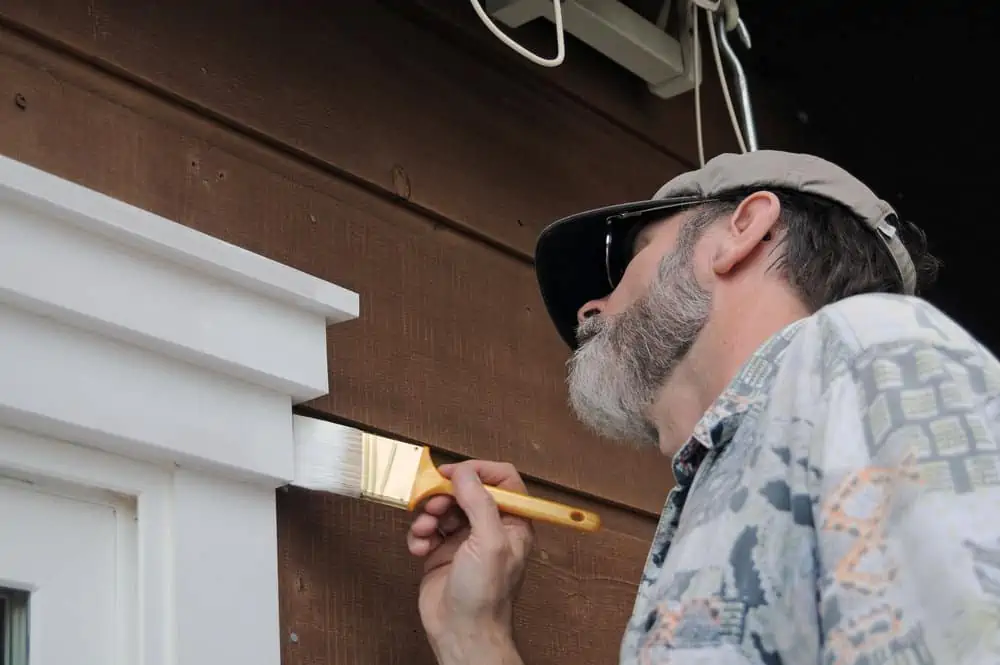
Other than the materials and tools listed above, there is no cost to paint a brick house yourself. Just keep safety in mind, and always use ladders and scaffolding in the correct manner. According to the Bureau of Labor, ladders were the most common cause of fatal falls between 2011 and 2016.
They calculated that 836 people lost their lives during this period!
If you intend to paint your exterior walls, only do it if you have the confidence and skill to tackle the job. Some people are scared of heights, and others don’t have the physical strength to complete the task.
If you fall into this category, consider hiring a pro and get the work done with guarantees. It will cost you more, but at least it will be completed correctly and swiftly.
Cost to Remove Painted Brick from a House
If you get a contractor to complete the task, they will cost it into their quote. If you want to save cash, consider removing the old paint yourself. Hiring a pressure washer will cost $40 per day, but you can buy them from hardware stores and online for $100 to $400.
This Sun Joe Pressure Washer is an excellent mid-priced model that uses a brushless motor for better performance and greater longevity.
Is Painting a Brick House a Good Idea?
There are pros and cons to painting a brick house. It cheers up an otherwise drab exterior and makes your home stand out. However, painting brickwork is expensive, and the minute it dries, it begins to fade in the sunlight.
Let’s take a look at the pros and cons in more detail:
Pros
- Makes it easier to keep exterior walls clean.
- Transforms your exterior walls.
- Increases curb appeal.
- Gives your home an individual style.
- Protects the brickwork and mortar.
- May cool the interior if painting in light colors.
Cons
- Tricky to remove.
- Fades in sunlight.
- May trap moisture and cause dampness or mold.
- Needs constant maintenance.
- May make dirt more visible.
Best Color to Paint a Brick House
While there are almost infinite color choices, which ones are the best colors for house exteriors? Let’s look at your options:
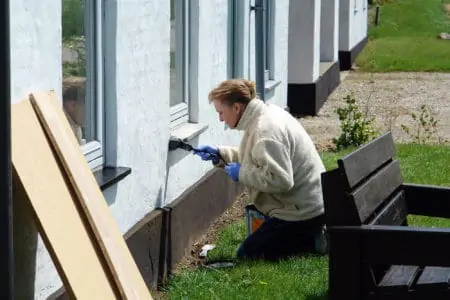
White
White is the classic color favored by millions of homeowners. It transforms dull brickwork into crisp, clean surfaces and reflects light. It also fits any color scheme.
Light Gray
Light gray is a stylish color for house exteriors. It adds a colonial flavor but also French chic to otherwise boring bricks. Accented with white window and door frames, you could have a home that’s the talk of the neighbors.
Light Blue
Light blue conjures images of sandy New England beaches lined with classic houses with weathered walls. While it may not sound attractive, light blue adds that sense of period homes so loved by our ancestors.
Cream
Like white, cream is a traditional color favored by our colonial forefathers. It is easy on the eye and yet mellows the starkness of pure white walls.
How to Save Money When Painting Brick House
We all like to save money, and when it comes to painting a brick house, there are a few tips you can use.
Use Whitewash
Whitewashing paint is more cost-effective than paint and adds a classic vintage style to your home’s exterior. You can even make your own whitewash by adding water to latex paint. It thins the formula and makes it go further.
Do the Prep Work Yourself
If you’ve hired a pro, why waste money getting them to do the donkey work. Why not hire a pressure washer and remove the old and flaking paint, repoint the mortar, and fill any gaps yourself.
It means your painter can get on with the work straight away and complete the task faster.
Use Primer
Your instincts may tell you that using primer increases your costs and takes longer. Not so! Primer helps seal the brickwork, giving your topcoat a better bonding surface. You get increased coverage, and you need fewer layers of the topcoat to achieve a patch-free exterior.
Sure, you must paint on the primer and wait for it to dry, but from here on, it’s plain sailing.
FAQs

How Long Does Painted Brick Last?
If done correctly, painted brick should last for three to 20 years. Different paints have varying longevities:
- Acrylic paints last three to five years on average.
- Lime and whitewash last five to seven years on average.
- Mineral-based masonry paint lasts 20 years plus on average.

Should You Prime Brick Before Painting?
You should prime before spray painting to give the paint a better adherence. It also means you get a deeper color that lasts longer before fading and peeling.

How Do You Maintain Painted Brick?
Use a low setting on your pressure washer to remove dirt and mold. Failing that, a hose and soapy water will do the trick. If you see flaking paint, touch it up because the longer you leave it, the harder the task becomes.

What is the Best Paint for Exterior Brick?
Mineral-based masonry paint is the best product for exterior brick walls. It bonds well, protects against UV damage, and lasts 20 years plus.
The Trick With Brick
Asking how much to paint a brick house is a valid question. If you want to revamp your home’s exterior to create immediate impact, cracking open the paint can is the best way to achieve it.
However, it is not for the faint-hearted and requires much effort. But get it right, and you’ll be admiring your new exterior every time you park on the driveway.