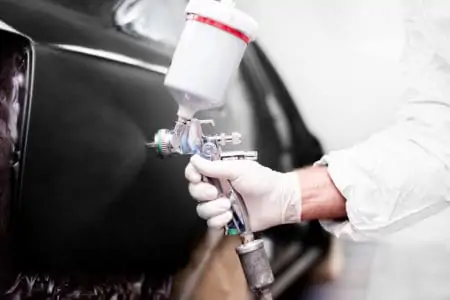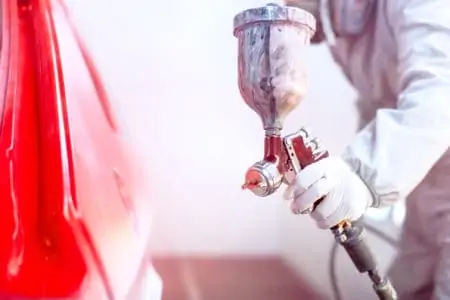
Have you managed to scratch, bump, or damage your vehicle in any way? Then you’re probably left wondering how much does it cost to paint a car. Depending on your budget, you can go with a cheap or DIY paint job, or a more premium one.
We’re going to tell you everything you need to know about repainting car prices. Plus, the pros and cons of different methods and factors that influence the end cost.
Key Takeaways
- Professional car paint job costs range from $1,000 to $4,500, depending on vehicle type.
- DIY car paint jobs average around $200 with proper materials and preparation.
- Factors affecting paint job cost include car size, color selection, repairs needed, and desired finish.
- Car wraps are an alternative to painting, offering customization without long-term commitment.
When Should You Repaint a Car?
When a car’s paintwork deteriorates, its richness, sheen, and color diminish as well. This is usually a sign that it requires a new paint job or a different color.
Causes
Discoloration is frequently caused by the car being exposed to natural elements such as sunlight and snow and poor paint protection.
After repainting, car owners should have their vehicles waxed at least four times a year to avoid fading.
Peeling is also a warning sign that it’s time for a new paint job. This is frequently an issue if the clear coat begins to peel away from the base coat of the vehicle. Again, this is often the result of weather elements exposure and an insufficient level of protection.
A paint job is also required if the vehicle exhibits noticeable bubbles or discoloration. This is another circumstance that requires you to wax the vehicle frequently after repainting.
How Much Does It Cost to Paint a Car?
Let’s break down the cost to paint a car by vehicle model. Prices can range due to size and area that requires coverage. As well, smaller details and design elements can drive up the cost.
| Vehicle Type | Price |
| Average Cost for SUV | $1,000 – $3,500 |
| Average Cost for Sedan | $1,000 – $4,500 |
| Average Cost for Truck | $500 – $4,000 |
Average Cost For an SUV
People typically spend $1,000 and $3,500 on what they described as thorough, full-body paint treatments of high quality. According to consumers who submitted their pricing, a showroom-quality paint job costs at least $2,500.
Average Cost for a Sedan
A normal paint job often involves removing rust and sanding the body prior to painting to get a beautiful appearance. Costs are typically between $1,000 and $4,500.
Average Cost for a Truck
You should budget between $500 and $1,000 for the majority of basic services. However, more skilled painting work can cost upwards of $4,000.
Factors Affecting Paint Job Cost
Before you jump the gun, consider these key points when painting your car.
Car Size
The size of the vehicle has a significant impact on the cost of painting. For instance, painting a compact car is less expensive than repainting a truck or an SUV, which are larger and have a greater surface area to cover with color.
Color Selection
The color you choose to paint your car will also play a large factor in determining the cost of the paint job. If you’re on a budget, white, black, and gray are all less expensive than unique hues from more upscale firms.
You can expect to pay a premium for rarer or less common colors that most automakers do not utilize, as they often have to create a custom paint for it. Paint jobs with custom paint require specially-ordered pigments and extra time. Hence the cost.
Repairs
If your automobile has severe scratches, painting it may be more expensive. Consider using a scratch remover product first.
If you have more severe damage, such as holes or rust, it’s best to get a professional to fix those before any paint job.
If you paint over rust without sanding it off first, the rust will eventually bleed through.
Finish
The final cost of a car painting service varies according to the sort of finish desired. A standard wax will cost between $100 and $200, but ceramic coatings or other specialist finishes may cost considerably more. We take a look at some of the most common finishes for your vehicle.
Solid Finish
This is the finish that most off-the-lot vehicles come with. Colors are usually limited to blue, red, black, and white.
In terms of cost, this is the most affordable as it’s the easiest. It’s simply a primer coat, the paint, and then a top coat lacquer.
Metallic Finish
While it sounds costly, a metallic finish is actually pretty affordable. It adds roughly an extra $500 to the overall paint job.
It consists of adding an aluminum powder to the regular paint. But a metallic finish on your car makes it look high-end, so it’s worth it!
Pearlescent Finish
Similar to a metallic finish in terms of how it works and how much extra it costs. The main difference is the overall appearance which looks “deeper” and more reflective. This is due to the use of ceramic dust added to the paint.
Matte Finish
The unfinished look. It’s gained popularity over the years. And while it might sound like a cheaper option, it’s actually one of the most expensive, often adding thousands to the price.
It uses a primer coat with a high epoxy added or a flattening agent. Once done, it gives the vehicle a smooth, dull sheen.
Take Note
This high-maintenance finish requires regular cleaning and polishing to hold that ‘look.’
Can I Paint a Car Myself?
Yes, you can. In the case of older automobiles, attempting a do-it-yourself paint job may be more cost-effective. The materials required can typically be purchased for less than $200 and require only a small-time effort on your part.
Some DIYers do it with spray paint. Note that you can’t just use regular spray paint for this. I recommend you grab some spray paint specially formulated for painting vehicles.
Quick Tip
If possible, use your garage to paint the car by yourself. A clean, well-ventilated room is good for minimizing the amount of dust that comes into touch with the paint.
Painting vs. Wrapping a Car
If your preferred color is not available from the factory, a car wrap may be an alternative. Perhaps you’ve gotten weary of the color scheme of your current rented vehicle and desire a change.
You can wrap it, drive it in the new color for a bit, and then remove it before the lease expires.
Is it Cheaper to Paint or Wrap a Car?
If you recently saw a car with a rather unusual print, the likelihood is that it was wrapped in vinyl rather than painted. Car wraps are a rapidly expanding trend in car personalization, with an estimated North American market size of $10.8 billion by 2025.
Wrapping enables you to alter the appearance of your car without committing to a long-term commitment.
Pros
- Is usually done in one day.
- Doesn’t require waxing.
- Highly customizable.
- New-car look without permanent change.
Cons
- Usually lasts a maximum of 10 years.
A low-cost paint job is typically less expensive than a car wrap. If you opt for a high-quality car paint job that requires numerous coats, it will cost approximately the same as a vehicle cover.
If you want to opt for color-shifting paint or a matte finish on your car, painting it will cost substantially more than wrapping it.
Pros
- Can last a lifetime.
- Can be done at home.
- Can save money as a DIY project.
Cons
- Can take up to two weeks.
- More difficult to customize.
Is Repainting a Car Worth It?
Refinishing your car is an investment in a variety of ways. Not only will you be treating yourself to a like-new vehicle, but you will also be increasing its resale or residual value.
Take Note
You should examine if the increased trade-in value outweighs the cost of repainting the vehicle for vehicles over 10ten years old
With a fresh coat of paint, an aging vehicle can be transformed. Simply ensure that the investment will be worthwhile. If the car is in otherwise poor condition, repainting it may turn out to be more expensive than the car’s market value.
Certain insurance policies include coverage for bodywork in the event that the car is damaged in an accident. Consult your insurance carrier to determine whether your policy covers the expense of repainting your car.
FAQs

Is It Legal to Change the Color of Your Car?
It’s not surprising that different countries have quite diverse regulations about notifying authorities when altering the color of your car. And even within the United States, the laws vary by state.
As a general guideline, it is prudent to notify the DMV if you alter the color of your vehicle, even if no state law requires it.

What is the Hardest Color to Paint on a Car?
Red is considered one of the most challenging colors to paint. But it’s also one that’s difficult to maintain, especially since marks and scratches are highly visible on a red surface.

Where Can I Get My Car Painted?
You can either paint your car at an authorized car shop such as Speedy Auto, Maaco, or your local shop. Or attempt it as a DIY project if you have an older car and you’re looking to save some money.