Are you doing bathroom renovations and need to replace the toilet? Or perhaps you’re putting in a guest bathroom and need to install a new toilet.
Whatever the situation, you’re probably wondering what the toilet replacement costs are. Some simple factors determine the price of a toilet, so let’s break them all down before you put in a new toilet.
Key Takeaways
- Toilet prices range from $90 to $1,500, with an average of $200 for a standard toilet.
- Plumbers typically charge between $275 and $480 to replace a toilet, with an average cost of $375.
- Types of toilets include dual-flush, low-flow, upflush, wall-mounted, composting, and smart toilets, with prices varying based on features and brand.
- Factors affecting toilet replacement costs include the brand, additional features, drain pipe installation, location, old toilet removal and disposal, and job complexity.
How Much Does a Toilet Cost?
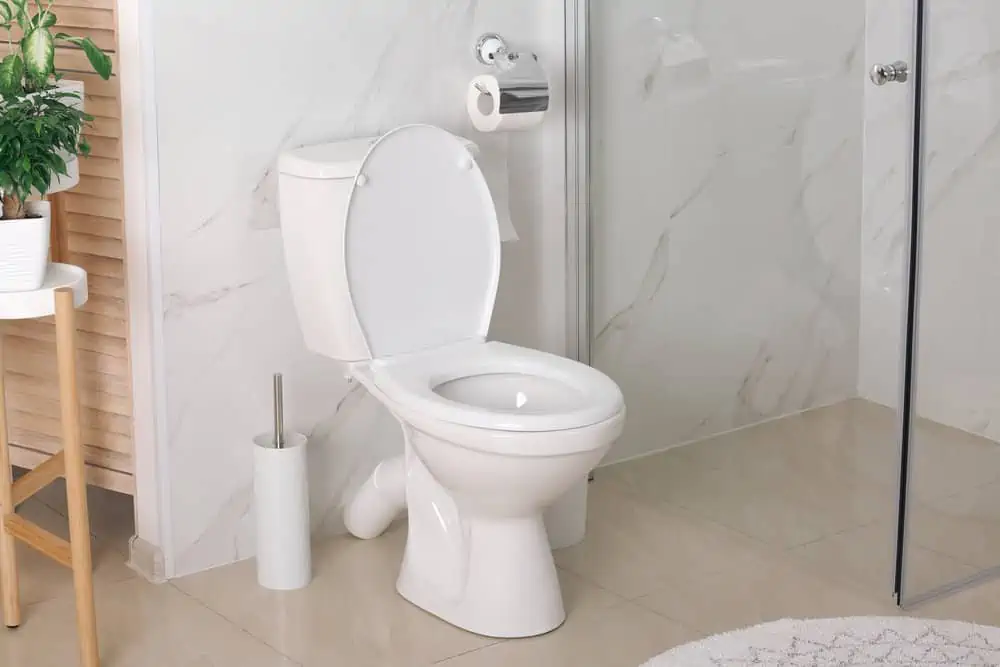
Toilet prices vary greatly depending on type and brand. But costs vary between $90 and $1,500, with an average of $200 for a standard toilet of good quality. When determining how much to install a toilet, the actual toilet’s cost is the first factor.
How Much Does a Plumber Charge to Replace a Toilet?
When considering the costs of installing a toilet, you might want to factor in how much a plumber charges to replace a toilet.
According to HomeAdvisor, a toilet installer typically charges between $275 and $480 to replace a toilet, the average being $375.
This price usually includes removing and disposing of the old toilet, installing the new one, and testing to ensure the toilet is functioning correctly.
Average Cost of Different Types of Toilets
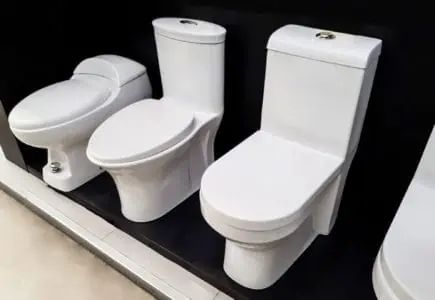
One of the first things determining your toilet replacement cost is the type of toilet you wish to buy.
Dual-Flush Toilet Cost
A dual flush toilet costs, on average, $350. These toilets are an excellent option to make your home more environmentally conscious. You can save money on your monthly water bill by using the different flush options for liquids and solids that these toilets provide.
Low-Flow Toilet Cost
A low-flow toilet will set you back about $510 on average. If you’re attempting to save water, low-flow toilets are an excellent choice. Each flush reduces your environmental footprint because they use less water than a regular toilet.
Upflush Toilet Cost
You’ll pay an average price of $950 for an upflush toilet. These high-priced toilets are popular in Europe and other constrained places because of their ability to squeeze into small spaces.
They have a unique way of disposing of waste through a small upwards pipe, which is why you can install them even on a finished floor.
These toilets are ideal for basement bathrooms. You won’t have to drill down through concrete floors or the foundation. Instead, route your plumbing upward.
Wall-Mounted Toilet Cost
If you want to purchase awall-mounted toilet, the average cost is around $675. These toilets have a minimalist design and usually lack a base. They are good space-saving units.
Composting Toilet Cost
The average cost of a composting toilet is $900. This particular toilet model doesn’t come with any plumbing requirements for those who are truly concerned about the environment.
Rather than flushing waste back into the sewers with water, these toilets dispose of it into a compost-like substance. Compost toilets are popular among tiny house dwellers and RVers since they don’t require access to running water.
Smart Toilet Cost
Smart toilets are the present and future of bathroom usage. You can get a good smart toilet for about $4,000, but the price can vary widely, from as little as $1,200 to as much as $13,000.
Touchless flushing, seat warming, and self-closing lids are just some of the innovative features that make them stand out from the others.
Self-cleaning features, such as UV disinfecting lights, and built-in bidets, are all options. Much like dual-flush and low-flow toilets, these can also save water.
Factors Affecting Toilet Replacement Costs
Consider the following when looking at the toilet installation costs.
Brand of Toilet
When you want to buy a new toilet, you can expect to pay between $90 to $1,500, or even more if you choose a smart toilet with a lot of extra features. The type of toilet and the brand you choose will also influence the price.
Different toilet categories have different price ranges. A wall-mounted toilet from one brand won’t have the same price as a similar model from another brand.
If you want a budget-oriented toilet, consider brands like Delta, with prices between $116 and $398, or American Standard ranging from $121 to $721.
You can get high-end toilets from brands like Kolher (with their most expensive models being $8,000) or TOTO USA ($13,000 for a luxury toilet).
Additional Toilet Features
Every extra feature of a toilet will cost you extra because it implies both a higher toilet cost and more labor on behalf of the plumber. Here are some prices you can expect for extra features:
- Hands-free flushing can cost between $299 and $585.
- Some toilets can operate via remote control, costing anything between $1,100 and $4,230.
- If you’d like a toilet with a seat warmer, expect to pay between $841 and $7,600.
- A self-cleaning toilet uses UV lights to break down dirt, costing you between $349 and $3,375.
Drain Pipe Installation
To install a toilet in a new bathroom, you have to factor in the cost of new plumbing. The farther away the new toilet is from your existing plumbing, the more it will cost you.
This is both in terms of materials needed and higher labor costs for additional hours (expect to pay about $85 per hour on labor costs alone). These costs are greater if you also choose to install a sink or a shower.
Location
Labor costs can vary greatly depending on where you live. For instance, replacing a toilet in LA only costs $320, but replacing one in Chicago can cost as much as $500.
But, aside from the area where you live, you also have to consider where in the house you’re placing your new toilet.
Installing a toilet on the second level is more expensive than doing it on the first.
Basement toilet installation is more expensive in houses that lack basement plumbing, and you can expect to pay around $1,695 in these instances.
Old Toilet Removal and Disposal
If you’re switching your old toilet with a new one, you have to consider the costs of removing and properly disposing of the old toilet. When buying a new toilet, it should cost you around $370 to install. This process includes draining and removing the old toilet.
Job Complexity
If your existing plumbing system requires any repairs, those are extra costs to consider. You might need to fix leaks or replace the toilet wax ring. At most, you will pay another $800 for these repairs.
Should any leaks around the toilet plumbing result in damage, it could cost between $200 and $500 to repair the floors. But these costs increase when dealing with mold or structural damage.
Emergency Installation
Naturally, it’s going to cost you extra if you call a plumber in the event of an emergency. When a plumber is called for last-minute emergencies after business hours, during weekends, or on holidays, the cost of labor increases.
The hourly charge for an emergency visit can rise to time-and-a-half or even treble. In addition to a higher rate per hour, some plumbers impose an emergency fee ranging from $100 to $350.
Can I Install a Toilet Myself?
It’s possible to install or change a toilet on your own if you have plumbing competence and the necessary materials, saving you money. Always be looking for potential problems, including mold, leaks, and outdated pipes that require replacement.
If you’ve previously installed a toilet bowl, you should own or have access to the proper tools and be aware of the potential hazards. Perfect toilet installation will ensure that the toilet does not leak or take too long to flush or seal properly.
Tips For Choosing a New Toilet
Before deciding how much money you invest in a new toilet, here are some tips on choosing the best model for your needs.
Asses the Plumbing
Likely, the plumbing in your current bathroom is already set up to meet your needs. You’ll be limited in your options by this and the size of your bathroom.
You should see a plumber, though, if you wish to alter the plumbing to accommodate the toilet of your dreams. There’s no limit to the type of toilet you can install in a bathroom if you’re starting from scratch.
Look for WaterSense Certifications
1.6 gallons of water or less is used per flush by toilets that have earned the WaterSense certification. The Department of Energy gives this certification in recognition of water-saving efforts.
These rules are particularly essential in California, where toilets must consume no more than 1.28 gallons of water per flush to comply with state regulations. Toilets that have received this EPA certification will assist you in reducing the amount of water consumed in your home.
Compare Flush Ratings
Because you’ll be using your toilet for at least a decade, it’s well worth your time to conduct some research before you buy it. Google “toilet testing” to find impartial test results that will tell you more about the flushing performance of different toilet models.
Measure the Rough-In
The rough-in is the exact spot where your toilet flange (hole in the floor) will be. Most toilets will state on the box the distance you need from the wall to the center of the hole. It’s usually a minimum of 12 inches, but each toilet is different.
However, from side to side, you need a clearance of at least 15 inches from the closest object (wall, tub, or vanity) to the center of the hole.
FAQs

When Should You Replace a Toilet?
If it’s older than 20 years or shows any of the following signs, it’s likely time for a replacement.
- The tank is cracked.
- The toilet is leaking, running water from the tank.
- It gets clogged very often.

How Long Do Toilets Usually Last?
It depends on the frequency of use. A toilet that’s subjected to heavy use lasts between 10 to 15 years.
When you care for it properly, it can last more than 20. If the toilet is not used daily (like a toilet in a guest bathroom), it can last even longer.

How Long Does It Take to Replace a Toilet?
If replacing a toilet requires removing the old one and installing a new one, the process shouldn’t last more than three hours. However, if there’s new plumbing to be installed or repairs to be made, it can take more than a day.

How to Get Rid of an Old Toilet
The best way to dispose of an old toilet is to contact your local solid waste disposal company. They will have the right details for your local bylaws and instructions on what to do.
Alternative
If there’s a program in your area, you can contact the local Habitat for Humanity ReStore. As long as the toilet is in working order, you can donate it.
Bottom Line
So, now you know that toilet replacement costs are very subjective. It’s one thing to replace a regular low-flow toilet with a new one and a completely different thing to install a smart toilet in a new bathroom.