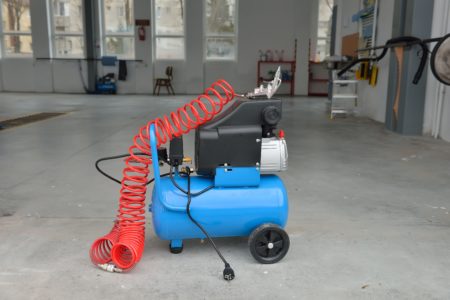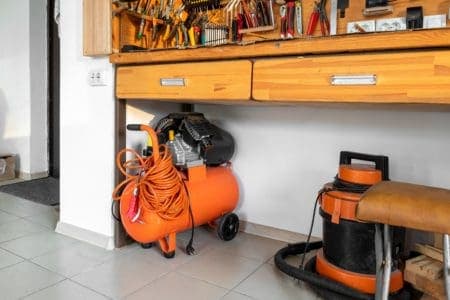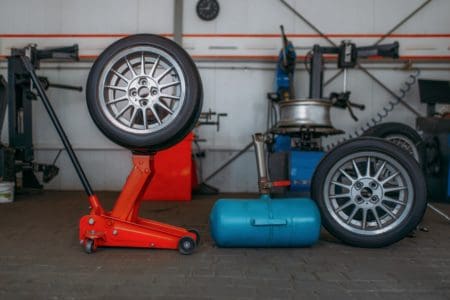
Sometimes you just need something with an extra punch. Removing rusted bolts, or fixing up a classic car, takes specialist tools. Air tools are the best for heavy-duty jobs, and to power them, you need an air compressor.
Let’s find the best air compressors for the home garage to make your choices a little easier.
- Uses synthetic lubricants
- 2,000 hour service life
- Maximum of 135 psi
- Weighs only 31 pounds
- Cold start motor
- Environmentally-friendly
- 6-gallon capacity
- High pressure 150 psi
- 13-piece accessory set
- Never-flat wheels
- 10-gallon tank
- Maximum 150 psi pressure
- Quiet 75 dB operation
- Oil-free pump
- Lightweight & stationary
- Cast iron twin cylinder pump
- 30-gallon capacity
- Oil-lubricated
- Patented design
- Massive 80-gallon capacity
- Thermal overload protection
Review Methodology: At Sensible Digs, we believe in delivering the most reliable and thorough analysis of the best home garage air compressors. Our assessments are based on careful research, hands-on experience, and objective data evaluation. We measure and rank each product based on various criteria such as performance, durability, ease of use, and noise level, to provide you with the most comprehensive review. We identify key decision factors, compare products, and provide first-hand evidence of our findings. Our goal is to help you understand what sets each product apart, making it easier for you to choose the best compressor for your needs. We consider every design choice, its effect on users, and offer a benchmark for comparison. Trust us to guide you towards the best home garage air compressor that meets your needs and exceeds your expectations.
The Best Home Garage Air Compressor of 2024
Here is our take on the best air compressors for the home garage.
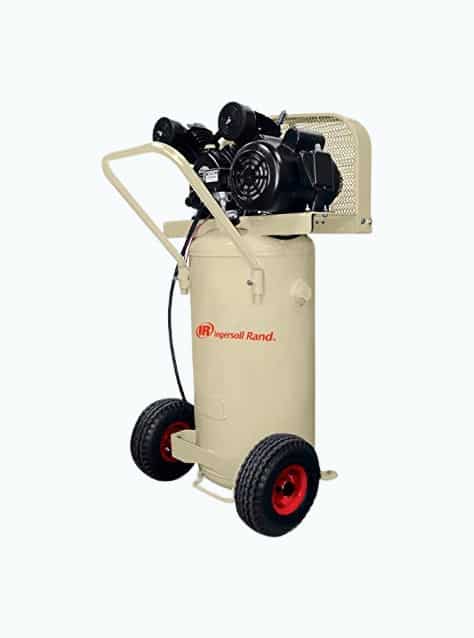
Ingersoll Rand 20-Gallon Single Stage Air Compressor
Best 20-Gallon Air Compressor for the Home Garage
It is fitting that we start the review with this Ingersoll Rand model because it is a trusted name in the world of air tools and compressors. It has a low decibel level at 80, which is quieter than some vacuum cleaners, and it has an ergonomic handle and semi-pneumatic tires to make it easy to cart around.
This 20-gallon air compressor uses a synthetic lubricant instead of oil-based alternatives. Synthetic oils are more efficient and give you a longer run time between changes. According to Ingersoll Rand, you get 2,000 hours, which is 4 times longer than traditional lubricants provide.
It has a 2 horsepower motor that delivers a maximum of 135 PSI, so it is ideal for commercial and home garage duties. It has a protective belt guard and a manual overload motor to ensure smooth running and a very long lifespan.
What We Like
Trusted Name
Ingersoll Rand makes excellent products that are loved by professionals and hobbyists alike across the globe. This model is undoubtedly popular given the high rating.
Super-Quiet Operation
Running a compressor for long periods can damage your ears, so it is recommended you use ear defenders to silence the noise. However, some are louder than others, and this compressor is among the quietest.
Maximum of 135 PSI
135 PSI is more than enough pressure to handle all your air tools. You can connect nail guns, air hammers, spray guns, and just about anything else to this compressor.
What We Don't Like
Very Expensive
Ingersoll Rand is not a budget brand. They provide high-quality products, and you have to dig deep to buy them. While this is not the most expensive air compressor to make the list, it is up there.
Product Specs
| Weight (pounds) | 200 |
| Dimensions (inches) | 22 x 23 x 43 |
| Max PSI | 115 |
| CFM | 135 |
| Capacity (gallons) | 20 |
| Oil/Oil-free | Synthetic lubricant |
| HP | 2 |
| Price | $$$$ |
| Warranty | 1-year |
Our Ratings
User Experience
Bostitch Pancake 6-Gallon Air Compressor
Best Cheap Air Compressor for the Home Garage
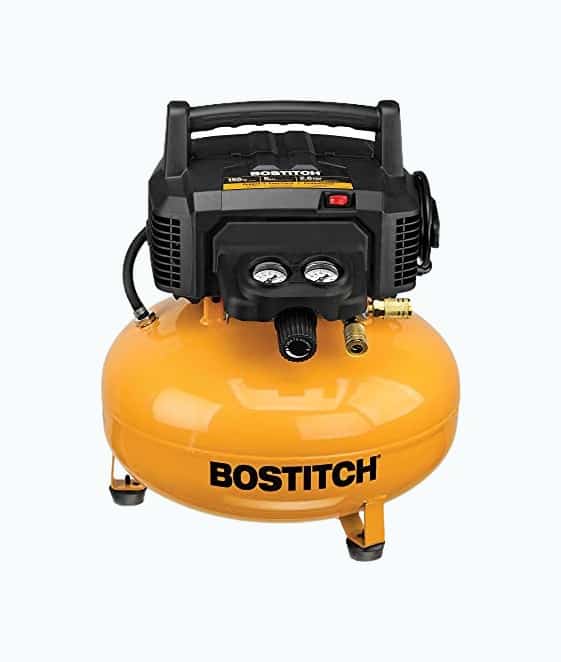
This is a pancake compressor, and it gets its name from the unique shape. It is a lightweight and oil-free version, with a 6-gallon tank, producing a maximum pressure of 150 PSI and airflow values that top out at 2.6 SCFM at 90 PSI.
The compressor runs at 78.5 decibels, so it is as noisy as a typical office environment, and it has a high-flow regulator and coupler to maximize your air tools. Bostitch’s high-efficiency motor ensures an easy start even on cold days.
As the cheapest compressor to appear, this is still a quality item.
What We Like
Weighs Only 31 Pounds
Pancake compressors are incredibly lightweight. This one weighs just 31 pounds, so while it lacks wheels, it is easy to carry in the trunk of your car.
Cold Start Motor
Motors can struggle on cold days, but this model is so efficient that it has an easy-start feature to get going no matter what the temperature. Tire shops are drafty places, so when it gets cold, the equipment suffers.
Environmentally Friendly
Oil-free pumps are better for the environment and your wallet. They create zero waste and reduce the running costs of operating the compressor. They also produce cleaner air, improving the lifespan of the compressor.
Great Price
It is a cheap compressor, which limits its capacity and power. But it scores big when it comes to price. It’s a great option if you are a beginner and are looking for a manageable compressor.
What We Don't Like
Limited Capacity
These compact compressors are great for inflating tires, but they have limited uses if you are looking for longer projects and heavy-duty tasks.
Product Specs
| Weight (pounds) | 31 |
| Dimensions (inches) | 17 x 17 x 19.25 |
| Max PSI | 150 |
| CFM | 2.6 at 90 PSI |
| Capacity (gallons) | 6 |
| Oil/Oil-free | Oil-free |
| HP | 0.9 |
| Price | $ |
| Warranty | 1-year limited |
Our Ratings
Personal Perspective
Craftsman Pancake Air Compressor
Best Portable Air Compressor for the Home Garage
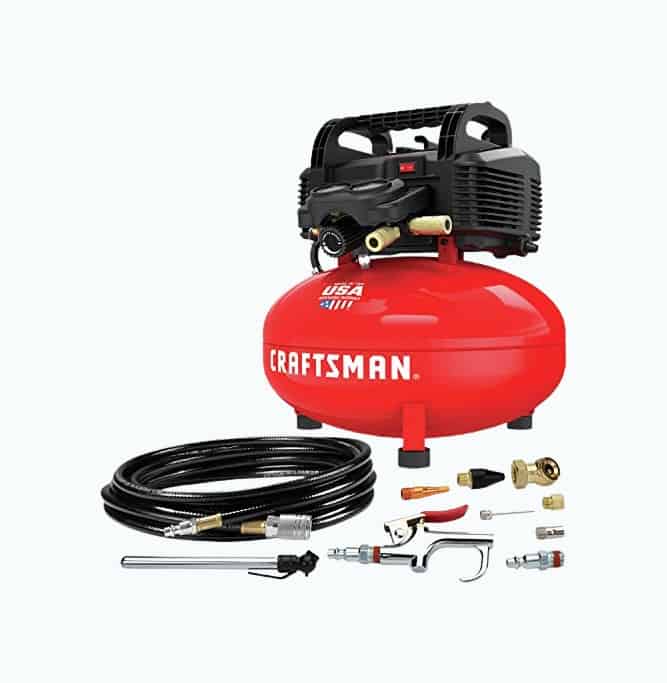
This Craftsman is also a pancake compressor, so it is compact and light and still has a 6-gallon capacity. It generates a SCFM of 2.6 at 90 PSI, so it should power your impact wrench and air hammer. SCFM rates are more generous than CFM, so bear this in mind.
It also generates a maximum PSI of 150, so it can inflate your car and truck tires effortlessly. What makes this the ideal home garage kit is the 13-piece accessory set. You can get to work straight out of the box. It comes with a PVC air compressor hose, a blowgun, a tire gauge, an OSHA-certified safety nozzle, and three inflator adaptors. So, getting the kids swimming pool ready will take no time at all.
The pump is oil-free, which increases the compressor’s running life and reduces the need for maintenance.
What We Like
Oil-Free Pump
If you want a maintenance-free compressor, choose one with an oil-free pump. It reduces the need for you to service it, and it is better for the environment because it requires no harmful lubricant.
High-Pressure Levels
Increasing the PSI value means you can inflate all manner of tires, from the SUV to your truck. Also, it is powerful enough to drive air tools, which increases your flexibility inside your garage.
13-Piece Accessory Set
Get started straight out of the box with the 13-piece accessory set. It comes with the hose, adaptors for different inflatables, and an OSHA-approved safety nozzle. You have everything you need at no extra cost.
Customer Satisfaction
This compressor is extremely popular, both in sales numbers and the satisfaction rating. It’s the reason why it tops our list. Customer feedback is one of the best ways to gauge the truth about a product.
What We Don't Like
Build Quality Issues
Some people have complained that parts were missing on delivery, and others were frustrated because the compressor stopped working after a few uses. Low cost can mean low quality.
Product Specs
| Weight (pounds) | 32.5 |
| Dimensions (inches) | 16.5 x 16.5 x 17.88 |
| Max PSI | 150 |
| CFM | 2.6 at 90 PSI |
| Capacity (gallons) | 6 |
| Oil/Oil-free | Oil-free |
| HP | 0.8 |
| Price | $$ |
| Warranty | 1-year |
Our Ratings
Community Feedback
WEN 2289 10-Gallon Vertical Air Compressor
Best Upright Air Compressor for the Home Garage
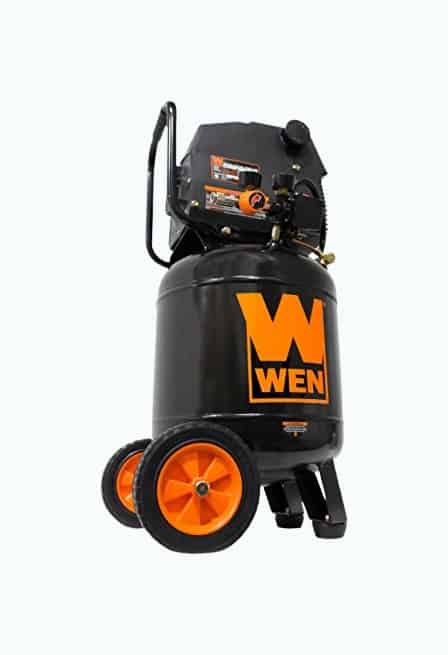
Portability is crucial if you want to increase your flexibility. The ability to bring the compressor closer to the action is much more convenient. This WEN model is our pick for the best upright compressor, thanks to its vertical design.
It stores away easily and takes up minimal room in the garage. And because it has never-flat wheels and a large handle, it is incredibly maneuverable too.
The 10-gallon tank glides along almost every surface, and when you reach your destination, two sturdy legs ensure that the compressor is balanced and secure. It has a maximum PSI of 150 and a CFM of 4.0 at 90 PSI.
It’s also an oil-free pump, so it provides cleaner, uncontaminated air, which preserves the operating lifespan of your compressor. It also features an easy-to-reach quick drain valve and a quick coupler, and two pressure gauges.
What We Like
Never-Flat Wheels
If you are looking for a portable air compressor, this WEN has never-flat wheels to make maneuverability a top priority. The handle also has a rubber grip, increasing the agility of the compressor.
Oil-Free
Oil-free pumps are the best types if you want to avoid the added expense of compressor oil and the damage disposing of old oil does to the environment. It also reduces the maintenance burden.
Maximum of 150 PSI
Most air tools operate at about 70 to 80 PSI, so having 150 at your disposal increases your options. It means you can tackle heavy-duty tasks as well as lighter duties.
What We Don't Like
Build Quality Issues
Some customers have complained that their compressor arrived with missing parts or it failed after a few uses. It seems that to save costs, WEN has used cheaper components during the construction process.
Product Specs
| Weight (pounds) | 71.5 |
| Dimensions (inches) | 16 x 17 x 33.5 |
| Max PSI | 150 |
| CFM | 4.0 at 90 PSI |
| Capacity (gallons) | 10 |
| Oil/Oil-free | Oil-free |
| HP | 1.5 |
| Price | $$$ |
| Warranty | 2-year |
Our Ratings
First-Hand Impression
California Air Tools CAT-60040CAD Ultra-Quiet 60-Gallon Air Compressor
Best 60-Gallon Air Compressor for the Home Garage
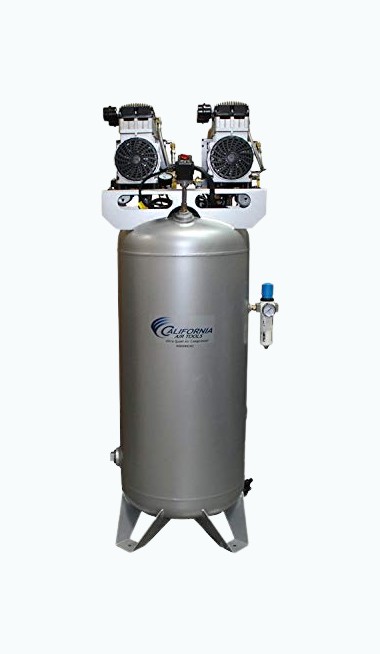
When you want a quiet 60-gallon compressor, there is only one model you should be looking for. This California Air Tools compressor is super-quiet at just 75 decibels. That’s the equivalent of office noise or a normal conversation.
The 60-gallon tank ensures you have enough compressed air to tackle the biggest jobs. However, thanks to its size, it is a stationary compressor, so make sure you situate it correctly because it will be difficult to move.
It has an oil-free pump, so it will last longer and needs minimal maintenance, which increases its convenience, and it has a CFM of 10.6 at 90 PSI. The motor produces 2 horsepower, so it isn’t as powerful as the Quincy model, but with a maximum PSI of 125, it should still tackle most tasks.
The main selling feature of this compressor is that it is 30 percent quieter than the competition.
What We Like
75 Decibels
75 decibels is nothing when you are dealing with a 60-gallon compressor. They are noisy devices, so to get one as quiet as this is rare. It means you won’t be going deaf any time soon.
Oil-Free Pump
If you hate maintenance, an oil-free pump could be the perfect choice. They last longer and are more convenient, and are better for the environment because you are not tossing away old oil.
Lightweight (For a 60-Gallon Compressor)
Okay, we get that a compressor weighing 213 pounds is not that light, but comparing it to other 60-gallon models, it is quite light. These aren’t portable compressors, but it does make it easier if you wanted to move them.
What We Don't Like
Lacks Power
The CFM is 10.6 at 90 PSI, which is light when comparing it to some 60-gallon models. It isn’t going to hinder you too much, but it might restrict the kind of work you can do.
2 Horsepower Motor
Some of this weaker power is a result of the 2 horsepower motor. If the engine is less potent, it will affect the PSI and the CFM.
Product Specs
| Weight (pounds) | 213 |
| Dimensions (inches) | 21 x 29 x 66 |
| Max PSI | 125 |
| CFM | 10.6 at 90 PSI |
| Capacity (gallons) | 60 |
| Oil/Oil-free | Oil-free |
| Horsepower | 2 |
| Price | $$$$$ |
| Warranty | 1-year limited |
Our Ratings
User Experience
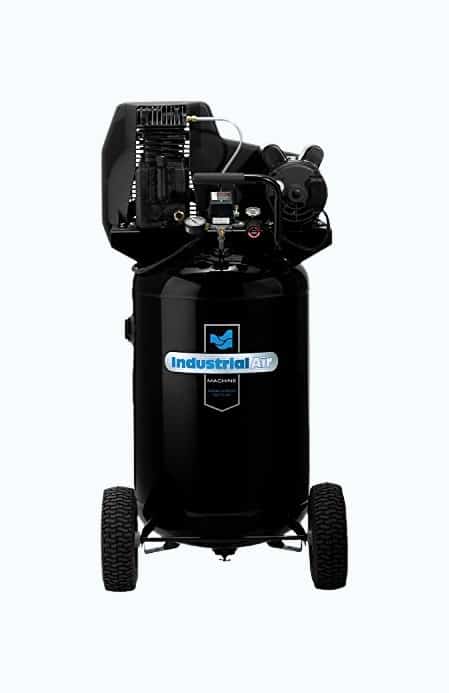
Industrial Air ILA1883054 30-Gallon Air Compressor
Best 30-Gallon Air Compressor for the Home Garage
This Industrial Air 30-gallon compressor has a cast iron twin cylinder pump that generates 155 PSI and 5.7 CFM at 90 PSI, so it has all the juice you need to power your air tools. It’s also an oil-lubricated compressor, which can handle heavy-duty projects that other compressors can’t.
The motor is wired for 120-volt systems, but it can convert to operate on 240-volt supplies, making it an ideal choice for home and commercial settings. It weighs 190 pounds, which is lightweight for such a bulky compressor, and the two large pneumatic wheels make it a breeze to maneuver.
What We Like
Healthy Airflow
Compressors are judged on their airflow and PSI. 5.7 CFM is a healthy figure, ensuring there is enough power to drive all of your air tools.
30-Gallon Capacity
If you want to scale up your projects, you need a compressor with the capacity to handle the task. Having a 30-gallon tank means you can keep working for longer, with fewer pauses as the tank needs to refill.
Oil-Lubricated
Oil-lubricated compressors are hard wearing and perfect for heavy-duty jobs. They produce more power than oil-free models, making them the compressor of choice for home users and professionals alike.
What We Don't Like
Big and Bulky
Think about the type of jobs you want to do, because this is a bulky compressor, and if you have limited space, it might not be the best choice. It also weighs 190 pounds, which is quite a weight.
Product Specs
| Weight (pounds) | 190 |
| Dimensions (inches) | 24.75 x 24.75 x 49.75 |
| Max PSI | 155 |
| CFM | 5.7 at 90 PSI |
| Capacity (gallons) | 30 |
| Oil/Oil-free | Oil |
| Horsepower | 1.9 |
| Price | $$$ |
| Warranty | 2-year |
Our Ratings
Personal Perspective
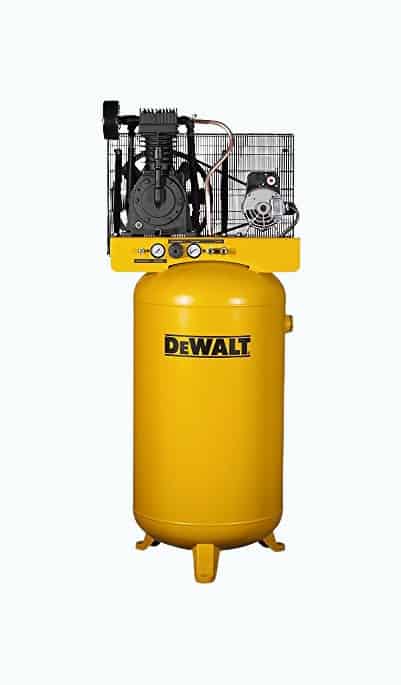
DeWALT DXCMV5048055 Two-Stage 80-Gallon Air Compressor
Best 80-Gallon Air Compressor for the Home Garage
We had to feature a DeWALT air compressor somewhere in the list. No review would be complete without one. This is a massive 80-gallon compressor, so very much a commercial-grade model.
It produces 17.9 SCFM at 100 PSI and has a pressure capacity of 175 PSI. That’s enough pressure and airflow to power all your air tools, including spray paint guns. And thanks to the 80-gallon tank, you should have ample supply to keep you going.
It has a 5 HP engine with thermal overload protection, so you are safe from voltage fluctuations, and the patented piston and pump design features cooling fins to keep the motor ventilated.
What We Like
Patented Design
The patented piston and pump design have fins that cool the motor to ensure it runs smoother and quieter. It also preserves the engine’s life, keeping your compressor in working order for years.
Massive Capacity
The tank holds 80-gallons, giving you the capacity to take on large-scale projects. It also means you have less time to waste between tank refills, keeping you focused on the task at hand.
Trusted Brand
DeWALT is one of the most recognizable brands in the world. Their products are loved across the globe for their quality and ruggedness. This air compressor is no different.
What We Don't Like
Incredibly Expensive
You will need to dig deep to buy this compressor. It costs over 16 times the price of the budget model, making it one of the most expensive compressors to feature.
Huge Size
The tank capacity is huge, at 80 gallons. Unless you have a large garage, this stationary compressor will take up a lot of room. Decide if you need something this large before you purchase.
Product Specs
| Weight (pounds) | 470 |
| Dimensions (inches) | 35 x 32 x 79 |
| Max PSI | 175 |
| SCFM | 17.9 at 100 PSI |
| Capacity (gallons) | 80 |
| Oil/Oil-free | Oil |
| Horsepower | 5 |
| Price | $$$$$ |
| Warranty | 2-year limited |
Our Ratings
Community Feedback
| Product | Best | Weight | Dimensions | Max PSI | CFM | Capacity | Oil/Oil-free | HP | Warranty |
|---|---|---|---|---|---|---|---|---|---|
| Ingersoll Rand Single Stage | 20-Gallon | 200 lbs | 22 x 23 x 43″ | 115 | 135 | 20 gal | Oil | 2 | 1-year |
| Bostitch Pancake Air Compressor | Cheap | 31 lbs | 17 x 17 x 19.25″ | 150 | 2.6 at 90 PSI | 6 gal | Oil-free | 1 | 1-year limited |
| Craftsman Pancake Air Compressor | Portable | 32.5 lbs | 16.5 x 16.5 x 17.88″ | 150 | 2.6 at 90 PSI | 6 gal | Oil-free | 0.8 | 1-year |
| WEN 2289 Vertical Air Compressor | Upright | 72 lbs | 16 x 17 x 33.5″ | 150 | 4.0 at 90 PSI | 10 gal | Oil-free | 2 | 2-year |
| California Air Tools Compressor | 60-Gallon | 213 lbs | 21 x 29 x 66″ | 125 | 10.6 at 90 PSI | 60 gal | Oil-free | 2 | 1-year limited |
| Industrial Air Air Compressor | 30-Gallon | 190 lbs | 24.75 x 24.75 x 49.75″ | 155 | 5.7 at 90 PSI | 30 gal | Oil | 1.9 | 2-year |
| DeWALT Two-Stage Air Compressor | 80-Gallon | 470 lbs | 35 x 32 x 79″ | 175 | 17.9 at 100 PSI | 80 gal | Oil | 5 | 2-year limited |
What Size Air Compressor Is Best for Home Use?
It depends what you want to use the air compressor for. If you are looking to power air tools, you will need a compressor with a minimum PSI (Pounds Per Square Inch) of 135 and a minimum CFM of about 5.
The CFM, or Cubic Feet Per Minute, is the measure of how healthy the airflow is. A higher CFM means rapid delivery of air and a better outcome for your pneumatic tools. A great way to determine the air compressor size is to audit your air tools to see which are compatible.
The good news is most small to medium air compressors possess the power, airflow, and capacity to meet 90 percent of home garage demands. Small air compressors have 2 to 6-gallon tanks, while medium-size compressors range from 8 to 20 gallons.
You can buy 60 and 80-gallon air compressors. The larger the tank, the heavier they are, making them better suited to tougher jobs and industrial-scale tasks.
Some air tools require a more powerful compressor, like an HVLP (High Volume, Low Pressure) gun, for example. This type of spray gun requires a higher air volume with a lower pressure, so 10 to 14 CFM at 40 PSI would be suitable.
How To Choose an Air Compressor for a Home Garage?
You need to consider what you want from the compressor before choosing one. Some have a higher CFM, while others have a greater horsepower. Do you want one with the maximum tank capacity, or are you looking for the best duty cycle?
Let’s take a look at some of the basics.
What’s the CFM?
As we’ve said, CFM is the measurement of the airflow strength of your compressor. Getting one with a weakened airflow will hamper your ability to deliver completed tasks in a timely fashion.
It will also reduce the types of air tools you can use. Most home garage projects are on the light to medium size, so you shouldn’t be stuck finding the right compressor.
Look for a CFM value between 2 and 5 for a small compressor and between 5 and 10 for a medium-size model. Some 60 and 80-gallon compressors have impressive CFM values of between 10 and 20.
What’s the PSI?
PSI is the measurement of the air pressure your compressor creates. It is the amount of pressure created by forcing air through a surface of 1-inch square. Small to medium compressors have a typical PSI of 135 to 150.
Be careful when shopping for the best PSI because there are different ways of reporting air pressure. You are ideally looking for the best “operating” PSI. This is the pressure level recorded while the compressor is actually working rather than the maximum PSI when idle.
It’s a bit like saying your car can do 150 MPH because the speed dial shows it when in reality, it’ll top out at 120.
PSI is what creates a faster airflow. If you are using an air impact wrench or air hammer, it might be better to focus on these two elements.

What’s the Horsepower?
Small compressors have less horsepower than larger, more industrial models. The horsepower of your particular model relates to how many horses it would take to do the same job.
The term is a throwback to the engineer, James Watts, who used draft horses to compete against steam engines as a way of measuring their output strength. One horse has about 14 horsepower, so James calculated the pulling power of the horses measured out over a peak period to get his comparison.
A higher horsepower means your motor will generate compressed air faster and should recharge your tank more rapidly. It is important when you need to keep working and don’t have the time to stand about while the tank refills.
Tank Capacity
Compressors with a larger tank capacity can store more pressurized air between refills. It increases your work rate because the tank needs to recharge far less than smaller models. It also produces a steadier stream of pressure, ensuring your air tool doesn’t suffer any dips in performance as the tank empties.

Oil or Oil-Free?
There are merits with both types of compressors. It might be better to use an oil-free compressor for home garage work. Why? Because oil-free pumps are better for lighter duties and require minimal maintenance.
Most home tasks are unlikely to tax your compressor, so it stands to reason that getting a compressor that requires the least attention is a great option. Also, oil-free air compressors are better for the environment due to the lack of oil wastage.
Oil-based compressors are better suited to more demanding tasks because they are more robust. They also create greater pressure and airflow, enabling you to take advantage of heavy-duty tools.
The only downside is the running costs of replacing the oil regularly and the damage it does to the environment when you dispose of the old oil.

How Loud?
Air compressors are loud. That’s a fact of life. However, just because they are loud, it doesn’t mean all compressors are the same. Most have a decibel level of about 80 or 90, although this figure increases or decreases with the compressor size.
Some models operate at about 60 decibels, so for home garage use, this would be a much better option if you wanted to stay on the good side of your neighbors.
Home Garage Air Compressor Maintenance
There are some basic housekeeping rules you should adopt when maintaining your air compressor. Some tasks need to be done daily, weekly, monthly, and yearly. Here’s a handy chart.
| Procedure | Daily | Weekly | Monthly | Yearly |
| Check pump oil level | ✓ | |||
| Check for oil leaks | ✓ | |||
| Drain water in tank | ✓ | |||
| Check for vibration | ✓ | |||
| Inspect for air leaks | ✓ | |||
| Inspect belts | ✓ | |||
| Clean/replace air filters | ✓ | |||
| Check safety relief valve | ✓ | |||
| Check belts | ✓ | |||
| Tighten bolts | ✓ | |||
| Check connector for leaks | ✓ | |||
| Service pump and motor | ✓ |
How Can I Make My Garage Air Compressor Quieter?
There are simple ways to make your air compressor quieter. Most involve vibration reduction measures, and where you stand your compressor makes a considerable difference to the noise it makes.
Placing it near a wall means the wall acts as a speaker, enhancing the volume. Also, the flooring type makes a big difference because sprung floors echo, while concrete amplifies the sound of the vibrations.
Place rubber pads under the feet to absorb excess volume. Make sure the nuts and bolts are tight before use. Keep the oil topped up, as the smoother the pump and motor runs, the quieter the compressor.
Finally, you could make a soundproof box and place the compressor inside. It isn’t too complicated to do and only requires some wood cut-offs and insulating foam. Remember to drill small vent holes, or the compressor will overheat.
Compress To Impress
Choosing the right air compressor for your home garage can be tricky, especially with all the makes and models available. It all boils down to the airflow, the pressure levels, and the tank capacity. Getting these three elements right ensures you get the compressor that best matches the tasks you want to undertake.
Whether you go large or small, your home garage is not complete without an air compressor.