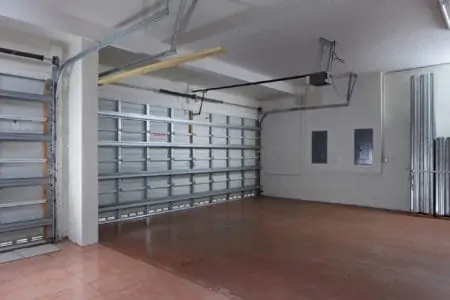
Garage floors are rarely top of our list when it comes to a fresh coat of paint, but you’d be surprised just how good it can look. The best garage floor paints seal the concrete, helping to preserve it against wear and tear.
We look at 7 garage floor coatings and rate them on coverage, type of paint, and value for money.
- Two coats last between 2 and 5 years
- Comes in 5-gallon containers
- It dries to a high gloss, making it easy to clean
- Non-slip provides added grip to your garage floor
- Superior adherence minimizes peeling, flaking, and fading
- Comes in 7 vibrant color variations
- A maximum of 500 square feet of coverage
- 1-part epoxy doesn’t require a hardener
- Resist chemicals, oil, and gasoline
- A maximum of 600 square feet of coverage
- Washing, weather, and acid-resistant
- Dries to the touch in 30 minutes
- A maximum of 500 square feet of coverage
- Dries 20 times harder than epoxy resin
- Dries to the touch in just 8 hours
- Get up to 7 years of protection
- Penetrates the concrete to protect from within
- It preserves the natural look of the concrete
- Paint and primer in one, so it goes onto bare concrete
- Coverage is 250 square feet, depending on surface porosity
- No hot tire pick-up and UV and weather-resistant
Review Methodology: At Sensible Digs, we meticulously assess and compare the best garage floor paints to provide you with an unbiased review. Our hands-on experience and comprehensive research allow us to analyze, test, and measure each product’s performance, ensuring you receive only the most accurate data and facts. We evaluate products from a user’s perspective, identifying key decision-making factors such as durability, coverage, drying time, and resistance to chemicals. Our professional team ranks each product based on these criteria, tracking their results to identify what sets each product apart. Our findings provide first-hand evidence, enabling you to make an informed decision based on our extensive evaluation and review.
The Best Garage Floor Paints of 2024
After researching hundreds of garage floor paints and epoxies, we have finally narrowed down the search to our favorite 7 products.
Armor 5-Gallon High Gloss Acrylic Concrete Paint
Best High Gloss Garage Floor Paint
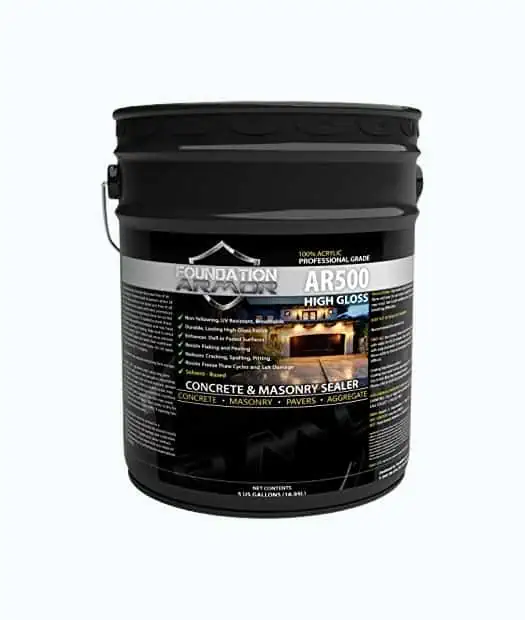
This Armor is100 percent acrylic professional-grade floor paint. It comes in huge 5-gallon containers, so no matter what size your garage is, you can get the job done. This is a solvent-based paint rather than water-based, which means it bonds better to the concrete surface.
It stands up to abrasion, UV rays, extreme weather temperatures, and hot tire pick-up. A two-coat application should last between 2 and 5 years before recoats, and you don’t need to fret about unsealed surfaces, as this product bonds to just about any concrete.
It doesn’t have any color, so it really makes your concrete stand out, even on old and worn surfaces. And thanks to the high gloss finish, it wipes clean and reflects the sunlight, which is ideal for dark garages.
What’s not so great is that solvent-based paints damage the environment, but you do get 175 square feet per gallon on porous surfaces and 225 square feet per gallon on non-porous surfaces.
Pros
- Two coats last between 2 and 5 years.
- Comes in 5-gallon containers.
- It dries to a high gloss, making it easy to clean.
- Protects against UV and hot tire pick-up.
Cons
- Damaging to the environment because of solvents.
- Only apply after 5 pm or when the sun starts to set.
Product Specs
| Quantity | 5-gallons |
| Coverage | 175 to 225 square feet per gallon |
| Drying time | 24 hours |
| Type | Solvent-based |
| Price | $$$$$ |
Our Ratings
User Experience
FIXALL Skid Grip Anti-Slip Paint
Best Non Slip Garage Floor Paint
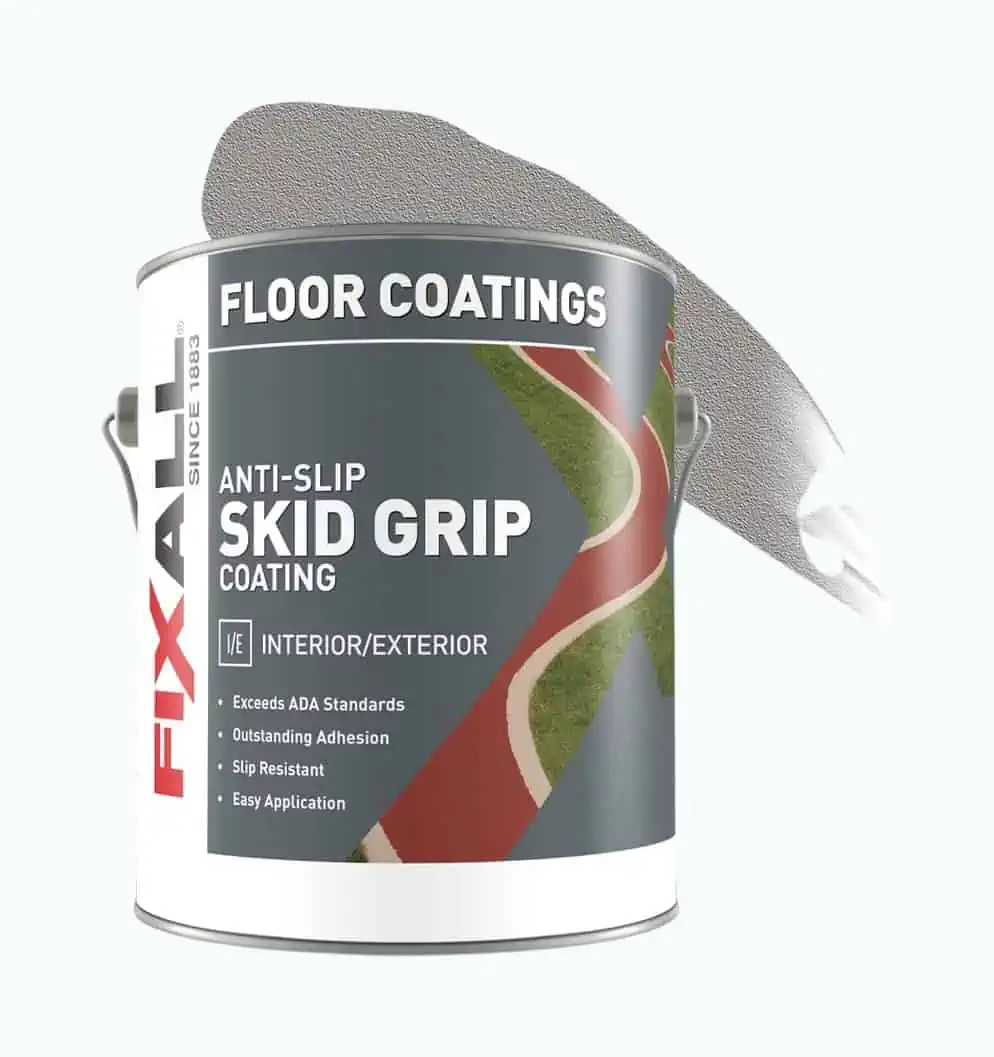
When your garage floor gets wet or freezes, you need paint that gives you extra grip. Sometimes, you just want the reassurance of knowing you have a non-slip base. This FIXALL Skid Grip paint has anti-slip qualities that mean you can paint it onto concrete, asphalt, and other surfaces.
It has an acrylic formula for superior adherence, and it reduces instances of peeling, flaking, and fading. It comes in 7 vibrant colors, and you also get between 60 and 80 square feet per gallon, depending on the porosity of the surface.
You can use it inside and out, so when you have done the garage floor, it will coat sidewalks, pathways, and play areas. The downside is it is hard to clean if you get oil or other chemicals on the floor, and when you sweep, the brush struggles to collect debris.
Plus, you only get a maximum of 80 square feet of coverage on smooth surfaces. That’s way down compared to other paints that feature.
Pros
- Non-slip provides added grip to your garage floor.
- Superior adherence minimizes peeling, flaking, and fading.
- Comes in 7 vibrant color variations.
- Adheres to concrete, asphalt, and other surfaces.
Cons
- Hard to keep clean due to the surface texture.
- You will struggle to sweep up debris.
- Reduced coverage of 80 square feet per gallon.
Product Specs
| Quantity | 1-gallon |
| Coverage | Maximum 80 square feet per gallon |
| Drying time | Not stated |
| Type | Water-based |
| Price | $$$ |
Our Ratings
Personal Perspective
KILZ 1-Part Epoxy Garage Floor Paint
Best Epoxy Garage Floor Paint
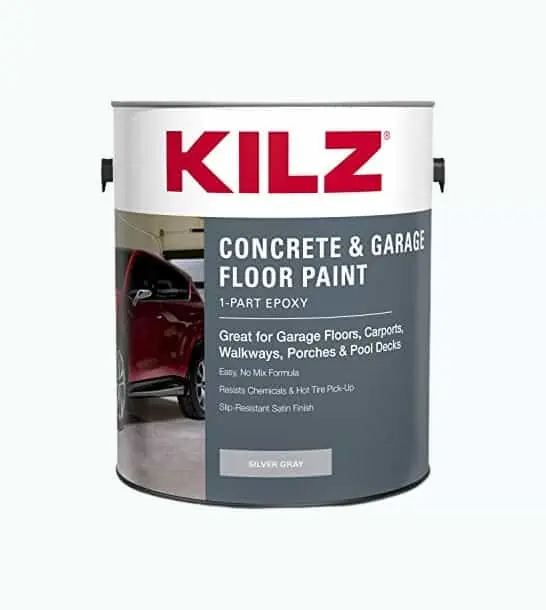
This KILZ paint dries to the touch in just 2 hours and is ready for the second coat in 4 hours. It dries to a satin finish, and it won’t scuff, fade, crack or blister and it can withstand the rigors of hot tires.
This is 1-part epoxy paint, meaning that it doesn’t require a hardener to set. It adheres to sealed and unsealed concrete, and it resists staining from chemicals, oil, and gasoline.
You get 300 to 400 square feet of coverage on rough surfaces and 400 to 500 square feet on smooth surfaces, so it easily has the best spread of any paints we have featured.
The preparation needed to get the best adherence for this paint is exhausting. First, you need to wash the floor, then treat it with an etching agent to increase the bonding of the paint. You then have to wait a couple of days while it dries before painting. It could take a week before you get both coats down.
Also, 1-gallon costs almost double the price of the FIXALL paint, and if you want the same quantity as the Armor, you can double the price, making it the most expensive paint so far.
Pros
- A maximum of 500 square feet of coverage.
- 1-part epoxy doesn’t require a hardener.
- Resist chemicals, oil, and gasoline.
- Dries to the touch in 2 hours and recoats in 4 hours.
Cons
- Very expensive when compared to other similar products.
- Complicated prep before applying the paint.
Product Specs
| Quantity | 1-gallon |
| Coverage | Maximum 500 square feet per gallon |
| Drying time | 4 hours between coats |
| Type | Water-based |
| Price | $$$$$ |
Our Ratings
Community Feedback
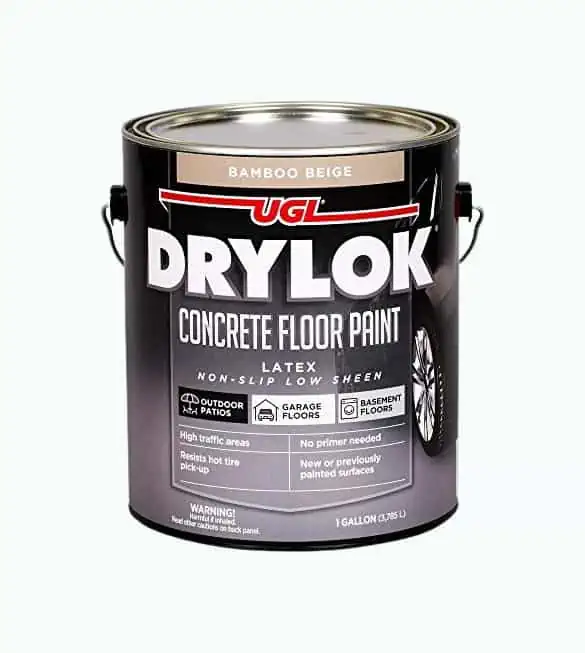
UGL 1-Gallon Bamboo Beige Drylok Latex Paint
Best Latex Garage Floor Paint
This latex-based paint has excellent bonding qualities, and thanks to the formula, it adheres to concrete floors, both indoors and out. It dries in 24 hours, but if you are using it for parking your car, you should leave 5 days for it to cure fully.
It’s resistant to washing, weather, acids, and alkalis, and you can paint it straight onto bare concrete because no primer is needed. It dries to the touch in 30 minutes, and you can apply the second coat within 4 hours.
The coverage of this paint is impressive. You get 500 to 600 square feet of spread on super-smooth surfaces, although that figure reduces depending on the porosity of the surface.
On the downside, some customers say that the paint still lifts under their car tires even when they wait a week to cure as per the instructions.
Pros
- A maximum of 600 square feet of coverage.
- Washing, weather, and acid-resistant.
- Dries to the touch in 30 minutes.
- Latex formula bonds to bare concrete.
Cons
- Some people report the paint lifting after a week.
Product Specs
| Quantity | 1-gallon |
| Coverage | Maximum 600 square feet per gallon |
| Drying time | 4 hours between coats |
| Type | Water-based |
| Price | $$$ |
Our Ratings
First-Hand Impression
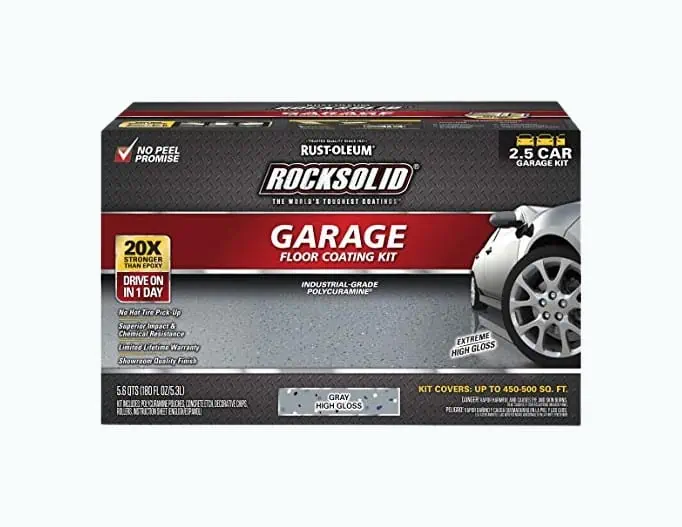
Rust-Oleum Polycuramine Garage Floor Paint
Best Garage Floor Paint Kit
This Rust-Oleum is a polycuramine garage floor coating, which means it’s an oil-based formula that bonds with garage floors and all interior concrete surfaces and dries 20 times stronger than epoxy.
You get 2 polycuramine burst pouches, 2 foam rollers, decorative chips, and concrete etch to get better adherence.
It’s self-leveling, and it has virtually no VOCs when it dries. Plus, it is odor-free, so you can use it in spaces with minimal ventilation. In addition, you get a limited lifetime warranty against defects, no hot tire pick-up, and a showroom quality finish.
Each kit covers up to 500 square feet of surface, depending on the porosity, and you get a high gloss finish that resists cracking, peeling, fading, and resistance to chemical spills. This coating dries to walk on in just 8 hours and is car usable within 24 hours.
However, you can only apply this coating when the temperature is between 40 and 90 degrees Fahrenheit, and it costs a lot of money for this 1.4-gallon kit compared to other floor paints.
Pros
- A maximum of 500 square feet of coverage.
- Dries 20 times harder than epoxy resin.
- Dries to the touch in just 8 hours.
- It comes with everything you need to coat your concrete.
Cons
- Must be applied between 40 and 90 degrees Fahrenheit.
- It costs a lot compared to other paints.
Product Specs
| Quantity | 1.4-gallon |
| Coverage | Maximum 500 square feet per gallon |
| Drying time | 8 hours between coats |
| Type | Solvent-based |
| Price | $$$$$ |
Our Ratings
User Experience
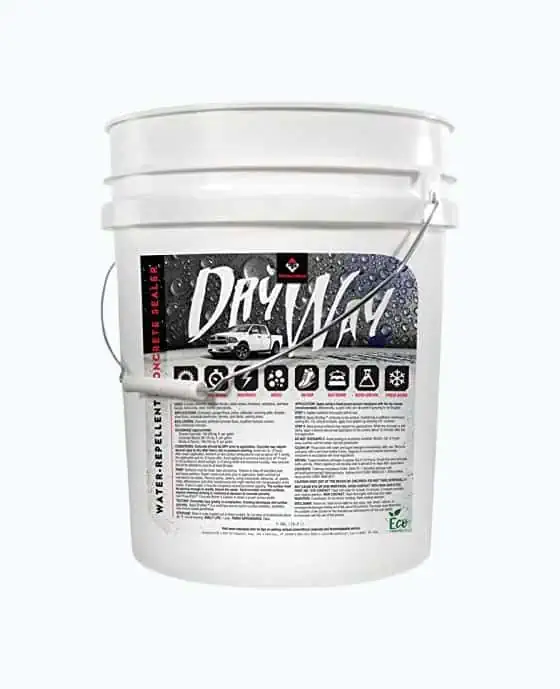
DryWay Water-Repellent Concrete Sealer
Best Concrete Sealer
Strictly speaking, this DryWay sealer and repellent is a concrete sealer, but it still coats like paint, and it protects your garage floor from water damage because the silane formula soaks into the concrete.
If you care about preserving the look and feel of your concrete garage floor, this sealer is the ideal product. It dries to a clear, matte finish with a non-slip adherence to help when the floor is wet.
You get up to 7 years of protection against water damage, salt, chemicals, and de-icing solutions. And when you are done with the garage floor, you can use it on any interior and exterior concrete around the home and garden.
It covers up to 200 square feet per gallon and dries within 3 to 6 hours, although you should wait 4 days for the seal to form fully for vehicle use and the maximum water coverage.
The downside is this formula only enhances the concrete you have, so if you want to freshen up faded surfaces, you will need colored paint rather than this sealer.
The other point is that you are spending a lot of money on a 5-gallon tub, so be sure you need that much before starting the project.
Pros
- Get up to 7 years of protection.
- Penetrates the concrete to protect from within.
- It preserves the natural look of the concrete.
- Dries to the touch in 3 to 6 hours.
- Paint it, roller it, or spray.
Cons
- Not great for faded or worn concrete surfaces.
Product Specs
| Quantity | 5-gallon |
| Coverage | Maximum 200 square feet per gallon |
| Drying time | 3 to 6 hours between coats |
| Type | Water-based |
| Price | $$$$ |
Our Ratings
Personal Perspective
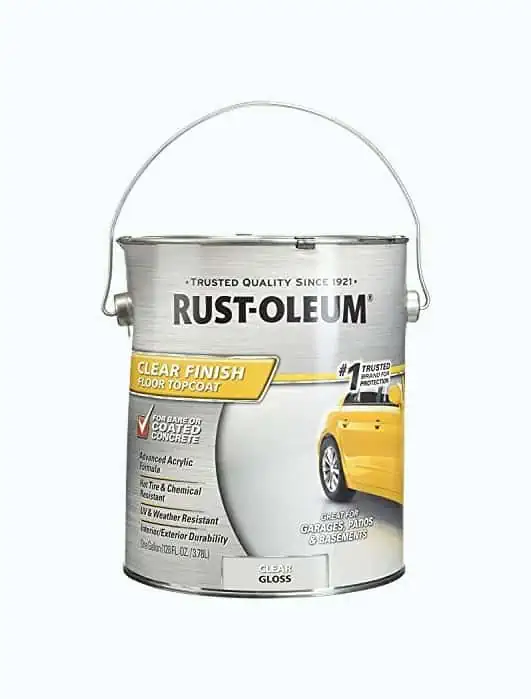
Rust-Oleum Clear Gloss Coating
Best Self-Priming Garage Floor Paint
Why spend hours priming bare or unsealed concrete to get a better bond with the concrete paint? This Rust-Oleum is the perfect answer because it is a primer and paint in one. You can layer it straight onto untreated concrete, and it seals the garage floor.
It has an advanced acrylic formula that is chemically resistant, and it dries to a high gloss finish, so it should be a breeze to keep clean and wipe stains away.
You get 250 square feet of spread from a 1-gallon can, and Rust-Oleum recommends that you paint at least 2 coats to get the best results. It’s UV and weather-resistant, as well as coping with hot tire pick-up.
This paint coats basements and patios, so it works indoors and out. The only fly in the ointment is that the can says gloss, but many customers have stated that it is more of a satin finish.
You also need to wait a long time between coats, and the curing process could take up to a week.
Pros
- Paint and primer in one, so it goes onto bare concrete.
- Coverage is 250 square feet, depending on surface porosity.
- No hot tire pick-up and UV and weather-resistant.
- It has an advanced acrylic formula that’s chemically resistant.
Cons
- The finish is more like satin, according to lots of customers.
- Long drying process and curing time.
Product Specs
| Quantity | 1-gallon |
| Coverage | Maximum 250 square feet per gallon |
| Drying time | Up to 1 week to cure |
| Type | Oil-based |
| Price | $$$ |
Our Ratings
Community Feedback
| Product | Best | Quantity | Coverage | Drying time | Type | Price |
|---|---|---|---|---|---|---|
| Armor 5-Gallon High Gloss Acrylic Concrete Paint | Best High Gloss | 5-gallon | 175 – 225 square feet per gallon | 24 hours | Solvent-based | $$$$$ |
| FIXALL Skid Grip Anti-Slip Paint | Best Non Slip | 1-gallon | Maximum 80 square feet per gallon | Not stated | Water-based | $$$ |
| KILZ 1-Part Epoxy Garage Floor Paint | Best Epoxy | 1-gallon | Maximum 500 square feet per gallon | 4 hours between coats | Water-based | $$$$$ |
| UGL 1-Gallon Bamboo Beige Drylok Latex Paint | Best Latex | 1-gallon | Maximum 600 square feet per gallon | 4 hours between coats | Water-based | $$$ |
| Rust-Oleum Polycuramine Garage Floor Paint | Best Paint Kit | 1.4-gallon | Maximum 500 square feet per gallon | 8 hours between coats | Solvent-based | $$$$$ |
| DryWay Water-Repellent Concrete Sealer | Best Concrete Sealer | 5-gallon | Maximum 200 square feet per gallon | 3 – 6 hours between coats | Water-based | $$$$ |
| Rust-Oleum Clear Gloss Coating | Best Self-Priming | 1-gallon | Maximum 250 square feet per gallon | Up – 1 week to cure | Oil-based | $$$ |
Types of Garage Floor Paint
Whatever garage floor finish you are aiming for, several types of paint help you achieve the best results. But which is the best variety and what are the differences?
Latex
Latex paint has many similar qualities to acrylic paint. Both are water-based, but latex paint comes in much larger quantities. So, if you are undertaking a large project, latex is the paint to get.
Latex paint contains an acrylic substance and gets its name because originally, it had a rubber base.
Acrylic
Acrylic paint can be oil or water-based, although it is more typically water-based. Acrylic seals the concrete, protecting it from oil spills, water damage, and staining. Water-based paints are easier to apply than epoxy because they have a thinner consistency, but you need to use several coats to get that pristine look.
Acrylic is not as hard-wearing as epoxy, so you will need to recoat the garage floor more frequently.
Epoxy
Epoxy resin is the king of floor coverings for your garage when it comes to resilience and strength. Once it dries, it sets like concrete, so nothing gets through. You can color-tint it to match your color scheme, and it comes in a range of finishes, from high gloss to matte.
The downside with epoxy is that it is generally oil-based, damaging the environment, and it doesn’t allow the concrete to breathe. So if you have even the slightest amount of moisture, it locks it in, which spells disaster for the concrete because of damp issues.
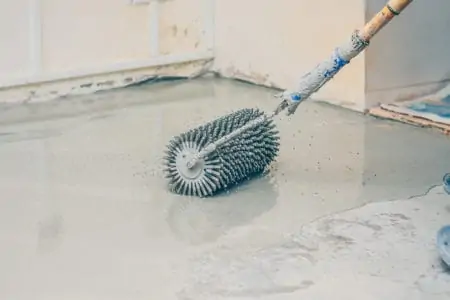
How To Choose the Best Garage Floor Paint
Getting to the core of what makes the best garage floor paint is tricky. With so many types and varieties, knowing what you want and what you can get are different things. However, here are some pointers you should bear in mind.

Ease of Application
How the paint applies is crucial to saving time and effort. Most water-based paints apply with either a brush, roller, or sprayer. Oil-based paints are slightly thicker, so they often have to be thinned if you use a sprayer. However, the thinner the formula, the more layers you will need.
Epoxy paints are suitable for spreading on rather than spraying and rolling, so be aware that this could affect your work rate. Plus, the drying time for epoxy is far greater than concrete paints, so you need to bear that in mind if you are working to a time constraint.

How You Use Your Garage
If your garage gets a lot of heavy use, like car maintenance and repairs, you will need paint that resists oil, staining, and tire damage. Most products are resistant to a degree, but epoxy is your best option if you want the highest protection.
It seals the concrete and forms a barrier on the surface that is easy to clean and protects the material below. So if your garage gets the lightest of uses, you might be better going for a concrete sealer.

What’s the Coverage?
Most garage floor paints cover between 250 and 50o square feet depending on the surface porosity. Remember that most paints require two coats, so if one can cover 500 square feet, you might need two cans instead of one if you have a large garage.
Because of their thickness, epoxies have the least spread, covering on average less than 200 square feet. However, you generally only need one coat, so you might find you get the same coverage if you factor in that paint typically needs two coats.

Is It Easy To Keep Clean?
When you perform some car repairs and oil spills on the floor, you want your floor covering to clean up as new with ease. Luckily, most garage floor paints and epoxies do just that, thanks to their ultra-smooth surfaces and water-resistant qualities.
FAQs

Do I Need To Prime My Garage Floor Before Painting?
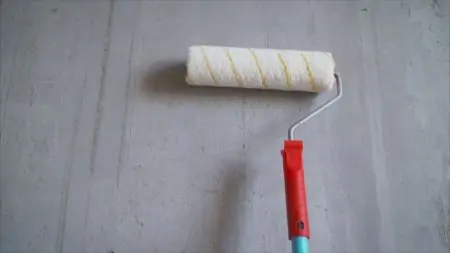
You do need to prime your garage floor to help the paint bond better. Concrete has a porosity value, so without priming, you risk painting onto an unsealed surface, and the paint starts to soak into the concrete.
However, some paints are self-priming, meaning the formula is designed to coat bare concrete.

Can I Prime a Garage Concrete Floor With PVA?
You can seal your garage floor using PVA glue. It forms a hard barrier when it dries, which helps you keep dust at bay. However, once the PVA is down and set, use oil-based paint.

How Long Does an Epoxy Garage Floor Paint Last?
It depends on the level of traffic the floor gets. With the right care program, it could last 30 years, but most epoxy paints last between 5 and 10 years.

Can I Paint Over Old Garage Floor Paint?
You can as long as you prepare the surface correctly, with all the loose paint removed. You should also use the same type of paint. Water-based paints don’t adhere to oil-based surfaces, and the same is true of oil-based paints on water-based surfaces.