There are countless water filters available today, designed to ensure that your home always has access to clean water. These large filters are helpful when you’re at home, but they are less useful when you’re on vacation or at the gym.
If you don’t have access to a water filter, it can be tempting to buy bottled water, which produces a lot of plastic waste and is expensive if done frequently. However, it is also possible to buy filtered bottles, which will remove contaminants from whichever water you fill them with.
These reusable bottles are the ideal solution for an active lifestyle, but there are many to choose from and they are not all created equal. To help you make the right purchase, we have reviewed seven of the current best filtered water bottles, chosen for their filtration type, size, and which contaminants they will remove.
- Multi-stage filter
- Organic filter
- Filter can process 75 gallons
- Durable material
- Tight seal
- User-friendly lid
- Five color options
- 36-ounce capacity
- Reduces chlorine taste
- Thorough two-stage filter
- Removes over 99% of bacteria
- Filters should last two months
- Four-stage filtration
- Wristband for secure grip
- Filters about 400 gallons
- Four-stage filter
- FDA-certified
- Can filter almost 400 gallons
- Double-wall insulated body
- Dishwasher-safe
- Effectively removes chlorine taste and smell
Review Methodology: At Sensible Digs, we believe in the power of in-depth analysis and hands-on experience. Our assessment of the best filtered water bottles is based on a rigorous evaluation of key decision-making factors such as filtration efficiency, material quality, design, and user-friendliness. Our team of professionals uses a standard set of criteria to measure and rank each product’s performance, comparing them to industry benchmarks. We gather and present factual data from our tests, sharing first-hand findings to help you make an informed choice. Our reviews go beyond surface-level details, delving into the design choices that set each product apart and their impact on user experience. By focusing on these crucial aspects, we ensure our readers get an accurate, comprehensive view of the best filtered water bottles in the market. Trust us to guide you to a cleaner, healthier hydration experience.
How Do Filtered Water Bottles Work?
Despite their relatively small sizes, filtered water bottles often contain very complex filtration systems. These systems can vary significantly from bottle to bottle. Some water bottles filter the water as they are filled, while others filter it as you drink from them. Both methods can be effective.
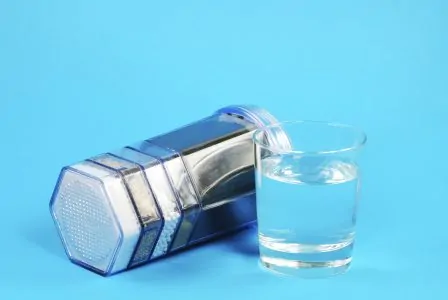
Filtered water bottles will remove contaminants and other impurities from your water. This means they can also remove odors, leaving you with cleaner, fresher water. Which contaminants a bottle removes will depend on the type of filter used.
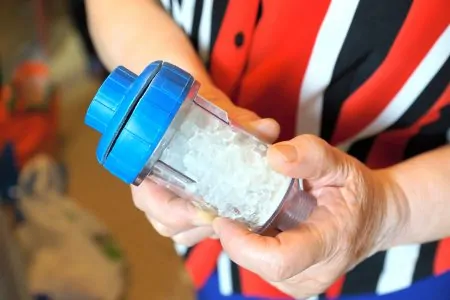
The most common type is an activated carbon filter, which typically uses three stages of filtration. Let’s take a closer look.

Stage #1: Activated Carbon
Activated carbon filters are currently the most popular type. They are very effective and can remove particles as small as 0.5 microns.
They can filter out a wide range of contaminants, including sediment, chlorine, volatile organic compounds (VOCs), and odors. When using an activated carbon-filtered water bottle, you may notice tiny black specks at the bottom of the bottle. These specks are harmless as they are only escaped carbon.
On the other hand, activated carbon is less effective at removing minerals, salts, and other dissolved organic compounds. They also need replacing more frequently than other types. It is important to replace the water filter when required, or they might fail to remove contaminants or even leak them back into the water.
The carbon in the filter has been treated with oxygen. This is achieved via physical modification and degradation in a furnace and makes the carbon highly porous (1). The activated carbon needs to be permeable to facilitate the next step in the process: adsorption.

Stage #2: Adsorption
Adsorption is a simple process where pollutant molecules are trapped inside the pores of the carbon substrate. In a filtered water bottle, the filter removes contaminants by binding them. Activated carbon is very effective as it usually has four binding sites (2).
Contaminants in the water adsorb to the activated carbon filter because they’re attracted to the carbon atoms. This is why it is so important to replace the filter when needed. When the carbon becomes fully saturated with pollutants, it will be unable to trap any more in its pores.

Stage #3: Filtration
Activated carbon removes pollutants based on their chemical attraction to carbon. Neutral or nonpolar (hydrophobic) contaminants are organic and have a high molecular weight. This means they are easily removed by the filter.
However, the nature of carbon filters means they will be unable to remove minerals and salts (3).
Pros & Cons of Filtered Water Bottles
Filtered water bottles have many benefits that make them a popular choice for both economical and environmental reasons.
Pros

Eco-Friendly
The plastic packaging of bottled water might be used once or twice, but it will eventually need to be disposed of. Although we recycle more than ever before, single-use plastics are among the main contributors to waste and landfills.
Carrying a reusable water bottle means you will produce far less plastic waste, and the water it contains can be made cleaner and safer by using a filtered bottle. If properly cared for, this will allow you to use the same bottle for years, only replacing the filter when required.
Convenient
A filtered water bottle is the most convenient way to drink cleaner water, allowing you to filter it anywhere. Home filters may be superior for filtering large amounts of water, but they aren’t much help on a long hike or camping trip.
In contrast, you can easily fill these bottles using a creek or river. This means the vast majority of natural water sources that might contain sediment or other mild contaminants will now allow you to drink pure water outdoors.
There are other portable methods such as disinfection tablets, hand pump filters, ultraviolet lights, and boiling water. Although they are effective, they are also less convenient than simply carrying a water bottle. Filtered water bottles are easy to carry, effective, and can filter water on demand.

Cost
People who want clean water on the go often choose bottled water by default, which can quickly add up to a significant expense. A filtered water bottle is reusable, and even filter replacements will cost far less than buying one or more bottles of water each day. Filtered bottles are designed to remove numerous contaminants, so you can be confident that your tap water will be safe after passing through one.
Cons

Slow Water Output
Unlike standard water bottles, where water can flow out instantly, filtered bottles can be quite slow. Most feature a straw that filters the water before it leaves the spout or straw.
This can slow the process significantly as the water moves through the filter. However, once the initial water has passed through the filter, you should be able to get more relatively quickly. Some bottles can be quite difficult to suck water from, especially if you have a breathing condition such as asthma, so take the time to read reviews before buying one.
Smaller Capacity
Due to the filter occupying space, filtered water bottles usually have a smaller capacity than standard bottles of the same size. Most bottles will hold around fluid 20 ounces, which probably won’t be enough for long hikes. However, if you can find a river, lake, or creek, you should be able to refill your bottle as long as it has an effective filter.
Choosing the Best Filtered Water Bottle
Filtered water bottles are convenient and will reduce your environmental impact. However, like any item you are expected to eat or drink from, it is important to find a high-quality product that is suitable for your lifestyle. To help you do that, here are some of the things you should look for to buy the best filtered water bottle.

Bottle Capacity
The average filtered water bottle will hold around 20 fluid ounces but some will only hold around 16. Considering how you will use your water bottle will help you choose a suitable capacity.
For example, if you often take long hikes, a larger capacity of 25 ounces or even more will be very helpful. On the other hand, if you only need a bottle to keep you hydrated as you run errands throughout the day, a smaller capacity should suffice.
Consider The Weight

Material
The material used is an important factor in the quality of any water bottle. Many materials are available but the most widely used are plastic and stainless steel. If you choose plastic, it is essential that it is BPA-free and FDA-approved to ensure it is safe to drink from (4). The mouthpiece is very important as this is the part that will be in contact with your lips — it should be made of food-grade silicone.

What Do You Need to Filter?
You will be filtering water but it is important to consider which sources you will use to fill your bottle.
Different water sources will contain various contaminants. Parasites and bacteria are generally found in rivers and creeks, while chemicals are found in tap water (5).
If you are out hiking and want to take water from a natural source, a filter that removes parasites is essential. However, if you live in the city and will only drink tap water, a simple filter will suffice.
The Best Filtered Water Bottles of 2024
With so many bottles to choose from, it can be difficult to know which ones are worth buying. To help you decide, we have reviewed seven of the best filtered water bottles that are available today. We chose these bottles based on their capacity, how effective they are, and how long their filters will last before they need to be replaced.
Epic Nalgene OG 32-Ounce
Best Large Filtered Water Bottle
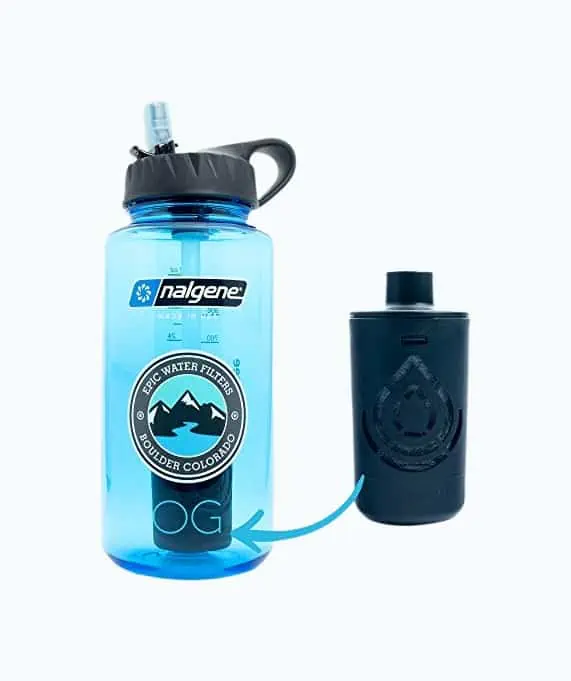
If you live an active lifestyle and want to stay hydrated with clean water, the Epic Nalgene OG is an excellent option. It has an organic coconut-based carbon filter that is made in the United States.
The bottle itself is made of Tritan material and is dishwasher-safe and FDA-approved. This means you can use it with confidence that it will be completely safe. It will hold 32 fluid ounces, making it a high-capacity model.
The materials used are reusable and recyclable, and the filter is gluten-free and 100% vegan. The multi-stage filter will effectively process about 75 gallons of water, so it should last you a long time depending on how much water you drink.
What We Like
Multi-Stage
This product is one of the most effective water filter bottles that are currently available. It houses a multi-stage filtration process that utilizes depth and adsorption to remove particles as small as 1 micron.
The activated carbon coconut filter adsorbs contaminants such as heavy metals, herbicides, chemicals, and cysts.
Organic
This bottle is fitted with an organic coconut shell-based carbon-fiber mesh filter. It is eco-friendly and complies with NSF/ANSI standards. This means it has been independently tested, so you can trust that it is high quality.
Lightweight
With a generous capacity of 32 ounces of filtered water, this bottle is an excellent size for anyone who needs to stay hydrated with an active lifestyle. Despite its capacity, the bottle is lightweight and easy to carry, thanks to the convenient handle at the top.
Long-Lasting
The filter has a long lifespan by bottle standards, able to filter up to 75 gallons before it needs to be replaced. The bottle itself is also long-lasting, potentially preventing hundreds of bottles worth of plastic waste. The filter is easy to replace and the replacements are affordable.
What We Don't Like
Filter Sits High
As the filter doesn’t reach the bottom of the bottle, you can be left with some water that is difficult to get out. This also means you might suck some air through the straw alongside the water, which can be uncomfortable.
Product Specs
| Filter Stages | Multi-stage |
| Filter Life | 75 gallons |
| Bottle Capacity | 32 ounces |
| Dimensions | Not specified |
| Weight | Not specified |
Our Ratings
User Experience
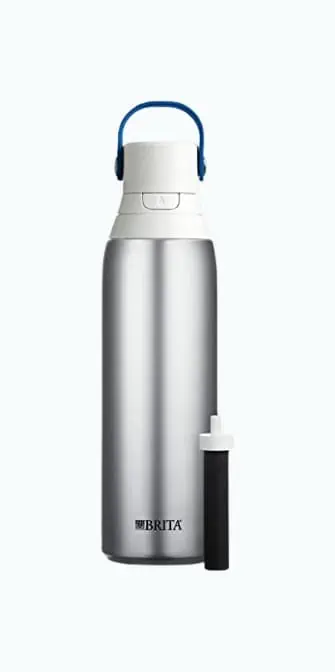
Brita 20-Ounce Stainless Steel Bottle
Best Stainless Steel Filtered Water Bottle
If you want to avoid plastic material as much as possible, we recommend this Brita stainless steel filtered bottle. It has a sleek but sturdy design that is made to last for years to come.
The activated carbon filter is very effective and should last about two months before it needs to be replaced. When the time comes to replace it, the process is very straightforward.
The lid seals tightly to prevent any leaks throughout the day. On a hot day, your water should stay cool thanks to the insulated stainless steel body.
What We Like
Durable
This Brita bottle is made of durable stainless steel and is resistant to rust, as well as physical damage. It has a slim design that is easy to hold while on the go. The bottle is also insulated, so it should keep your water cool throughout the day.
Tight Seal
A common problem with water bottles is that they leak. However, the Brita Premium’s lid seals tightly and won’t let a drop of water escape. You will be able to keep it in your bag without worrying about water damage to your belongings.
Easy Lid
It is quick and easy to open the lid while you’re out and about. The straw is easy to drink from, and the filter is at the top of the straw. This means you won’t leave any water at the bottom of the bottle due to a bad filter design.
Easy to Replace Filter
Each filter will last up to 40 gallons, so they should be replaced about every two months. Replacing the filter is very straightforward:
- Remove the old filter and rinse the new one under running water for 15 seconds.
- Place the new filter firmly into the straw and attach it to the lid.
- Fill the bottle, and it will filter the water as you drink from it.
What We Don't Like
The Lid Doesn’t Open Fully
As you drink from the bottle, you will have to either move it around or tilt your head back. Customers comment that the lid doesn’t open fully, so it might press against your cheek, nose, or chin as you drink.
Product Specs
| Filter Stages | Single |
| Filter Life | 40 gallons |
| Bottle Capacity | 20 ounces |
| Dimensions | 3.2 x 3.2 x 10.8 inches |
| Weight | Not specified |
Our Ratings
Personal Perspective
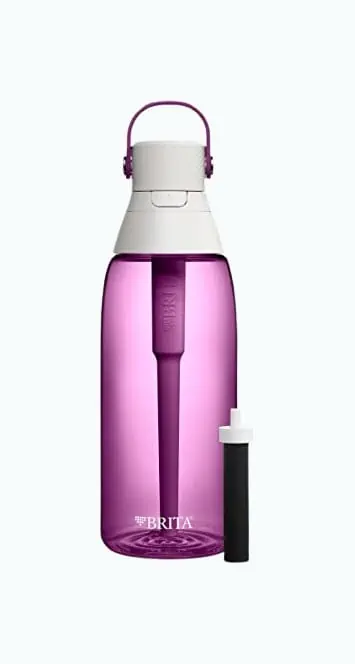
Brita Water Bottle With Filter
Best Cupholder Friendly Filtered Water Bottle
If your daily schedule includes constant travel, it is essential that you can take your water bottle with you to stay hydrated. This is why it is important that your bottle can fit in cup holders, such as those in a car or a child’s stroller.
Thankfully, this Brita BPA-free water bottle is an ideal fit. It also features a carrying loop so it can be attached to a backpack. It is dishwasher-safe on the top rack, making it far easier to clean than many other water filter bottles.
With a 36-fluid-ounce capacity, this bottle is a great choice for long hikes. The bottle is available in five different colors, so you have plenty of options to choose from.
What We Like
Five Color Options
If you aren’t a fan of pink, don’t worry. This Brita-filtered water bottle is also available in blush, night sky, sapphire, and sea glass.
36 Ounce Capacity
If you need a lot of water for a long hike or drive, you will appreciate this bottle’s generous 36-ounce capacity. You will be able to drink more water with fewer trips to the tap.
Reduces Chlorine Taste
Many people dislike drinking tap water as it can have an unpleasant taste or smell. Thankfully, this bottle’s filter removes most of the contaminants that cause these issues. It will allow you to enjoy your municipal water supply far more, as long as you replace the filter every couple of months.
What We Don't Like
Mold Issue in the Straw
Some customers find that mold forms at the top of the straw relatively quickly, even with regular cleaning. This is frustrating as the point of a filtered bottle is to drink clean, uncontaminated water.
Only Allows Small Sips
This isn’t the best bottle for the gym or running, as water moves through the straw quite slowly. This means you can’t drink from it quickly, which is a potential issue if you are trying to stay hydrated.
Product Specs
| Filter Stages | Single |
| Filter Life | 40 gallons |
| Bottle Capacity | 36 ounces |
| Dimensions | 10.51 x 3.86 x 3.62 inches |
| Weight | 8.4 ounces |
Our Ratings
Community Feedback
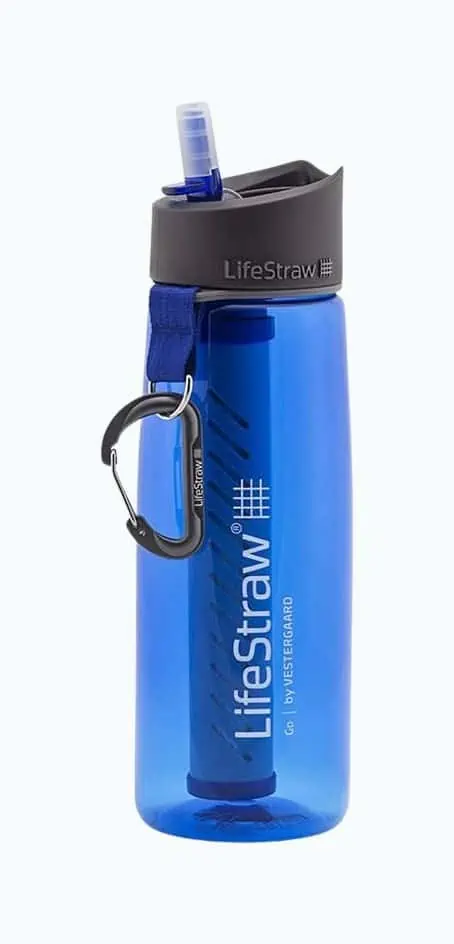
LifeStraw Go Water Bottle
Best Filtered Water Bottle for Intense Activities
LifeStraw is one of the leading brands when it comes to mobile water filtration, and its Go bottle lives up to this reputation. With a two-stage filtration system, this bottle will effectively remove the majority of bacteria, parasites, and chemicals from your water.
Its slim design and carabiner mean it is easy to take wherever you go, so you should never be left without clean drinking water.
The bottle is made of BPA-free Tritan, and the mouthpiece is food-grade silicone. The filter is very thorough and should last about two months, depending on your water quality.
What We Like
Thorough Two-Stage Filter
The two-stage filter includes a hollow fiber membrane that removes bacteria and parasites. It also has an activated carbon filter that removes chemicals such as chlorine and VOCs. This filter also improves the taste and smell of your drinking water.
Fights Bacteria
If you rely on natural water sources such as rivers or creeks while hiking or camping, this water bottle will be very helpful. The two-stage filter will effectively remove over 99% of waterborne bacteria and protozoan parasites.
Long-Lasting Filters
Each stage of the filter has a relatively long lifespan. The microbiological filter can process up to 264 gallons. The activated carbon filter has a shorter life of 26 gallons but you should still be able to go two months between replacements. The filters are easy to find and simple to replace.
Excellent for Intense Activities
If you enjoy rock climbing, sailing, or any other intense outdoor activity, you need a water bottle that can come with you.
The LifeStraw Go is an excellent addition to an active lifestyle. It is not only sturdy but also includes a built-in carabiner, making it easy to attach to your bag or belt.
What We Don't Like
Hard to Suck
Unfortunately, this bottle is quite hard to suck water through. It requires a few strong sucks to get the water moving, which can be difficult for people with breathing issues.
Product Specs
| Filter Stages | Two-stage |
| Filter Life | 1.056 gallons/126 gallons |
| Bottle Capacity | 23 ounces |
| Dimensions | 9 x 3 x 3 inches |
| Weight | 6 ounces |
Our Ratings
First-Hand Impression
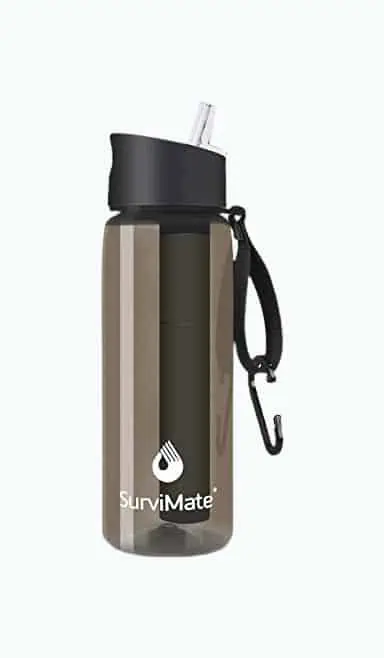
SurviMate 4-Stage Filtered Water Bottle
Best Long-Lasting Filter
The SurviMate is an excellent bottle for anyone who spends their days in the great outdoors. It is very easy to carry thanks to its light, slimline design.
The bottle is made of food-grade Tritan copolyester, so it is BPA-free, FDA-approved, and heat-resistant. It has a wristband that will help keep it secured when hiking or running, so you won’t have to worry about losing it.
To ensure you have clean drinking water, it is equipped with a four-stage filtration system. This is highly effective and ideal for filtering water taken from natural sources such as streams and rivers.
What We Like
Four-Stage Filtration
The SurviMate water bottle boasts advanced four-stage filtration:
- Medical-grade hollow fiber membrane filter
- Coconut shell-activated charcoal
- Antibacterial beads
- Medical-grade PP cotton filter
Each time you sip, these four stages will effectively remove pollutants as small as 0.01 microns.
Excellent for Hikes
On a hike through the wilderness, there could be long distances between water sources, so a reliable water bottle is essential. The SurviMate was designed with this in mind, so it is lightweight and has a slim design that makes it easy to hold.
In addition, the wristband sits securely around the neck of the bottle and won’t come loose as you walk or run. SurviMate claims you can fill this bottle using any natural water source you might discover in the wild.
Long-Lasting
The bottle’s filter is both thorough and long-lasting. SurviMate claims it should filter almost 400 gallons, depending on the quality of the water you put through it.
What We Don't Like
Slow to Drink
Due to the four filtration stages, it can be quite difficult to initially get water to come out. Customer reviews say it requires five to eight strong sucks to get the water started, which can be challenging if you have a breathing condition.
Product Specs
| Filter Stages | Four-stage |
| Filter Life | 396 gallons |
| Bottle Capacity | 22 ounces |
| Dimensions | 9.4 x 3.1 x 3.1 inches |
| Weight | 6.7 ounces |
Our Ratings
User Experience
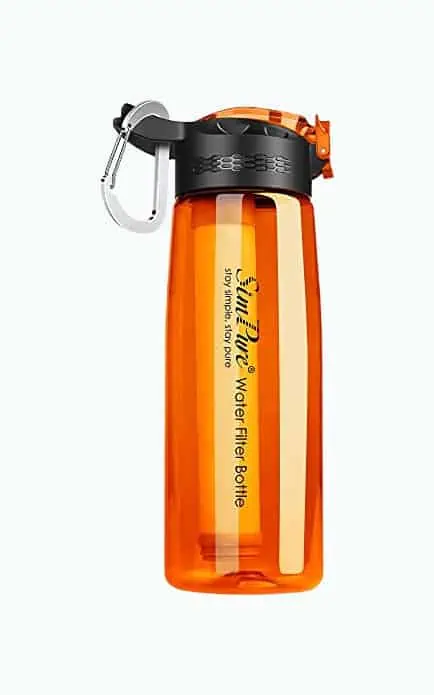
SimPure Filter Bottle
Best Filtered Water Bottle for Hiking
If you love hiking, this could be the bottle you’re looking for. With an advanced four-stage filter that effectively purifies water on the go, it is the perfect companion for long stays in the wilderness.
SimPure claims you will be able to safely fill this hiking bottle with water from any rivers or creeks you find on your travels. The slim design makes it easy to carry, and the addition of a top loop makes it even more secure while running or walking over rough terrain.
What We Like
Four-Stage Filter
This bottle is equipped with an advanced four-stage filter. Its pre-filter effectively removes solids and debris. The coconut shell activated carbon filter reduces chlorine tastes and smells. The third filter removes water impurities such as bacteria, protozoan parasites, and microplastics with its 0.1-micron hollow fibers.
If any contaminants remain unfiltered after the third step, 0.2-micron PP cotton intercepts residual particles to ensure your drinking water is as clean and safe as possible.
Slim Design
Unlike many other filtered water bottles, this SimPure bottle has a slim design. It is 9.06 inches tall and 2.95 inches in diameter — easy to grab and hold, even during activities.
Long-Lasting Filter
The filter can process almost 400 gallons, enough for two to three months depending on how frequently you use it. It is easy to access the filter, as it is slim and lightweight.
Excellent for Camping and Hiking
The slimline bottle is easy to carry securely, as you should be able to fit two fingers through the top loop. Despite being slim, it is well-balanced and should stay standing even if it is placed on a slight slope.
The filter itself is very effective, you can safely fill the bottle using rivers, creeks, or lakes as you go. This makes it an overall excellent choice for time spent outdoors.
What We Don't Like
Replacement Filter Not Included
The only significant downside of this product is that it does not include a replacement filter. This means you will need to find one yourself when the initial filter reaches the end of its lifespan.
Product Specs
| Filter Stages | Four-stage |
| Filter Life | 396.25 gallons |
| Bottle Capacity | Not specified |
| Dimensions | 9.06 x 2.95 x 2.95 inches |
| Weight | 10.56 ounces |
Our Ratings
Personal Perspective
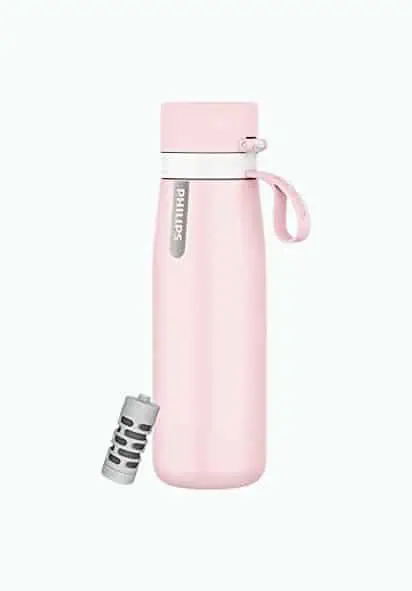
Philips Water GoZero Everyday Water Filter Bottle
Best 18.6-Ounce Filtered Water Bottle
The GoZero filtered water bottle from Philips Water is an excellent choice for anyone who wants pure water from every sip. It can hold 18.6 fluid ounces and the activated carbon fiber filter will process up to 40 gallons, or about two months’ worth of water.
It has a slim design that is lightweight and easy to carry. When paired with the electro-adsorptive filter it will remove bacteria and viruses. Maintaining the bottle itself can be almost effortless as it is suitable for dishwashers.
What We Like
Long-Lasting Filter
If you want a filter that will last a long time without needing to be replaced, this is an excellent option. The activated carbon filter will process up to 40 gallons of water before a replacement is required.
Improves Taste
Chlorine in tap water can create an unpleasant smell and chemical taste. The activated carbon filter in this bottle reduces chlorine and water particulates. This greatly improves the taste and odor of municipal water by adsorbing chemicals and other contaminants.
Easy to Clean
The Philips Water GoZero filtered bottle is safe to clean on the top shelf of your dishwasher, making it a very low-maintenance option.
Double-Wall Insulated Body
This bottle is double-insulated, making it ideal for keeping your drink cool on long trips.
What We Don't Like
Small Water Capacity
This is an excellent bottle in terms of filtration and keeping water cool throughout the day. Unfortunately, its 18.6-ounce capacity means your water is unlikely to last long in any case.
Product Specs
| Filter Stages | Activated carbon fiber filter |
| Filter Life | 40 gallons |
| Bottle Capacity | 18.6 ounces |
| Dimensions | 2.93 x 2.93 x 9.65 inches |
| Weight | 13.58 ounces |
Our Ratings
Community Feedback
| Product | Best | Filter Stages | Filter Life | Bottle Capacity | Dimensions | Weight |
|---|---|---|---|---|---|---|
| Epic Nalgene OG Bottle | Large | Multi-stage | 75 gal. | 32 oz | 8.8 x 4 x 3.7″ | 9.6 oz |
| Brita Stainless Steel Bottle | Stainless Steel | Single | 40 gal. | 20 oz | 3.2 x 3.2 x 10.8″ | N/A |
| Brita Water Bottle | Cupholder Friendly | Single | 40 gal. | 36 oz | 10.51 x 3.86 x 3.62″ | 8.4 oz |
| LifeStraw Go Water Bottle | Intense Activities | Two | 126 gal. | 23 oz | 9 x 3 x 3″ | 6 oz |
| SurviMate 4-Stage Bottle | Long-Lasting Filter | Four | 396 gal. | 22 oz | 9.4 x 3.1 x 3.1″ | 6.7 oz |
| SimPure Water Purifier | Hiking | Four | 396.25 gal. | 20.8 oz | 9.06 x 2.95 x 2.95″ | 10.56 oz |
| Philips Water GoZero | 18.6-Ounce | Activated carbon fiber | 40 gal. | 18.6 oz | 2.93 x 2.93 x 9.65″ | 13.58 oz |
FAQs

How Long Does a Bottle Filter Last?
Most bottle filters will be able to process up to 40 gallons of water, which is about 5,120 fluid ounces. Depending on how frequently you use it, this might be one or two months. It is important to replace the filter before you hit the 40-gallon mark to ensure your bottle continues to work properly.
Keep In Mind

Are Filtered Water Bottles Dishwasher Safe?
Some filtered water bottles are suitable for dishwasher cleaning but many are not. This is largely based on the material used. Before you put your bottle in the dishwasher, check its manual to make sure it is dishwasher-safe.
Most dishwasher-safe bottles should be placed on the top shelf — ensure you remove the filter beforehand. We strongly recommend choosing a dishwasher-safe bottle as they require less maintenance and can be cleaned more thoroughly without risking damage.

How Do I Clean a Filtered Water Bottle?
If your filtered water bottle isn’t dishwasher-safe, don’t worry as it will be easy enough to clean by hand. You simply need to take the bottle apart and wash it in warm, soapy water, setting the filter to one side. Use a small, long-handled brush to scrub the inside of the bottle and a sponge for the lid and mouthpiece.

Will a Filter Bottle Remove Important Minerals from My Water?
As most filtered water bottles are equipped with an activated carbon filter, they won’t remove minerals. Activated carbon filters are designed to remove harmful contaminants such as chlorine and VOCs, but they won’t affect salt or minerals. This means you will still benefit from the mineral content while enjoying purified water.

Do Filtered Water Bottles Actually Work?
Despite the ongoing debate, there’s definitely evidence suggesting that filtered water bottles work as advertised. These bottles effectively block harmful substances such as chlorine, heavy metals, bacteria, and viruses.
Also, you can find a ton ofuser reviews althat so attest to the health benefits of using these bottles. Many claims to have seen improvements in their energy levels and overall well-being since switching to filtered drinking water.

How Long Can I Keep Bottled Water?
Over time, the plastic in the bottle degrades and begins to leach chemicals into the water. While generally considered safe for consumption, these chemicals can have long-term detrimental effects on health.
Also, prolonged exposure to light or high temperatures can also affect the taste and quality of the bottled water, potentially leading to nausea or even more serious health complications.

How Do I Know If My Bottled Water Is BPA-Free?
Luckily, plastic bottles often have a plastic identification code that can help you determine whether or not they’re BPA-free. Typically, plastic bottles will carry a number in the sequence 1-7, along with a series of other markings that can tell you more about the type of plastic used.
Check the bottom of the water bottle to find this code. Numbers ranging from 1 to 6 indicate that the container is BPA-free. Avoid any bottles with the number 7.

Is Stainless Steel Water Bottle Better Than Plastic?
Stainless-steel water bottles have grown popular as more people want ways to reduce their reliance on plastic. These bottles offer several advantages over their plastic counterparts.
They’re more durable than plastic bottles, allowing them to withstand years of regular use without showing visible signs of wear or tear.
Also, stainless steel bottles don’t produce potentially harmful chemicals when heated or come into contact with acidic liquids like lemonade or tomato juice.
These bottles are free of potentially harmful BPA, often found in cheap plastic bottles. They’re also friendlier to the environment.

What Is the Best Reusable Filtered Water Bottle?
The SurviMate Filtered Water Bottle is probably one of the best reusable filtered water bottles you can get simply because it’s affordable and BPA-free. It can fit up to 650 ml of water and is more resistant than its competition. So, if you drop it, it’s less likely to crack.
It can offer up to 1,500 liters of continuous usage, and you can buy replacement filters. Some of the key components are medical-grade PP cotton, coconut shell activated carbon, and medical-grade hollow fiber membrane.

Which Brand of Filtered Water Bottles Is the Best?
It’s very clear that Brita is probably the best choice when it comes to filtered water bottles. Not only is Brita known for its quality, but they offer a plethora of different sizes and models. Their filters use activated carbon to remove contaminants from the water, making your drinks safe and clean.