When you want to protect your exterior wooden surfaces, the best outdoor polyurethane is your new best friend. Not only does it keep your wood sealed against the weather and sun, but it also keeps it looking good.
We feature 5 of the best exterior polyurethanes, rating them on coverage, UV resistance, price, and value for money to help you make the right choice.
- Repels water and harmful UV rays
- Ideal for light and exotic wood grain
- Works indoors and out
- Dries to the touch in 30 minutes
- Add a new coat within the hour
- Easy to use and store with no cleanup
- Minimal odors and low VOCs
- Dries in under 2 hours for the second coat
- Comes in 5 different finishes
- Marine-grade and UV resistant
- Ideal for fiberglass, wood, metal, and other materials
- 350 to 400 square feet of coverage
- 100 percent waterproof and dries flexible
- Guaranteed to work for 50 years
- Flexes up to +/- 35 percent
Review Methodology: At Sensible Digs, we pride ourselves on our thorough, hands-on approach to product analysis and reviews. Our professional team conducts rigorous tests and evaluations on exterior polyurethane products, ensuring you get factual, reliable information. We compare performance, durability, and ease of application, among other key decision-making factors. Our in-depth assessment also includes the review of design choices and their effect on users, backed by first-hand experience and evidence. Through our research, we’ve been able to rank the best exterior polyurethane products, measure their standards, and track their results. Trust our findings and score your perfect product.
The Best Exterior Polyurethane of 2024
After hours of research and many hundreds of products reviewed, we have narrowed down the field to our favorite 5 based on coverage, UV resistance, and value for money.
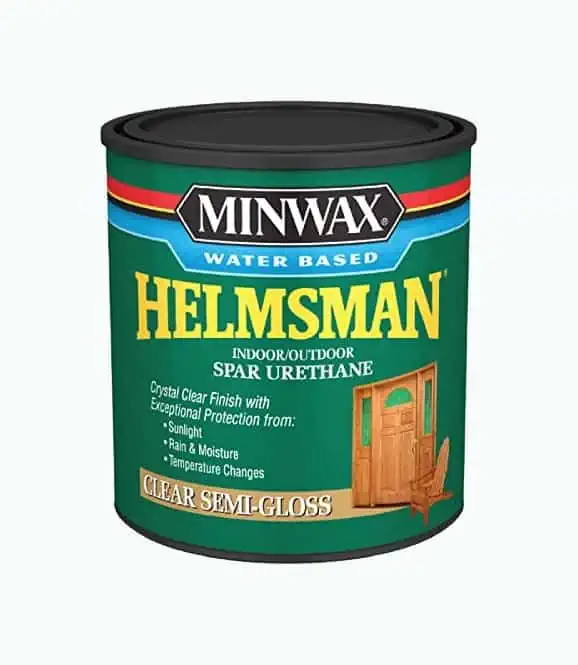
Minwax Water-Based Helmsman Spar Urethane
Best Water-Based Exterior Polyurethane
This water-based polyurethane creates a protective barrier to repel water and the harmful effects of UV light. It has a UV blocker that slows the graying effects of the sun.
If you have light or exotic wood and want the grain to shine through, this polyurethane is a perfect choice because it dries crystal clear. You can use this sealer indoors and out on window and door frames, kitchen countertops, and garden furniture.
It has low VOCs, which means you won’t suffer from headaches, nausea, and stinging eyes. Plus, it is much better for the environment because it washes clean with soap and water.
It comes in a variety of finishes. This one is semi-gloss, but you can get gloss, matte, and satin. The only downside is this product is sold in 1-quart cans, so if you are coating a larger area, it could work out to be very expensive, especially as you will need several coats.
Pros
- Repels water and harmful UV rays.
- Ideal for light and exotic wood grain.
- Works indoors and out.
- Low VOCs, so it’s better for your health.
Cons
- Could be costly if you are covering a large area.
Product Specs
| Size | 1-quart |
| Type | Water |
| Coverage | Not stated |
| Drying time | 4 hours |
| Price | $$$ |
Our Ratings
User Experience
Rust-Oleum 200181 Water-Based Polyurethane Spray
Best Exterior Polyurethane Spray
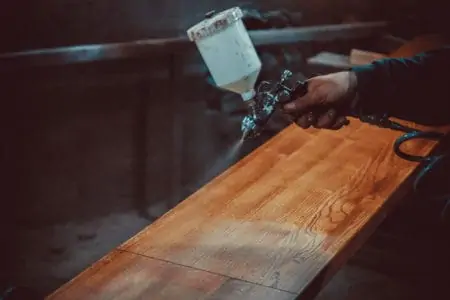
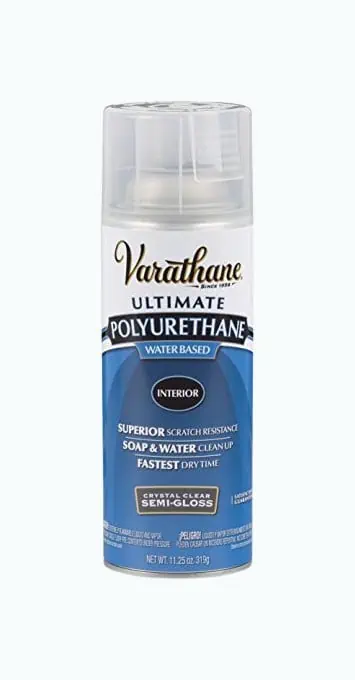
Rust-Oleum is one of the most trusted brands in the USA, so this spray polyurethane should be reliable to use on your interior and exterior wood. It dries to the touch in just 30 minutes, and you can use it on outdoor furniture, decking, and even boat trim.
Thanks to the formula, it’s scratch and chip-resistant with added stain resilience. It dries semi-gloss and comes in 11.25-ounce cans. One container gives you up to 25 square feet of coverage, and you can apply the second layer within an hour of drying.
The beauty of polyurethane spray is it applies easily, requires minimal experience, and when you are done, you just pop the lid back on, and no cleanup is necessary. The downside is you get limited coverage, and the spray is challenging to direct with any degree of accuracy, which means you might get overspray.
The other thing is this spray is not a cheap option. One small can will set you back quite a bit, so it might be better for smaller projects.
Pros
- Dries to the touch in 30 minutes.
- Add a new coat within the hour.
- Easy to use and store with no cleanup.
- Scratch and stain-resistant.
Cons
- The spray is hard to direct with accuracy.
- Costs are high if you are coating a large area.
Product Specs
| Size | 11.25 ounces |
| Type | Water |
| Coverage | 25 square feet |
| Drying time | 30 minutes to 1 hour |
| Price | $$$ |
Our Ratings
Personal Perspective
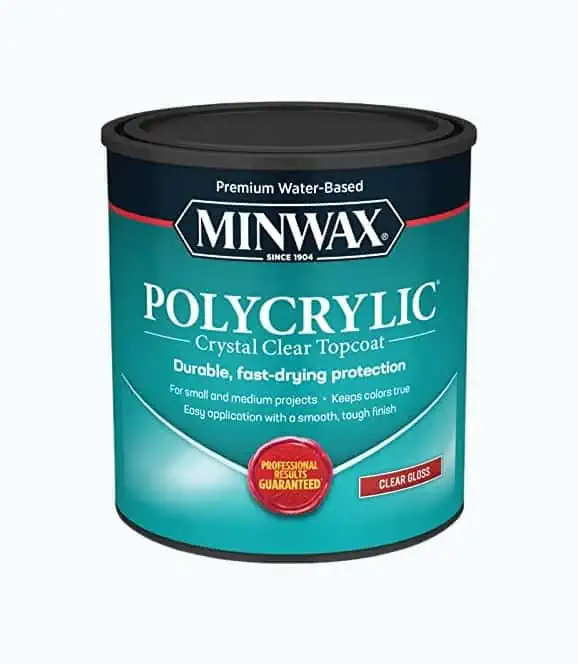
Minwax Polycrylic Water-Based Gloss
Best Exterior Gloss Polyurethane
Minwax dominates this review. This product comes in 5 different finishes, from gloss to ultra-flat. It is water-based, so you can safely use it indoors and out, and there are minimal odors and very low VOCs.
That means you won’t suffer from headaches, nausea, and sore eyes and throat. It also means it’s good for the environment because the cleanup is done with soap and water.
It dries ready for a recoat within 2 hours, so you should be able to get the job done in a single day, and it is the perfect choice for lighter woods like pine, maple, ash, and birch. It also dries crystal clear and has a non-yellowing formula.
While this might be ideal for exterior and indoor projects, it is not suitable for floors, so protecting your deck will not be possible.
Pros
- Minimal odors and low VOCs.
- Dries in under 2 hours for the second coat.
- Comes in 5 different finishes.
- Has a special non-yellowing formula.
Cons
- Not suitable for floors.
Product Specs
| Size | 1-quart |
| Type | Water |
| Coverage | 125 square feet |
| Drying time | 2 hour |
| Price | $$ |
Our Ratings
Community Feedback
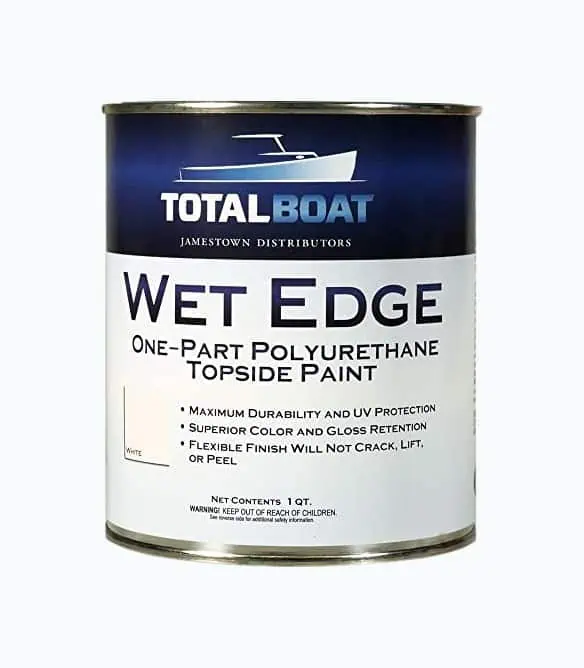
TotalBoat Wet Edge Marine Polyurethane
Best Exterior Polyurethane for Fiberglass Doors
If you have fiberglass doors, like the type found on modern sailboats, this is the polyurethane you should use. This marine-grade polyurethane offers maximum UV protection and is water, chemical, and scratch-resistant.
This product will not crack or peel and is also abrasive-resistant, making it ideal for situations of high wear and tear, just like the sort of punishment your fiberglass doors might get on your boat.
As with anything connected to boats, you can expect this polyurethane to be expensive. It costs almost 5 times the price of other products to feature in the review. The other thing to watch out for is you cannot use this polyurethane in areas of high submersion, so you can’t paint it below the waterline of your boat.
You get coverage of 350 to 400 square feet, so you might pay more, but you do get your money’s worth. Because this is an oil-based product, it has higher VOCs, which is worse for the environment.
Pros
- Marine-grade and UV resistant.
- Ideal for fiberglass, wood, metal, and other materials.
- 350 to 400 square feet of coverage.
- Water, chemical, and scratch-resistant.
Cons
- Very expensive marine paint.
- Not suitable for use below the waterline.
- High VOCs and toxic to the environment.
Product Specs
| Size | 1-quart |
| Type | Oil |
| Coverage | 350 to 400 square feet |
| Drying time | 3 to 5 days |
| Price | $$$$$ |
Our Ratings
First-Hand Impression
DAP Polyurethane Construction Sealant
Best Exterior Polyurethane Caulk
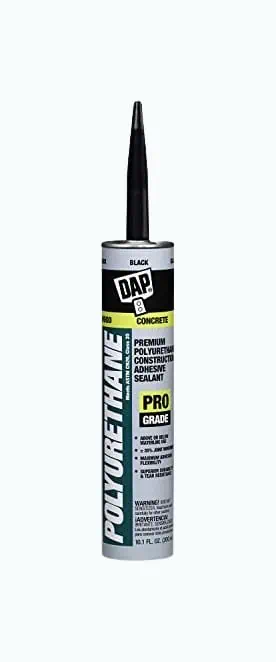
When you want something suitable for a host of outdoor applications, this caulk is a perfect choice. You can use it on roof shingles, gutters, chimneys, skylights, and ducts. It dries flexibly, so it shouldn’t crack or split, and it is guaranteed for 50 years.
It can withstand joint movements up to +/- 35 percent, so no matter what the situation, this caulk can cope. It’s also 100 percent waterproof, so if you live in an area of high rainfall, this sealant will keep the water out.
It comes in 3 colors: white, gray, and black, and it adheres to fiberglass, concrete, wood, metal, vinyl, and even bricks.
The only downside is this caulk is only intended for small applications and sealing cracks and gaps. Plus, it requires a little skill to master using the caulk gun.
Pros
- 100 percent waterproof and dries flexible.
- Guaranteed to work for 50 years.
- Flexes up to +/- 35 percent.
- Ideal for shingles, gutters, chimneys, and skylights.
Cons
- The caulk gun is tricky to master.
- Only intended for specialist uses.
Product Specs
| Size | 10.1 ounces |
| Type | Oil |
| Coverage | Not applicable |
| Drying time | 24 hours |
| Price | $ |
Our Ratings
User Experience
| Product | Best | Size | Type | Coverage | Drying time | Price |
|---|---|---|---|---|---|---|
| Minwax Water-Based Helmsman Spar Urethane | Best Water-Based | 1-quart | Water | Not stated | 4 hours | $$$ |
| Rust-Oleum 200181 Water-Based Polyurethane Spray | Best Spray | 11.25 ounces | Water | 25 square feet | 30 minutes – 1 hour | $$$ |
| Minwax Polycrylic Water-Based Gloss | Best Gloss | 1-quart | Water | 125 square feet | 2 hour | $$ |
| TotalBoat Wet Edge Marine Polyurethane | Best for Fiberglass Doors | 1-quart | Oil | 350 – 400 square feet | 3 – 5 days | $$$$$ |
| DAP Polyurethane Construction Sealant | Best Caulk | 10.1 ounces | Oil | Not applicable | 24 hours | $ |
Types of Exterior Polyurethane
Essentially, there are two kinds of polyurethane: water and oil-based, but which is the best? Let’s take a look at the differences between the two.
Water-Based
Water-based polyurethane is excellent if you want to preserve the wood grain, showing it off at its best. Water-based polyurethane goes on milky and dries crystal clear. The other advantage of this type is it has a low impact on the environment because it cleans with water and soap.
It is also a low VOC (volatile organic compound) option, which means it won’t irritate your eyes and throat. However, you do still need to work in an area with good ventilation because it still has a strong odor.
The disadvantage is you need to apply several coats to get that even and watertight covering. Also, water-based polyurethane is thinner than oil-based products, so while it goes on easily enough, it also dries very quickly.
Oil-Based
Oil-based polyurethane gives the wood a warm hue as it dries slightly amber in color. It goes on easily, and you only need to apply a couple of coats to get that weatherproof bond. It is higher in VOCs, meaning it gives off a strong chemical odor, which could adversely affect your health.
It also means that it is bad for the environment because you need thinner or mineral spirits to perform the cleanup, and they pollute the ecosystem. There are even some parts of the country where this product is effectively banned from sale.
How To Choose the Best Exterior Polyurethane
With so many products and options available, how do you make the right choice? Do you go for oil or water-based? Which one is better for larger areas or smaller spaces? The answer to these questions and more are here.
Let’s take a look at the factors you should consider when choosing your next exterior polyurethane.

Ease of Application
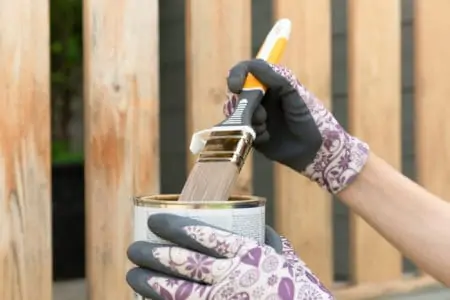
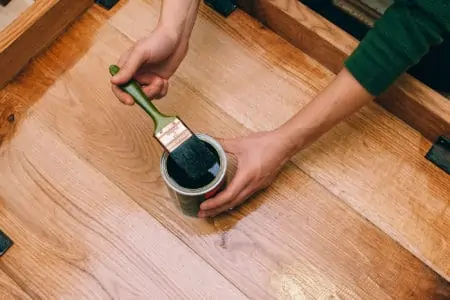
No one wants to make their lives more difficult, so how easy the polyurethane goes on is one of the most important considerations. Water-based products are thinner, so they can be sprayed or painted on using a brush or pad.
Oil products are thicker, so you may need thinner if you want to apply them with a sprayer. The advantage of this is you get an easier application, but you may need to add a couple of coats more than you would if you brushed it on.
Painting is always a cheap and easy option, but it takes longer, so if you have a larger area to coat, it could take you some time.

Number of Coats
For the sake of convenience, it’s always easier if you only need to apply one or two coats. Unfortunately, water-based polyurethane requires several coats to get that hardened seal against the elements.
Oil versions can usually offer weatherproofing in one or two coats, making them less work. However, it takes longer to dry, so you may need to wait a couple of hours between layers, while water-based products dry in 30 minutes, so you can get the deck or fence completed in a single day.

Drying Time
As we’ve touched on above, each type of polyurethane takes different times to dry. Water-based dries the fastest, in about 20 to 30 minutes, but you usually need to wait a couple of hours to allow the polyurethane to cure before you can walk on it and use it as you normally would.
Oil products take between 2 and 4 hours to dry between coats, but to cure, you could be looking at anywhere from 48 to 72 hours. So, if you paint your deck on a Friday, don’t expect it to be ready to use the next day.

UV Resistance
No matter how hard you try, the sun will fade your decking, so getting polyurethane with the best UV resilience is crucial. Look for ingredients like titanium oxide and other ground metal particles.
These additives absorb the sun’s rays and release them as heat to deflect any effects the UV radiation has on your wooden surfaces. As your polyurethane starts to suffer, it fades and becomes opaque. However, too many added metal particles can make the mixture milkier.
FAQs

Is Water or Oil-Based Polyurethane Better for Outdoor Use?
Both are effective but perform in different ways. Water-based products are excellent at forming a hard seal on the surface of the wood, so no rain can touch it. However, water products are less durable and chip or peel more easily, which leaves your deck or fence exposed to water and UV.
Oil-based polyurethane soaks into the wood, penetrating the fibers and protecting it from within. However, it is less able to cope with UV because the wood still dries out in the sun. If you live in California, many oil-based polyurethanes are unavailable due to state laws. The good news is water-based coatings are better at deflecting the sun’s ultraviolet light.

How Long Does Polyurethane Last Outdoors?
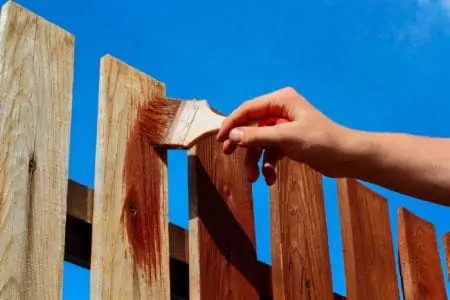
You should recoat your exterior wood every one to two years, depending on the type of punishment it gets. In sunnier states, you should probably do this every year. If you live in a wet climate, the same rule applies.
For moderate weather areas, you might get away with recoating your exterior wood every three years.

How To Keep Exterior Polyurethane From Yellowing?
The best way to stop yellowing is to choose a high-quality water-based polyurethane with added titanium oxide or other metal particles. It helps to absorb the UV rays from the sun and release them as heat.

Will Polyurethane Make Wood Waterproof?
Polyurethane won’t make your wooden surfaces waterproof, but it will make them water-resistant, and there is a subtle difference. Waterproofing implies that you will never suffer water damage, whereas water resistance means that it will gradually fail over time, but you are protected for a period.

How Thick Can Exterior Polyurethane Be Applied?
If you are applying water-based polyurethane, expect to add about 5 or 6 coats to get that hardened seal. If you are using oil-based products, it should be applied in 1 or 2 coats.