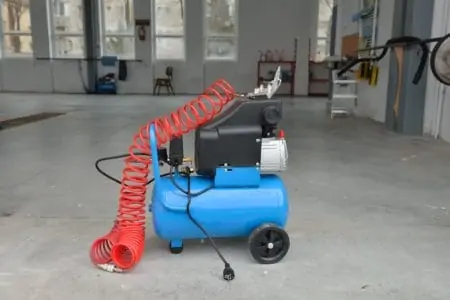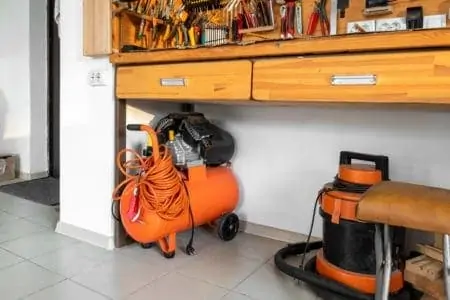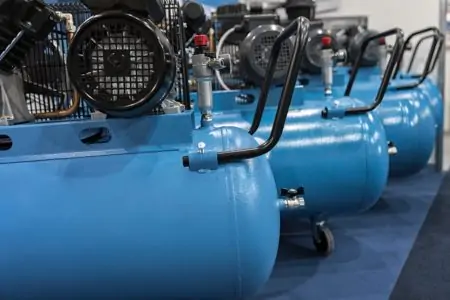
Before you start searching for the best air compressor, you should consider what you want the air compressor to do. Some compressors suit heavy-duty tasks, while others have a more specific role.
If you want to know more about the best air compressors, read on. After thorough research, we have selected our top 10 favorites to help you decide.
- Portable & lightweight
- Max pressure of 150 PSI
- Includes 25 ft extension cable
- 12 horsepower motor
- Robust cast iron construction
- 244 CFM airflow
- High customer satisfaction rating
- Easy maintenance
- Comes with 13 accessory kit
- 2.5 HP 4-pole motor
- Cast iron pump
- Impressive 4.2 CFM airflow
- Lightweight 31-lb design
- Cold start motor
- High-flow pressure regulator
- 22% lighter
- Oil-free pump
- More air flow
- 120-volt motor
- Max 150 PSI
- Auto thermal overload protection
- 2,000 hour runtime
- Low noise at 80 dB
- 2 horsepower motor
- Inflates large tires
- Connects to a battery
- Comes with 16 ft air hose
- Runs at 60 dB
- Quick recharging
- 3,000 hour life cycle
Review Methodology: At Sensible Digs, we provide a thorough analysis of the best air compressors based on in-depth research and hands-on experience. Our professional assessment includes comparing key performance measures, tracking data, and evaluating design choices to determine their effect on user experience. We identify and rank essential decision-making factors such as power, capacity, durability, and noise level. Our reviews include evidence from real-life usage, offering you a comprehensive understanding of each air compressor’s strengths and weaknesses. Trust our findings and make an informed decision on which air compressor stands out in the market.
The Best Air Compressors of 2024
As this is a rundown of all the different air compressors, there was quite an extensive list of products to trawl through. Here is our take on the 10 best air compressors.
Viair 40045 400P Portable Compressor
Best 12V Air Compressor
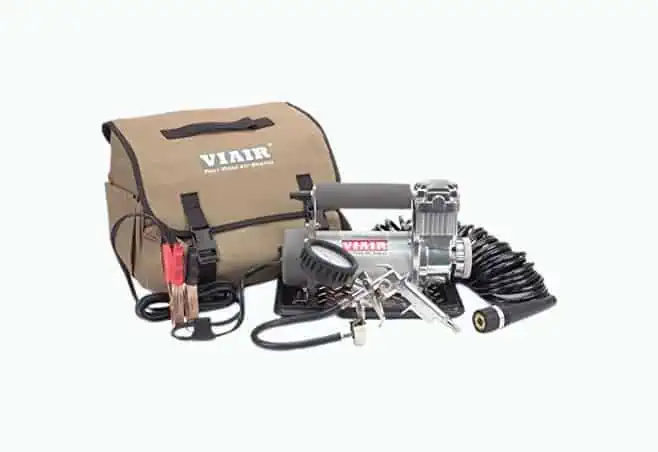
Viair air compressors feature twice in this review. They are excellent products and hugely popular. This 400P model has a maximum working pressure of 150 PSI, and it creates a CFM of 2.3 at zero PSI.
It inflates all sizes of tires up to 35 inches, so it is ideal for maintaining ATV, SUV, and larger vehicles. It has a duty cycle of 33 percent at 100 PSI, meaning you can run it for just over 3 minutes out of every 10 minutes between rests.
It comes with a carry bag, a 25 ft extension cable, and an 8 ft power cord. It even has an anti-vibration sand tray.
What We Like
Portable and Lightweight
12V air compressors are designed for use on the road. Plug it into the 12V lighter socket, and you have all the power you need.
Ideal for the Farm
This is the perfect air compressor to throw into the back of the truck and take into the fields. When you need emergency air in remote places, this Viair is the one to choose.
25 Ft Extension Cable
The cable allows you to reach all four wheels with ease. It also has an 8 ft power cord, which extends the reach even further.
What We Don't Like
Limited Uses
If you want an air compressor to inflate tires and small beach toys, this is great, but it does limit you to lighter duties. It won’t power air tools and spray guns.
Product Specs
| Weight (pounds) | 8.5 |
| Dimensions (inches) | 11 x 4 x 7 |
| Max PSI | 150 |
| Max CFM | 2.3 |
| Duty cycle (percent) | 33 |
| Power source | Battery clamps |
| Price | $$$$ |
| Warranty | 1-year limited |
Our Ratings
User Experience
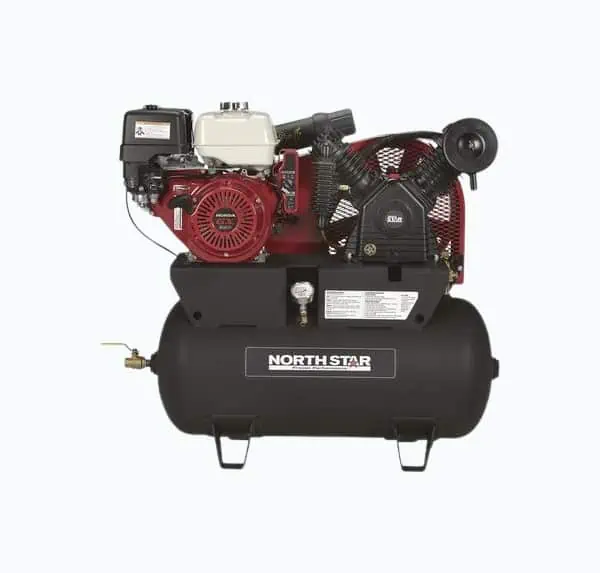
NorthStar Gas Powered 30-Gallon Air Compressor
Best Gas Powered Air Compressor
This gas-powered NorthStar model is the perfect choice if you want extra power and the ability to work anywhere. It gets its power from a Honda GX390 OHV engine that produces 12 horsepower and a maximum PSI of 175.
It also has an impressive 24.4 CFM at 90 PSI, making it one of the most powerful air compressors available.
It has a one-piece cast iron crankcase with bearings on both ends for superior support and a cast iron pump for longer life, plus a V-style cylinder to improve cooling and Swedish floating-style valves for a longer valve life.
The pump runs at 1,300 RPM, the flywheel is oversized for cooler operation, and the tank is wet-weather resistant and powder coated.
What We Like
12 Horsepower Motor
If you want a compressor with impressive strength, the 12 horsepower motor puts this device at the top of the power charts. It produces enough PSI and CFM to tackle any heavy-duty industrial tasks.
Robust Construction
A cast-iron pump and crank casing gives this air compressor superior durability. Nothing has been spared. For the price-tag, you would expect this compressor to be built like a tank.
24.4 CFM Airflow
The airflow on this compressor takes some beating. 24.4 CFM at 90 PSI is impressive, especially when you compare it to the competition.
Go-Anywhere
Gas power allows you to take this compressor anywhere without the need to plug it in. It is a truly portable device, making it a great choice for construction sites and off-grid places.
What We Don't Like
Portability Issues
For a go-anywhere compressor, it has limitations. It lacks wheels, making it harder to transport. The best way to carry this device is in the back of a flat-bed truck and drive straight onto the worksite.
Hefty Price
This compressor costs almost 5 times the price of the budget model. We get that it is a quality compressor, but the price-tag is only likely to appeal to professionals and not hobbyists or amateurs.
Product Specs
| Weight (pounds) | 492 |
| Dimensions (inches) | 41 x 19 x 40 |
| Max PSI | 175 |
| CFM | 24.4 at 90 PSI |
| Horsepower | 12 |
| Oil/Oil-free | Oil |
| Price | $$$$ |
| Warranty | 4-year limited (2-year commercial) |
Our Ratings
Personal Perspective
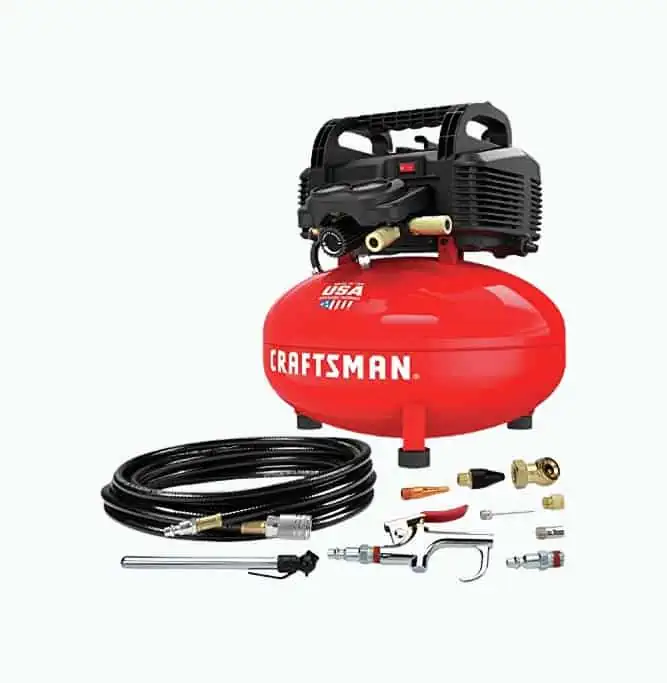
Craftsman 6-Gallon Oil-Free Air Compressor
Best Small Air Compressor
This model has a 6-gallon capacity and a maximum PSI of 150, so it is no slouch for making an impact. It also has an oil-free pump, so maintenance should be easy, and there are fewer running costs than an oil-lubricated model.
The first thing you notice about this Craftsman pancake-style air compressor is the volume of sales it has notched up. And then you see the satisfaction rating, which is exceptionally high.
It even comes with a 13-piece accessory set that includes a PVC air hose, coupler, plug assembly, tire chuck, blow gun with an OSHA safety nozzle, and 3 inflator adapters. It also has 2.6 standard cubic feet per minute (SCFM) at 90 PSI, which allows for a quick compressor recovery time.
The voltage is 120, it has a large carry handle, and it weighs just over 32 pounds, making it pretty lightweight.
What We Like
Customers Love It
This compressor is extremely popular, both in sales numbers and the satisfaction rating. Customer feedback is one of the best ways to gauge the truth about a product.
Decent Pressure Rating
While this may be the perfect small air compressor to keep around the house, it is still a powerful tool. You can connect nail guns, air wrenches, and just about any other air tool you want, and it will cope.
13 Accessory Kit
You get 13 accessories to get you started straight out of the box. Whether you want to paint or inflate, this pancake compressor has the adaptor or attachment to do it.
What We Don't Like
Quality Control Issues
Sometimes, you get what you pay for, which bears truth when you look at customer reviews. Tanks leak, attachments snap, and some have even struggled to get it to work after a few weeks.
Product Specs
| Weight (pounds) | 32.5 |
| Dimensions (inches) | 16.5 x 16.5 x 17.88 |
| Max PSI | 150 |
| CFM | 2.6 at 90 PSI |
| Capacity (gallons) | 6 |
| Accessories | 13-piece set |
| Oil/Oil-free | Oil-free |
| Price | $$ |
| Warranty | 1-year limited |
Our Ratings
Community Feedback
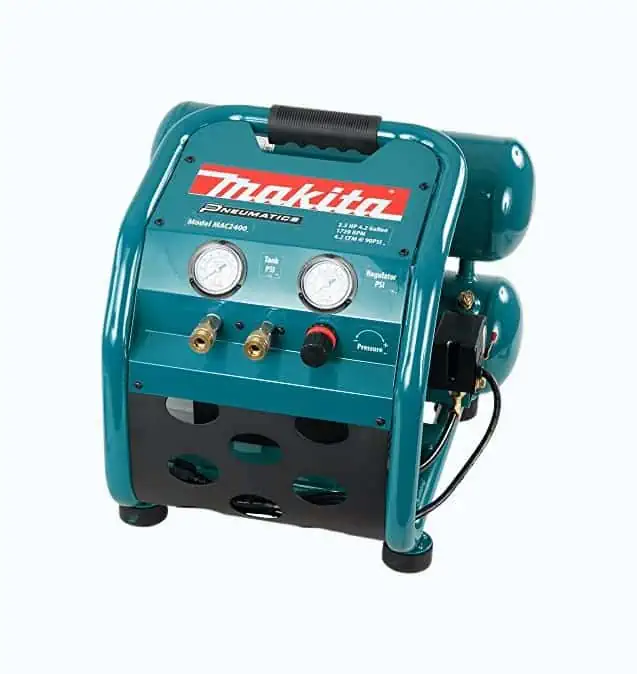
Makita MAC2400 Big BoreAir Compressor
Best Portable Air Compressor
This Makita Big Bore is the compressor to consider when you need greater power to drive your air tools. It generates 4.2 CFM at 90 PSI, which is impressive for such a small device.
It also has a 2.5 HP 4-pole motor, which increases productivity and reduces the compressor’s running volume. That said, it isn’t the quietest to feature, but 79 dB is still pretty good.
Thanks to the twin stacked tanks with a capacity of 4.2 gallons, it generates a maximum operating PSI of 130 to handle most air tools. It has a robust design, making it job-site ready, and the cast iron pump with its big bore cylinder and piston provides a faster recharge time when the tank empties.
This is not a cheap option, but it is a compact compressor that delivers.
What We Like
Cast Iron Pump
The cast iron pump benefits from a big bore cylinder and piston, which is long-lasting and increases the compressor’s efficiency to improve refill times. It all adds up to less time wasted.
Strong Airflow
You can have all the horsepower and PSI, but the compressor can’t power your tools if the airflow is weak. When it comes to compressors, airflow is king. It should be the number one consideration when you shop for a compressor.
Built To Last
This Makita is encased in a roll cage, making it super-tough. It can withstand the rigors and punishment of the construction site or commercial environment, and yet, it is portable.
What We Don't Like
Weighs 80 Pounds
This compressor has no wheels and a large carry handle, but it weighs 80 pounds. That’s a lot of weight to lift when you want to take it on the road.
Not Cheap
Compact air compressors cater to the budget-conscious, but this Makita bucks that trend. It costs double the amount of other compact models. Makita is famed for its quality, but it comes at a cost.
Oil-Lubricated
Oil-lubricated compressors produce more power, but they also increase harmful waste with old engine oil. Disposing of it is bad for the environment.
Product Specs
| Weight (pounds) | 80.8 |
| Dimensions (inches) | 20 x 18 x 18.75 |
| Max PSI | 130 |
| CFM | 4.2 at 90 PSI |
| Capacity (gallons) | 4.2 |
| Accessories | N/A |
| Oil/Oil-free | Oil |
| Price | $$$$ |
| Warranty | 1-year parts and labor |
Our Ratings
First-Hand Impression
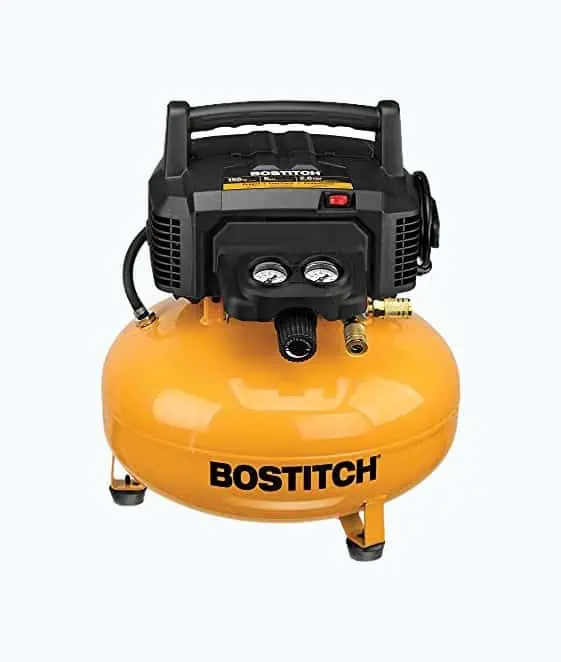
Bostitch Oil-Free 6-Gallon Air Compressor
Best Shop Air Compressor
This is a lightweight and oil-free pancake compressor with a 6-gallon tank, producing a maximum pressure of 150 PSI and airflow values that reach 2.6 SCFM at 90 PSI. Bostitch’s high-efficiency motor even ensures an easy start on cold days.
This Bostitch compressor runs at 78.5 decibels, so it is as noisy as a typical office environment. It comes with a high-flow pressure regulator and coupler to maximize your air tools performance.
What We Like
Lightweight 31-Pound Design
This Bostitch may lack wheels and the maneuverability of some compressors, but it only weighs 31 pounds. It all adds up to an air compressor that is portable and powerful.
Cold Start Motor
Motors can struggle on the coldest mornings, but with this model, you get an easy-start feature to get going no matter what the temperature. This is a great feature, especially in cold and drafty auto shops.
Oil-Free Pump
Oil-free pumps are better for the environment and your wallet. They create zero waste and reduce the running costs of operating the compressor. They also produce cleaner air, improving the lifespan of the compressor.
Very Affordable
What a great option if you are a beginner and are looking for a manageable compressor. This is a cheap device, which limits its capacity and power, but it scores big when it comes to price.
What We Don't Like
Limited Capacity
These compact compressors are great for inflating tires, but they have limited uses if you are looking for longer projects and heavy-duty tasks.
Product Specs
| Weight (pounds) | 31 |
| Dimensions (inches) | 17 x 17 x 19.25 |
| Max PSI | 150 |
| CFM | 2.6 at 90 PSI |
| Capacity (gallons) | 6 |
| Oil/Oil-free | Oil-free |
| HP | 0.9 |
| Price | $ |
| Warranty | 1-year limited |
Our Ratings
User Experience
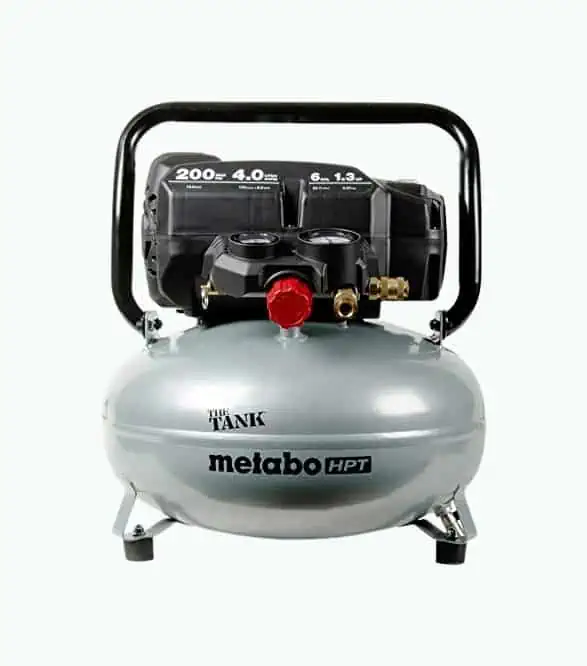
Metabo HPT EC914S Air Compressor
Best Pancake Air Compressor
This compressor creates a maximum of 200 PSI, as well as a CFM of 4. With that being said, there is an increased airflow of around 30 percent. The pump is oil-free and has a 6-gallon capacity.
You can rely on the brand as it has been awarded by the Builder & Developer magazine for five years. However, it doesn’t come with other accessories so you might need to purchase them separately to finish all the delicate projects inside your home.
What We Like
22% Lighter
At 41 pounds, this item is almost 30 percent lighter in comparison to the traditional twin-stack compressors.
More Air Flow
When it comes to airflow, it’s better to get a model with a known CFM rating rather than a SCFM rating. This model has a CFM score, which is more accurate.
Oil-Free Pump
Oil-free pumps are better for the environment because you have zero waste products to dispose of. It also reduces the running costs of the compressor, thanks to no oil and reduced maintenance.
What We Don't Like
No Accessories
This machine is straightforward to use without any accessories. In any instance, you may need to purchase a separate accessory.
Product Specs
| Weight (pounds) | 41 |
| Dimensions (inches) | 18.5 x 16 x 16 |
| Max PSI | 200 |
| CFM | 4 at 90 PSI |
| Capacity (gallons) | 6 |
| Accessories | None |
| Oil/Oil-free | Oil-free |
| Price | $$ |
| Warranty | 1-year |
Our Ratings
Personal Perspective
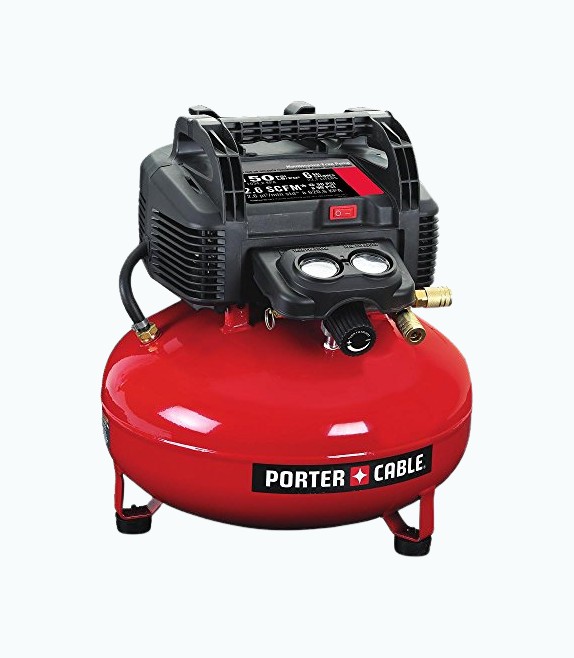
Porter-cable C2002 6-Gallon Air Compressor
Best Air Compressor for Painting
This pancake compressor generates a maximum PSI of 150, with 2.6 CFM at 90 PSI. The 6-gallon tank stores more air for increased tool running time, and the low-amp, 120-volt motor starts quickly in cold conditions, even with an extension cord.
Porter-Cable has ensured that this compressor is stable with the addition of rubber feet, and the drain valve lets you clean moisture out of the tank to prevent corrosion.
It also has a shroud to protect vital components from damage and weather, and the large carry handle enables you to lift this 30-pound device, making it portable. And for safety, it has built-in automatic thermal overload protection.
What We Like
Oil-Free Pump
Oil-free pumps are easy to maintain, last longer, and are better for the environment because you never have to dispose of old oil. If you want less maintenance and more convenience, go oil-free.
6-Gallon Tank
The 6-gallon tank gives you the freedom to tackle medium to large jobs. Add to that the CFM rate, and you get a faster recharge when it empties.
Great Price
Porter-Cable has managed to produce an affordable air compressor. When you compare it to the competition, the price-tag is very desirable. It also makes this compressor a candidate for beginners.
What We Don't Like
No Accessories
If you want the extra kit, you have to buy it. Hose attachments and nozzles aren’t cheap, so they could increase your spend considerably.
82-Decibel Operation
This compressor produces 82 dB, which puts it at the top of the noise charts, and it is far louder than most of the competition. That’s noisier than a domestic vacuum cleaner.
Product Specs
| Weight (pounds) | 30 |
| Dimensions (inches) | 19 x 19 x 18 |
| Max PSI | 150 |
| CFM | 2.6 at 90 PSI |
| Capacity (gallons) | 6 |
| Accessories | N/A |
| Oil/Oil-free | Oil-free |
| Price | $ |
| Warranty | 1-year limited (compressor parts only) |
Our Ratings
Community Feedback
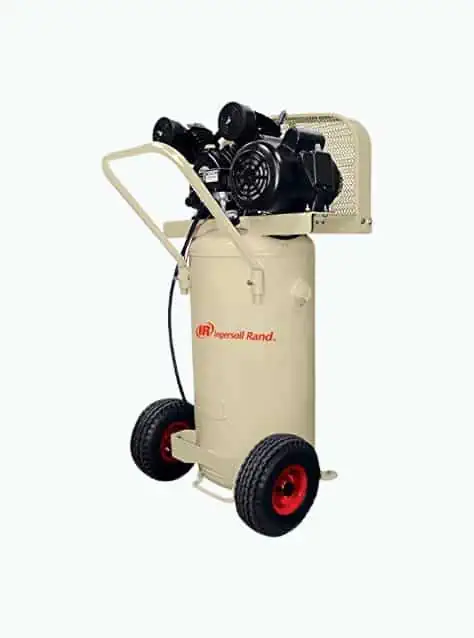
Ingersoll Rand 20-Gallon Single Stage Air Compressor
Best Air Compressor for Home Garages
This compressor uses a synthetic lubricant instead of oil-based alternatives. Synthetic oils are more efficient and give you a longer run time between changes. According to Ingersoll Rand, you get 2,000 hours, which is 4 times longer than traditional lubricants provide.
We included this Ingersoll Rand model because it is a trusted name in air tools and compressors. It has a low decibel level of 80, which is quieter than some vacuum cleaners, and it has an ergonomic handle and semi-pneumatic tires to make it easy to cart around.
It has a protective belt guard and a manual overload motor for smooth running and increased lifespan. It also has a 2 horsepower motor, delivering a maximum of 135 PSI. So, it is ideal for commercial and home garage duties.
What We Like
Trusted Brand
Ingersoll Rand makes excellent products that are loved by professionals and hobbyists alike across the globe. This model is undoubtedly popular given the high rating.
Very Quiet
This compressor is among the quietest to feature. It doesn’t quite reach the heights of the California Air model, but it comes close. Running a compressor for long periods can damage your ears, so it is recommended you use ear defenders to silence the noise.
135 PSI
135 PSI is more than enough pressure to handle all your air tools. You can connect nail guns, air hammers, spray guns, and just about anything else to this compressor.
What We Don't Like
Not Cheap
Ingersoll Rand provides high-quality products, and you have to dig deep to buy them. This is not a budget model, by any stretch. However, there are more expensive air compressors to choose from.
Product Specs
| Weight (pounds) | 200 |
| Dimensions (inches) | 22 x 23 x 43 |
| Max PSI | 115 |
| CFM | 135 |
| Capacity (gallons) | 20 |
| Oil/Oil-free | Synthetic lubricant |
| HP | 2 |
| Price | $$$$ |
| Warranty | 1-year |
Our Ratings
First-Hand Impression
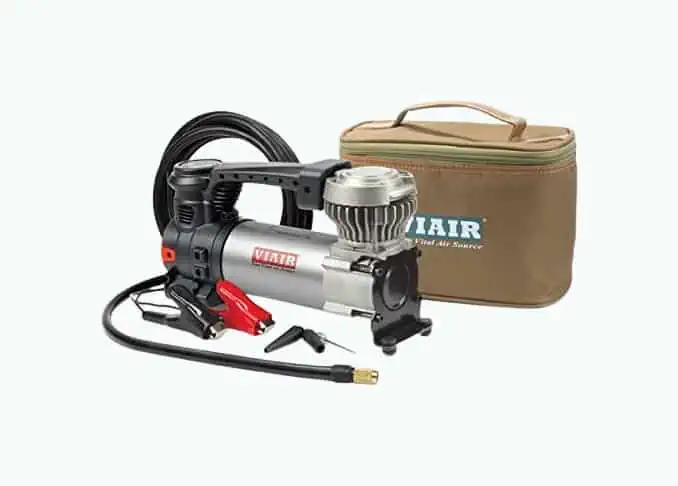
VIAIR 00088 88P Portable Air Compressor
Best Air Compressor for Tires
This VIAIR model is pretty hard to beat. It is small, lightweight, cheap, and stores easily in your trunk, ready for emergencies. Plus, it scores big for sheer customer satisfaction and sales numbers.
It clamps directly to your car battery and generates a maximum PSI of 120 and 1.47 CFM at freeflow. Because it is a 12-volt compressor, it uses almost no power, and yet it is powerful enough to inflate the tires of ATVs, SUVs, and trucks with a tire size of 33 inches.
This VIAIR comes with a 16 ft air compressor hose, a 10 ft power cord, and a 3-piece inflator tip kit. It has an easy-to-read gauge, adapters for different valves, and color-coded clamps, so you know which one is positive and negative.
What We Like
Lightweight and Portable
Small and powerful air compressors are extremely useful. When you are on the road and need to inflate a tire in an emergency, look no further than this Viair model.
Inflates Large Tires
You can inflate SUV and small truck tires with this air compressor. It can handle tires up to 33 inches, and it generates a maximum PSI of 120.
Connects To Your Battery
Forget 12V sockets; this air compressor clamps directly to your car battery. It means you can reach every tire on the vehicle and offer assistance to others should they need it.
What We Don't Like
Limited Uses
Once you have inflated your tires and the kid’s swimming pool, you have reached the limits of what this device can do. Unless you specifically need it for the car, try another compressor.
Product Specs
| Weight (pounds) | 4.5 |
| Dimensions (inches) | 6.75 x 6.25 x 10.75 |
| Max PSI | 120 |
| CFM | 1.47 at 0 PSI |
| Capacity (gallons) | N/A |
| Oil/Oil-free | N/A |
| HP | N/A |
| Price | $$$ |
| Warranty | 1-year limited |
Our Ratings
User Experience
California Air Tools 8010 8-Gallon Air Compressor
Best Quiet Air Compressor
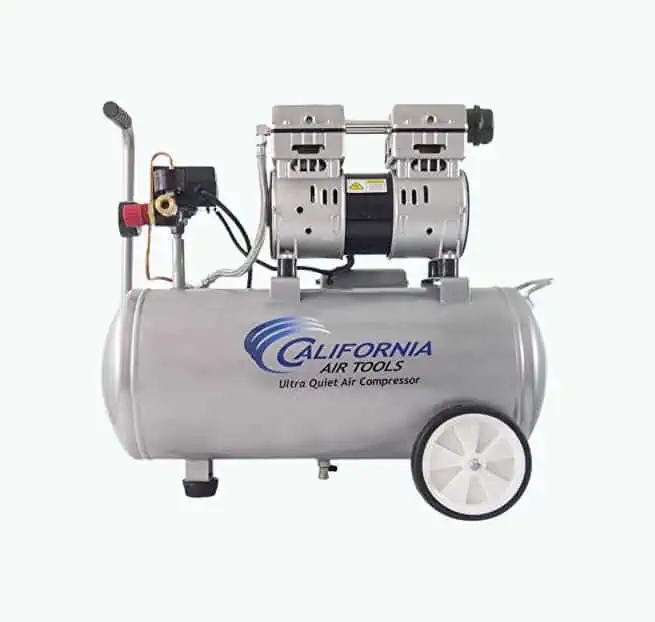
Few air compressors achieve the low decibel levels of this California Air Tools model. It runs at 60 dB! By anyone’s standard, that’s impressive. It’s the equivalent of the volume of a normal conversation. Some come very close, while others get nowhere near.
It has a maximum pressure of 120 PSI, so there are more potent examples in this review, but it has a dual-piston pump with a life cycle of plus 3,000 hours.
This compressor uses an oil-free pump, so you won’t have to fork out for new compressor oil or dispose of the old oil in the landfill. It also has an airflow of 2.2 CFM at 90 PSI and 3.1 CFM at 40 PSI.
So, it’s low maintenance, produces cleaner air, and starts on cold mornings with the minimum of fuss.
What We Like
Quieter Than the Competition
This compressor will make life better, especially if you work in an environment where noise is a problem. Thanks to the 60-decibel running volume, it makes a difference of 20 decibels compared to some models.
Quick Recharging
This compressor recharges from empty to full in just over 2 minutes. It means you can spend more time making money and less time standing around.
Oil-Free
Oil-free pumps require almost zero maintenance and produce cleaner air because there is no oil residue to contaminate. Also, they are cheaper to run thanks to not needing fresh compressor oil.
What We Don't Like
Weak 1 Horsepower Motor
It only has a 1 horsepower motor and produces 2.2 CFM at 90 PSI. That is low compared to some of the other compressors to feature. You might want to save this compressor for lighter duties in the shop.
Product Specs
| Weight (pounds) | 48 |
| Dimensions (inches) | 26 x 14 x 23 |
| Max PSI | 120 |
| CFM | 2.2 at 90 PSI |
| Capacity (gallons) | 8 |
| Oil/Oil-free | Oil-free |
| HP | 1 |
| Price | $$ |
| Warranty | 1-year limited |
Our Ratings
Personal Perspective
| Product | Best | Weight | Dimensions | Max PSI | Capacity | Oil/Oil-free | Warranty |
|---|---|---|---|---|---|---|---|
| Viair Portable Air Compressor | 12V | 9 lbs | 11 x 4 x 7″ | 150 | N/A | N/A | 1-year limited |
| NorthStar Air Compressor | Gas Powered | 492 lbs | 41 x 19 x 40″ | 175 | N/A | Oil | 4-year limited |
| Craftsman Oil-Free Air Compressor | Small | 32.5 lbs | 16.5 x 16.5 x 17.88″ | 150 | 6 gal | Oil-free | 1-year limited |
| Makita Big BoreAir Compressor | Portable | 80.8 lbs | 20 x 18 x 18.75″ | 130 | 4 gal | Oil | 1-year |
| Bostitch Oil-Free Air Compressor | Shop Air | 31 lbs | 17 x 17 x 19.25″ | 150 | 6 gal | Oil-free | 1-year limited |
| Metabo HPT Air Compressor | Pancake | 41 lbs | 18.5 x 16 x 16″ | 200 | 6 gal | Oil-free | 1-year |
| Porter-Cable Air Compressor | Painting | 30 lbs | 19 x 19 x 18″ | 150 | 6 gal | Oil-free | 1-year limited |
| Ingersoll Rand Air Compressor | Home Garages | 200 lbs | 22 x 23 x 43″ | 115 | 20 gal | Synthetic lubricant | 1-year |
| VIAIR Portable Air Compressor | Tires | 4.5 lbs | 6.75 x 6.25 x 10.75″ | 120 | N/A | N/A | 1-year limited |
| California Air Tools Air Compressor | Quiet | 48 lbs | 26 x 14 x 23″ | 120 | 8 gal | Oil-free | 1-year limited |
How Does an Air Compressor Work?
An air compressor works by pushing air into a tank. Air is compressed as more air is forced into the tank. The tank stores the air until it is ready to use.
Air gets forced through an outlet in the tank, attached to a hose, which links to an air tool. When you press the trigger on the device, the air escapes from the tank and channels down the hose, gathering pressure as it moves.
When it reaches the device, the pressure creates energy, which drives the tool.
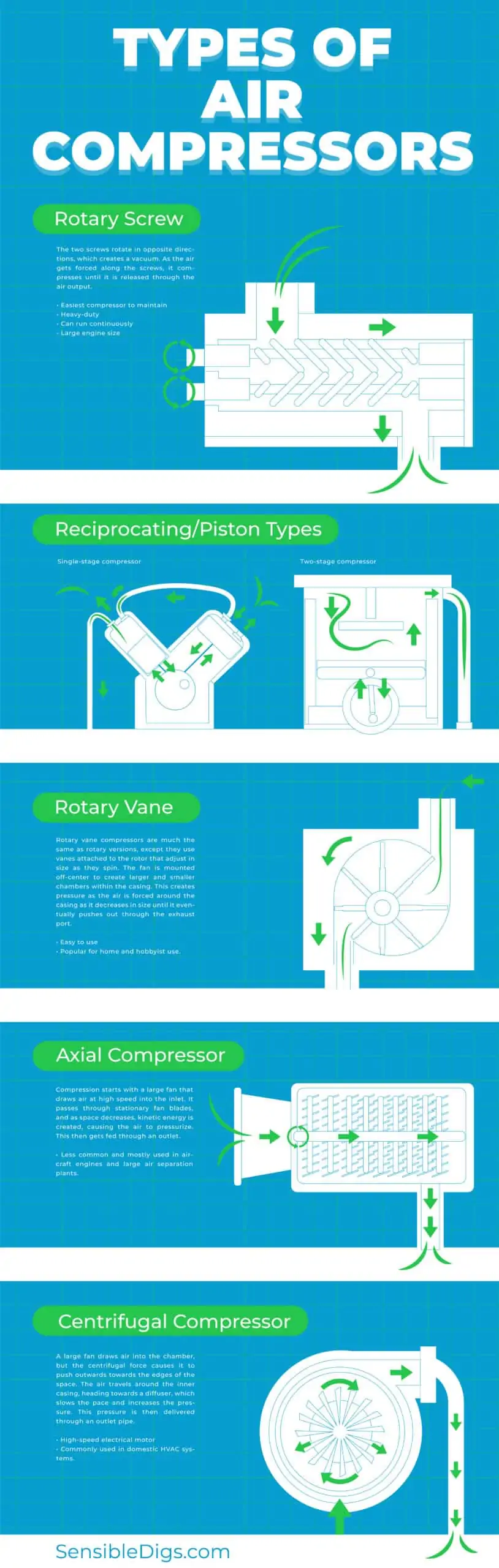
Types of Air Compressors
As we hinted in the introduction, the type of air compressors available vary according to size, style, and uses. Here is a breakdown of the different kinds you can get.
Pancake
Pancake air compressors are named after their shape. They have a squashed circular body with large feet and handles. This makes them portable and the ideal compressor for home, shop, and hobby use.
The tank capacity typically holds 6 gallons of air, although smaller ones are available, and they are extremely popular.
You would struggle to undertake heavy-duty tasks, but they are excellent multi-use compressors for air tools, auto repairs and tire shops.
Hot Dog
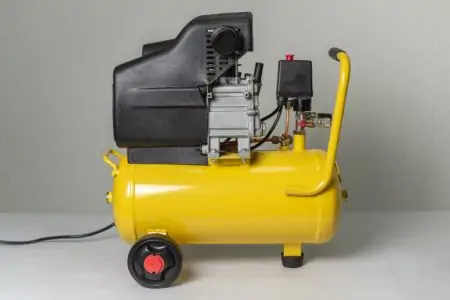
Hot dog air compressors have long, barrel-shaped bodies that resemble a hot dog. They are extremely popular because they have wheels and large handles to maneuver them easily.
Capacities vary with hot dog compressors. They range from 8 gallons to 30 gallons plus. This gives them the advantage of versatility because you can work on large or small projects.
Twin Stack
Twin stack air compressors look like double hot dog compressors. They have one tank stacked on top of another. The advantage is that you get more capacity without the need for a second air compressor.
They come with wheels and long handles to make them portable. Twin stack air compressors are a common site in auto repair shops and tire shops. They power a variety of air tools and can handle medium size tasks.
Wheelbarrow
Continuing with the visual theme, you can guess why wheelbarrow air compressors get their name. The tanks run either side of a central wheel, with the handle at the rear. It means you maneuver the compressor just like a wheelbarrow.
Wheelbarrow compressors range in capacity from 10 gallons upwards, and typically, they are gas powered, making them extremely powerful.
Vertical
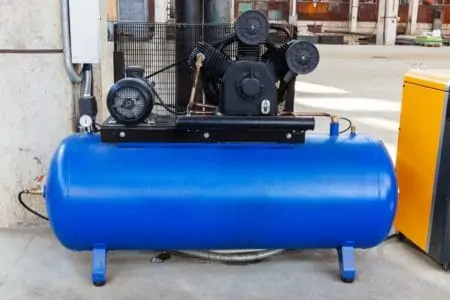
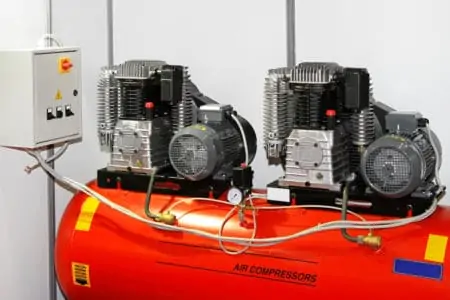
Vertical air compressors are the beasts of the bunch. They range in capacity from 20 gallons to 80 gallons plus. The larger models are stationary compressors without wheels and handles. Once in position, they stay put.
As you’ve guessed, their name comes from the fact that they stand upright. It means they take up less space in the workshop. Smaller versions have wheels and a handle to improve maneuverability.
How To Choose the Best Air Compressors
Deciding which air compressor is right for you depends on so many factors. But some elements are more important than others. Let’s run through the basics of what you should be looking for.
Type of Compressor
Choose the compressor based on the tasks at hand. If you want to tackle heavy-duty tasks, go for a larger capacity with strong HP and airflow. For smaller jobs, pancake compressors are a better choice.
And if you need to inflate your tires, try a 12V compressor. They are lightweight, compact, and portable.

Electric Vs. Gas
Electric compressors are far more common than gas models. Almost 90 percent of all air compressors are the electric variety. The advantage of electric air compressors is they are easy to operate and don’t need gas to power them.
They are also cheaper to buy, making them ideal for all sorts of settings. Also, electric air compressors have a wider capacity and power range, so if you are a hobbyist or a professional, there will be a model to suit.
Gas-powered air compressors offer a higher PSI and airflow, making them heavy-duty devices. They can also go anywhere, which is a distinct advantage over electric models because they don’t need an electrical socket.
The disadvantage is they are expensive, heavy, less widely available, noisy, and are not suited to home and hobby use.
Cubic Feet per Minute
Cubic feet per minute (CFM) is the measure of the airflow. The strength is determined by the volume of air the compressor moves during operation. This is crucial because it affects the types of tasks you can undertake and the tools you can use.
CFM varies with each model, but other factors can affect the airflow volume. Temperature changes and humidity can impede performance, so be careful where you locate your compressor.
You often see SCFM, or standard cubic feet per minute, as a value when talking about compressor airflow. The difference between the two is CFM is a lower rate because it measures the flow under pressure without standardized conditions.
SCFM measures the rate of flow under standardized conditions, so the numbers tend to be higher. Think of it like a car’s average miles per gallon (MPG). Manufacturers like to quote MPG under almost perfect conditions, whereas in the real world, there is no such thing.

Oil-Free Operation
Oil-free compressors are commonplace today. Their advantage is they need less maintenance and zero motor oil. It means they are better for the environment because they eliminate the need to dispose of old motor oil.
You also remove the chances of oil leaks, keeping your work environment clean.
Oil compressors need maintenance, increasing the owner’s financial burden, and the impact on the planet because you have to dispose of the old oil.
Tank Capacity
Tank capacity is judged by the amount of compressed air it stores. Increasing the tank capacity means that you can use multiple lines simultaneously and work on longer projects.
Remember that compressors with larger tanks are expensive compared to other models. If you are tackling smaller tasks, you don’t need extra capacity, and you should opt for reduced tank size.

Motor Horsepower
Horsepower (HP) determines the speed at which the tank fills. Buying a compressor with a huge tank and a low HP means you will be waiting for the tank to refill. Look for the best HP, especially when you opt for the larger models.

Maximum PSI
Pounds per square inch (PSI) is the pressure the compressor produces during operation. Air compressors need a minimum of 90 PSI to be effective at operating most air tools. You should choose a PSI level that’s at least 20 percent greater than your device.
This helps the compressor and the tool work in harmony, without struggling to maintain the correct PSI. To be on the safe side, try and avoid compressors with less than 100 PSI.
Most professionals using air tools choose a maximum of 125 PSI to cover all their needs.
Air Compressor FAQs

What Size Air Compressor Do I Need?
The size of the air compressor you need is determined by how you intend to use it. Take an audit of your air tools to see what PSI you need. Always size the compressor to your most potent tool.
The two most important factors are the PSI and the CFM when determining the size. If you are using the air compressor in a professional setting, maximizing the CFM and PSI is crucial as the tools you will be using are more demanding.
However, in the home or for hobby use, fewer PSI and CFM are acceptable because there is less demand placed on the compressor.

Is a Higher CFM Better for an Air Compressor?
Typically, a higher CFM rating delivers a more concentrated airflow. This is ideal for larger projects and heavy-duty tasks. If you are working on smaller jobs or using the compressor occasionally, CFM is less critical.
Which Is Better: Oil or Oil-Free Air Compressors?
It depends on what you prefer. Oil-free compressors are easier to maintain and kinder to the environment because they don’t produce waste oil. However, oil compressors are better suited to heavy tasks.
Also, oil compressors last longer because they are continually lubricated. The downside with oil-based compressors is the upkeep and the cost of fresh oil.

Is It Worth Buying an Air Compressor?
Air compressors are a valuable tool, especially if you’re a jack of all trades who likes to work on many tasks or a professional craftsman. You would be surprised to know how many things you can do with an air compressor.
Aside from allowing you to pump up useful tools (from impact wrenches to spray guns), you can use them to inflate your basketballs, air mattresses, deflated bike or car tires, clean your carpets, and more.

What Is a Good Size Air Compressor for Home Use?
If you need an air compressor for home use, you can make do with a 1 and 6-gallon tank-size unit. These are effective for all but the most labor-intensive do-it-yourself projects.
Paint sprayers and other devices that rely on a steady flow of air need a larger tank to accommodate the gap in supply and demand between the two.
For tasks such as grinding, sanding, or painting, you should purchase an air compressor with a tank capacity of 10 to 80 gallons to maintain constant pressure throughout the pneumatic tool.

What Is the Life Expectancy of an Air Compressor?
An air compressor can last between 5 and 25 years, but it depends on what model we’re talking about. Not all air compressors are built equally; some are used more often than others.
Air compressors designed for light-duty tasks can last long if you don’t use them daily. Those meant for industrial use typically have shorter lifespans, but you have exceptions even in that area (like rotary compressors, which are built to last).

How Much Does a Good Compressor Cost?
An air compressor can be as cheap as $150 and as expensive as $2,500. Models designed to power air tools are typically cheaper and more accessible to the average DIY enthusiast.
If you’re looking for an air compressor for heavy-duty tasks, you can expect to pay more than $1,000.

What Is Better: 1-Stage or 2-Stage Compressor?
To determine which of these is better, you need to think about what you need an air compressor for.
You can power almost every air tool in your garage or a small woodworking shop with a single-stage air compressor. From brad nailers to impact drivers, a 1-stage compress can tackle them all. You can also use this compressor for metal shearing, riveting, and grinding.
A 2-stage air compressor is a superior choice for more demanding tools and tasks. On an industrial level, you can’t do anything with a single-stage compressor.
These compressors are used in auto assembly, food preparation and packaging, the beverage industry, aerospace, military, and more.

What Brand Has the Best Air Compressor?
Many brands make high-quality air compressors, but the ones battling for the number one spot are Makita and DEWALT.
Industry experts seem to think that Makita’s air compressor products and features are superior to any other manufacturer currently available.
Their entire line of compressors is highly regarded for their products’ effectiveness, dependability, and longevity, making them an excellent option for any kind of work or maintenance.
Since DEWALT is well-known for manufacturing tools of a high standard, it stands to reason that the company also produces high-quality air compressors. You may anticipate a long-lasting performance from these units, which have been constructed to complete the task effectively.
Other good brands of air compressors include Craftsman, Ingersoll, and California Air Tools.
Compress To Impress
Compressors are multi-use tools that come in all shapes and sizes. If you are a hobbyist user, small and compact compressors will suit you best, but you will need something with more punch for professional and expert use.
The takeaway from all this is to think about the CFM and the PSI. Next, consider the tank capacity and the horsepower of the motor for faster refills.
One thing is certain, you will not regret getting an air compressor, no matter what model you choose.