Our Top Picks

- 100 percent duty cycle
- Motor made from the US
- 30,000 hours of runtime

- 5 HP two-stage pump
- 19 CFM at 90 PSI
- 50,000-hour cast iron pump

- Cast iron single-stage pump
- 12.4 CFM at 100 PSI
- Quiet low-RPM motor

- Quiet 75 dB operation
- Oil-free pump
- Weighs 213 pounds

- 220-pound shipping weight
- Cast iron twin-cylinder pump
- 9.3 CFM at 90 PSI

- Cast iron, twin-cylinder pump
- Trusted brand name
- 3.7 horsepower motor
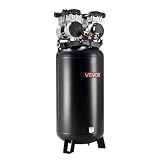
- Oil-free 4 HP motor
- 10 SCFM at 90 PSI
- Dual air outlets
Our Review Criteria: A 60-gallon compressor earns its floor space only if its CFM at 90 PSI covers the tools it feeds, so airflow set the order here. Behind that we compared the pressure ceiling and its effect on usable air between cycles, single-stage versus two-stage design, cast-iron versus aluminum pumps, and oil-lubricated versus oil-free operation. Duty-cycle rating, noise level, and tank certifications such as ASME and CRN counted for shop use. We built each assessment from manufacturer specifications and published owner and reviewer feedback, weighing genuine drawbacks against strengths instead of listing only positives. Every recommendation was checked for current availability, and we replace any model that goes out of production.
Every air compressor works the same way: it squeezes air into a tank to drive your tools. The problem with a pancake or hot-dog compressor is reserve. Run a die grinder or a DA sander on a small tank and the motor cycles constantly, the pressure sags, and the tool slows down. A 60-gallon tank holds enough compressed air to keep continuous-use tools running at full speed.
These are the 7 best 60-gallon air compressors for the shop, picked for steady CFM under load, pump build quality, and how well each one matches a specific job. We verify every recommendation is currently available and swap any model that goes out of production.
Why Upgrade to a 60-Gallon Air Compressor?
The real advantage of a 60-gallon tank is the air reserve it banks for high-draw tools. A small portable unit recovers fine for a brad nailer, but a dual-action sander pulls roughly 6 to 9 CFM continuously and a media blaster can demand 15 CFM or more. A 60-gallon tank stores enough pressurized air that the pump can keep pace instead of stalling your tool every few seconds.
The size also unlocks more capable hardware. Most 60-gallon air compressors run on a 230-volt circuit, which feeds a larger motor and a belt-driven pump that sustains higher PSI and CFM than a 120-volt garage unit can. That is what makes sandblasting a rusty frame or spraying a full vehicle realistic rather than a stop-and-wait chore.
How Do You Choose a 60-Gallon Air Compressor?
You choose a 60-gallon air compressor by matching its CFM, PSI, and pump type to the tools you actually run, not by horsepower alone. Before you drop the cash on a massive stationary unit, here are the critical specs and features you need to consider.
Single-Stage vs. Two-Stage
This is the most common decision you will face. Single-stage compressors compress air once and store it. They are great for general air tools like nail guns, air impact wrenches, and air hammers.
Two-stage compressors are the heavy-duty choice. They compress the air, cool it, and then compress it again to a higher pressure. This results in higher efficiency and PSI, making them the standard for auto body shops and industrial applications where tools run all day.
Product Reviews
Here are our picks for the best 60-gallon air compressors you can buy right now, from the high-output industrial unit to the lightest one to install. Each pick is matched to a specific job, with the honest trade-offs spelled out.
Quincy QT-54 Reciprocating 60-Gallon Air Compressor
Best 5HP 60-Gallon Air Compressor

Quincy has built compressors since 1920, and the QT-54 is the model that earns the brand its shop-floor reputation. It pairs a US-made Baldor motor with a cast iron, two-stage pump rated for 30,000 hours of service, which works out to years of daily heavy use before a rebuild.
The 5 HP pump runs on a 230-volt circuit at a slow 1,310 RPM. Lower pump speed is the quiet engineering choice here: it generates less heat and wear than the fast-spinning pumps on cheaper units, which is a large part of why the 30,000-hour rating is believable.
Air delivery lands at 15.2 CFM, enough to keep sanders, grinders, and spray guns fed without the pressure sagging mid-job. The catch is its 475-pound mass, so pick a permanent, bolted-down spot before it arrives.
What We Like
100 Percent Duty Cycle
The 100 percent duty cycle means you can run this compressor without pausing to let the motor cool. That is what makes long sanding or blasting sessions practical instead of stop-and-go.
Premium US Motor
The inclusion of a Baldor motor is a huge plus. These American-made motors are known for reliability and torque, ensuring the compressor starts easily even in colder weather.
Built for the Long Haul
With a 30,000-hour pump life rating, this isn’t a throwaway tool. It is an investment that will likely outlast most of the other tools in your shop.
What We Don't Like
Customer Service Hurdles
While the hardware is top-tier, some users report frustration when trying to reach customer support for parts or warranty questions.
Product Specs
| Weight (pounds) | 475 |
|---|---|
| Dimensions (inches) | 29 x 21 x 64 |
| Max PSI | 175 |
| CFM | 15.2 at 175 PSI |
| Oil/Oil-free | Oil |
| Horsepower | 5 |
| Price | $$ |
| Warranty | 1-year |
Polar Air PS05V060Y1 Two-Stage 60-Gallon Air Compressor
Best 60-Gallon Air Compressor for Industrial Use

Polar Air, a brand built by Eaton Compressor, targets the same buyer Ingersoll Rand does: an automotive shop, a fabrication bay, or a serious home garage that runs tools all day. The PS05V060Y1 is the heavy-duty pick on this list, and the airflow figure is the reason.
A 5 HP single-phase motor drives a three-cylinder, two-stage cast iron pump to 19 CFM at 90 PSI. That is the highest air delivery here, with enough margin to feed a media blaster or a frame-line of air tools without the pressure dropping. The pump turns at a slow 1,750 RPM, which keeps operating temperatures down and is part of why the cast iron pump carries a 50,000-hour service rating.
The tank is ASME and CRN certified and the unit is ETL listed, so it meets the pressure-vessel and electrical standards a working shop needs. Polar Air assembles and tests these units in the United States.
What We Like
Top-of-List Air Delivery
19 CFM at 90 PSI is the most airflow in this roundup. If your work involves continuous-draw tools, a sandblast cabinet, or several techs pulling air at once, this is the unit that holds pressure when the others would sag.
Cast Iron Pump, 50,000-Hour Rating
The three-cylinder pump is full cast iron and splash-lubricated, rated for 50,000 hours of service. That is the kind of pump that gets rebuilt rather than replaced, which is what justifies the industrial price.
Cool, Low-RPM Operation
The 1,750 RPM motor runs slower than the high-speed pumps on budget units, so it generates less heat and vibration. Cooler running means less moisture pushed into your air lines and less wear on the valves.
Certified for Shop Use
The ASME/CRN tank certification and ETL electrical listing matter if you run a commercial space or need to satisfy an inspector. Many cheaper imports skip these, and factory-installed isolator pads are included to cut vibration.
What We Don't Like
It Is a Permanent Install
This is a tall, heavy vertical unit that needs a 230-volt circuit and bolting down. There is no rolling it around the shop, so plan the location and the electrical run before it ships.
Premium Price
Polar Air sits at the top of this list on cost. For intermittent home use you may not need this much pump, and a single-stage unit would save money. The value is in continuous, heavy-duty work.
Product Specs
| Weight (pounds) | Not listed |
|---|---|
| Dimensions (inches) | Not listed |
| Max PSI | 175 |
| CFM | 19 at 90 PSI |
| Oil/Oil-free | Oil |
| Horsepower | 5 |
| Price | $$$ |
| Warranty | Manufacturer warranty |
Quincy Q13160VQ Single-Stage 60-Gallon Air Compressor
Best Single Stage 60-Gallon Air Compressor

A single-stage pump is the right call when you want strong air delivery without paying for a two-stage unit you do not need. The Quincy Q13160VQ makes that case well, built to the same standard as the QT-54 at the top of this list but at a lower price.
The 3.5 HP motor and cast iron single-stage pump deliver 12.4 CFM at 100 PSI, with a 145 PSI ceiling. That output handles ratchets, impacts, sanders, and a spray gun comfortably in a one-person shop. Quincy rates the pump beyond 10,000 hours, and the cast iron cylinder, valve plate, and crankshaft are the parts doing the heavy lifting there.
Like most single-stage reciprocating compressors, it is built for intermittent duty rather than running flat out all day. Used within that design, it is one of the better-built single-stage units you can buy, and the brand’s parts and service network is a genuine advantage.
What We Like
Quincy Build at a Lower Price
You get the same cast iron pump quality Quincy is known for without the two-stage premium. For a shop that does not run continuously, that is the smarter place to spend.
Genuinely Quiet for a Recip
The low-RPM pump and quality components make this one of the quieter cast iron reciprocating units in its class, well short of the harsh clatter cheaper single-stage compressors are known for.
Long-Life Cast Iron Pump
The pump is rated past 10,000 hours, with a cast iron cylinder, valve plate, and crankshaft. Those are the components that fail first on lesser units, so building them in cast iron is what earns the durability score.
Backed by a Real Service Network
Quincy parts and authorized service are widely available, so a worn gasket or valve years from now is a quick fix rather than the end of the compressor.
What We Don't Like
Single-Stage Duty Limits
This is an intermittent-duty design, roughly 5 minutes of running in 10. Push it past that on a long blasting session and the unloader line can run hot, so it is the wrong tool for true all-day continuous work. For that, step up to the Polar Air two-stage.
Lower Pressure Ceiling
The 145 PSI maximum trails the 175 PSI two-stage units here, so the usable-air reserve between motor cycles is smaller. For most single-operator shops that is a fair trade for the price.
Product Specs
| Weight (pounds) | Not listed |
|---|---|
| Dimensions (inches) | Not listed |
| Max PSI | 145 |
| CFM | 12.4 at 100 PSI |
| Oil/Oil-free | Oil |
| Horsepower | 3.5 |
| Price | $$ |
| Warranty | 1-year (extendable to 3-year) |
California Air Tools CAT-60040CAD Ultra-Quiet 60-Gallon Air Compressor
Best Quiet 60-Gallon Air Compressor

Noise is the deciding factor for anyone running a compressor in an attached garage or near neighbors. The CAT-60040CAD answers that with a 75-decibel rating, roughly the level of a running vacuum cleaner, so you can talk over it. A typical cast iron reciprocating unit runs near 90 decibels, above the 85 decibel 8-hour exposure limit NIOSH recommends (2), so hearing protection is required around the cast iron units on this list.
The quiet comes from a low-RPM, oil-free dual-piston pump. Oil-free also means no oil changes and no oil mist in the air line, which is why this one is a sensible match for spray finishing. The 4 HP motor reaches 125 PSI and delivers 10.6 CFM at 90 PSI.
It is not the strongest unit here, but it is the easiest to live with, and at 213 pounds it is lighter than the cast iron heavyweights.
What We Like
Ear-Saving Silence
At 75 decibels, this unit is drastically quieter than traditional reciprocating compressors. You won’t need hearing protection just to be in the same room with it.
No Oil to Manage
The oil-free pump skips oil changes, separator filters, and disposal entirely. It also keeps oil mist out of your air lines, which is exactly what you want feeding a spray gun or a plasma cutter.
Easier to Position
Weighing just 213 pounds, it is much easier to maneuver into place than the 400+ pound behemoths. It’s still stationary, but installation is less of a back-breaker.
What We Don't Like
Moderate Power
With 10.6 CFM at 90 PSI, it is great for most tools but might struggle with continuous high-demand equipment like large sandblasters compared to the Quincy.
Lower Max Pressure
The 125 PSI maximum is lower than the 175 PSI standard found on heavy-duty industrial models.
Product Specs
| Weight (pounds) | 213 |
|---|---|
| Dimensions (inches) | 21 x 29 x 66 |
| Max PSI | 125 |
| CFM | 10.6 at 90 PSI |
| Oil/Oil-free | Oil-free |
| Horsepower | 4 |
| Price | $$ |
| Warranty | 1-year limited |
Klutch 60-Gallon Single-Stage Vertical Air Compressor
Best Lightweight 60-Gallon Air Compressor
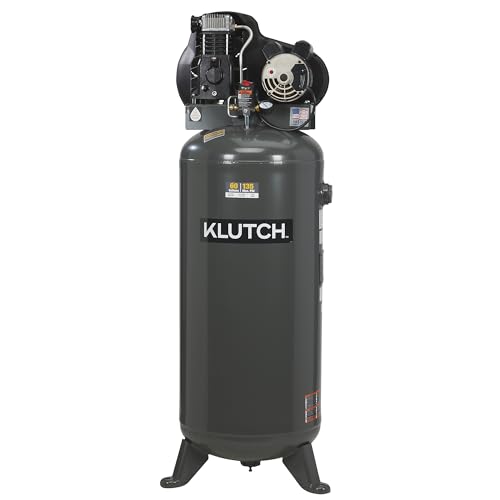
If you want 60-gallon capacity without wrestling a 450-pound machine into place, the Klutch is the easiest unit here to move. At a 220-pound shipping weight it is the lightest pick on the list, which matters a lot if you are installing it solo or may relocate it later.
Low weight does not mean a flimsy pump. Klutch, the house brand from Northern Tool, fits a splash oil-lubricated cast iron twin-cylinder pump driven by a 3.7 HP motor. It delivers 9.3 CFM at 90 PSI with a 135 PSI ceiling, enough for ratchets, impacts, nailers, and a spray gun in a home shop.
A balanced flywheel and ball-bearing crankshaft keep vibration down, and reviewers note the pump recovers quickly and runs cool for a single-stage unit. It is a sensible workhorse for the DIYer who wants cast iron durability in a manageable package.
What We Like
Lightest Unit Here
A 220-pound shipping weight makes this the easiest 60-gallon compressor on the list to position alone, a real advantage over the 400-plus-pound cast iron heavyweights.
Cast Iron Pump at a Fair Price
The splash-lubricated cast iron twin-cylinder pump is the durable part you want, and getting it in a lightweight, value-priced unit is what earns this pick. Cast iron sheds heat and wears slower than aluminum.
Smooth, Quick Recovery
The balanced flywheel and ball-bearing crankshaft cut vibration, and the twin-cylinder pump tops the tank back up faster than a single-cylinder design, so you spend less time waiting between bursts.
Northern Tool Parts Support
As a Northern Tool house brand, parts and oil sight gauge upkeep are straightforward, and the retailer support is more established than a no-name import.
What We Don't Like
Modest Pressure Ceiling
The 135 PSI maximum is the lowest among the oil-lubricated units here. It is fine for standard tools, but it leaves a thinner usable-air reserve than a 175 PSI two-stage, so high-demand tools cycle the motor more often.
Single-Stage, Intermittent Duty
Like other single-stage compressors, it is built for start-and-stop work rather than continuous all-day running. For sustained blasting or a busy commercial bay, a two-stage unit is the better tool.
Product Specs
| Weight (pounds) | 220 (shipping) |
|---|---|
| Dimensions (inches) | Not listed |
| Max PSI | 135 |
| CFM | 9.3 at 90 PSI |
| Oil/Oil-free | Oil |
| Horsepower | 3.7 |
| Price | $ |
| Warranty | Manufacturer warranty |
DeWALT DXCMLA3706056 60-Gallon Air Compressor
Best Budget 60-Gallon Air Compressor

DeWALT’s stationary compressor aims for pro-level specs at a price a home shop can justify, which is why it lands as the budget pick rather than a stripped-down one. The hardware is more serious than the price suggests.
A 3.7 HP motor drives an oil-lubricated, cast iron twin-cylinder pump to 11.5 CFM at 90 PSI and a 155 PSI ceiling. That cast iron pump is the part that matters for lifespan: it sheds heat better and wears slower than the aluminum pumps common at this price.
The output covers nearly every air tool in a home garage, from ratchets and impacts to a spray gun, and it ships with the gauge and on/off switch already mounted.
What We Like
Solid Specs
The 3.7 HP motor combined with 155 max PSI provides plenty of headroom for garage work. It balances power and electrical efficiency well for residential circuits.
Accessible Price
This unit often retails for significantly less than the Quincy or IR models. If you are building a shop on a budget, this frees up cash for hoses, reels, and tools.
Cast Iron Pump
Despite the lower price, DeWALT didn’t skimp on the pump body. The cast iron twin-cylinder design ensures better cooling and wear resistance than aluminum alternatives.
What We Don't Like
Component Quality
To hit this price point, some peripheral components (like switches or valves) aren’t as heavy-duty as those on industrial units. You might need to replace a pressure switch sooner than expected.
Product Specs
| Weight (pounds) | 247 |
|---|---|
| Dimensions (inches) | 30 x 24 x 68 |
| Max PSI | 155 |
| CFM | 11.5 at 90 PSI |
| Oil/Oil-free | Oil |
| Horsepower | 3.7 |
| Price | $ |
| Warranty | 2-year pump, 1-year parts |
VEVOR Oil-Free 60-Gallon Air Compressor
Best Oil-Free 60-Gallon Air Compressor
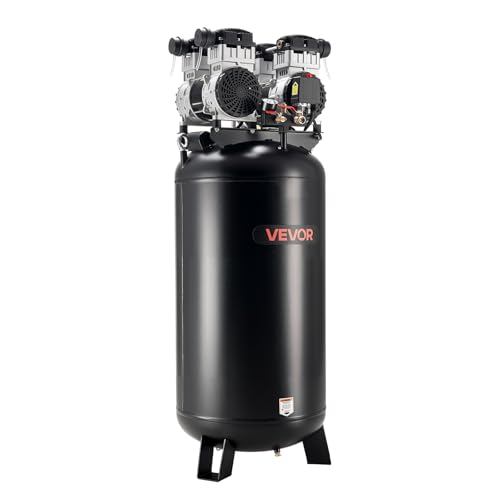
Most 60-gallon compressors run an oil-lubricated pump, which means oil changes, separator filters, and a chance of oil mist in the air line. The VEVOR oil-free unit skips all of that, which is the practical reason to choose it over a cast iron model in this class.
A 4 HP motor drives the oil-free pump to 10 SCFM at 90 PSI with a 125 PSI ceiling, enough for ratchets, impacts, tire work, and most spray jobs in a one-person shop. The 60-gallon tank is built from 3mm carbon steel with a powder-coated finish, and two air outlets let you run two tools at once. It needs a 230-volt, single-phase circuit and ships without a plug, so it is hardwired like the rest of this list.
This is the value oil-free pick rather than an industrial workhorse. Where the California Air Tools model spends its budget on whisper-quiet operation, the VEVOR spends it on a bigger pump and dual outlets for less money.
What We Like
No Oil Maintenance
The oil-free pump means no oil changes, no oil separators, and no oil mist reaching your air lines. That is less upkeep and cleaner air for spray finishing or running an airbrush.
Strong Output for the Price
10 SCFM at 90 PSI from a 4 HP motor keeps common air tools fed, and it costs less than the cast iron units delivering similar numbers. For a budget-minded shop, that is the trade that matters.
Two Tools at Once
Dual air outlets let a second person tap in, or let you keep a blow gun and an impact connected without swapping fittings. The 3mm carbon steel, powder-coated tank adds corrosion resistance.
What We Don't Like
Oil-Free Means Shorter Pump Life
Oil-free pumps run hotter and wear faster than the cast iron, oil-lubricated pumps on the Polar Air or Quincy. You trade some long-term durability for the no-maintenance convenience, so this is a better fit for moderate use than daily production work.
Newer Brand, Thinner Track Record
VEVOR is a value brand without the decades-long service network of Quincy or DeWALT. Early owner feedback is positive on build and leak-free assembly, but parts support is less established if something fails down the road.
Product Specs
| Weight (pounds) | Not listed |
|---|---|
| Dimensions (inches) | Not listed |
| Max PSI | 125 |
| CFM | 10 SCFM at 90 PSI |
| Oil/Oil-free | Oil-free |
| Horsepower | 4 |
| Price | $ |
| Warranty | Manufacturer warranty |
| Product | Best | Weight | Dimensions | Max PSI | CFM | Oil/Oil-free | Hp | Warranty |
|---|---|---|---|---|---|---|---|---|
| Quincy Reciprocating Compressor | 5 Hp | 475 lbs | 29 x 21 x 64″ | 175 | 15.2 at 175 PSI | Oil | 5 | 1-year |
| Polar Air PS05V060Y1 | Industrial Use | Not listed | Not listed | 175 | 19 at 90 PSI | Oil | 5 | Manufacturer |
| Quincy Q13160VQ Air Compressor | Single Stage | Not listed | Not listed | 145 | 12.4 at 100 PSI | Oil | 3.5 | 1-year |
| California Air Tools Ultra-Quiet | Quiet | 213 lbs | 21 x 29 x 66″ | 125 | 10.6 at 90 PSI | Oil-free | 4 | 1-year limited |
| Klutch Single-Stage Compressor | Lightweight | 220 lbs | Not listed | 135 | 9.3 at 90 PSI | Oil | 3.7 | Manufacturer |
| DeWALT Air Compressor | Budget Pick | 247 lbs | 30 x 24 x 68″ | 155 | 11.5 at 90 PSI | Oil | 3.7 | 2-year pump, 1-year parts |
| VEVOR Oil-Free Compressor | Oil-Free | Not listed | Not listed | 125 | 10 SCFM at 90 PSI | Oil-free | 4 | Manufacturer |
How to Install & Use a 60-Gallon Air Compressor
Installing a 60-gallon compressor is a bit more involved than plugging in a toaster. Here is the quick rundown:
- Location First: Place the compressor at least 12 inches away from walls to ensure the flywheel fan can suck in fresh air to cool the pump.
- Bolt It Down: These units vibrate. You must bolt them to the floor, preferably using vibration isolation pads. These rubber pads save your concrete and reduce noise significantly.
- Power Up: Most 60-gallon units require a 230-volt circuit and are “hardwired,” meaning they don’t come with a plug. You (or an electrician) will need to run a dedicated line from your breaker panel to the pressure switch on the compressor.
- Break-In: If your model is oil-lubricated, check the oil level, open the drain valve completely, and run the unit for 30 minutes with no pressure. This seats the piston rings properly. Close the valve, fill the tank, and you are ready to work.
How Do You Maintain a 60-Gallon Air Compressor?
You maintain a 60-gallon air compressor by draining tank moisture after every use, checking air filters monthly, and following the oil change schedule. The draining matters most: water buildup rusts the tank from the inside out. Oil changes typically land every 3 to 6 months depending on usage, so check the manufacturer’s schedule for your model. Running cost matters too: the average U.S. household paid $0.173/kWh for electricity in 2025 (3), and a compressor cycling all day adds up over a year of shop use.
60-Gallon Air Compressor FAQs
Final Thoughts
The right 60-gallon compressor comes down to your duty cycle and your tools. For continuous, heavy work the Polar Air two-stage delivers the most air; for a quiet attached garage the California Air Tools unit is the easiest to live with; and the Klutch is the simplest to install on your own. Whichever you pick, size the CFM to your most demanding tool first.
Before you buy, measure the floor space and confirm your panel can supply a dedicated 230-volt circuit. These units bolt down and stay put, so it is worth getting the location and the electrical right the first time.