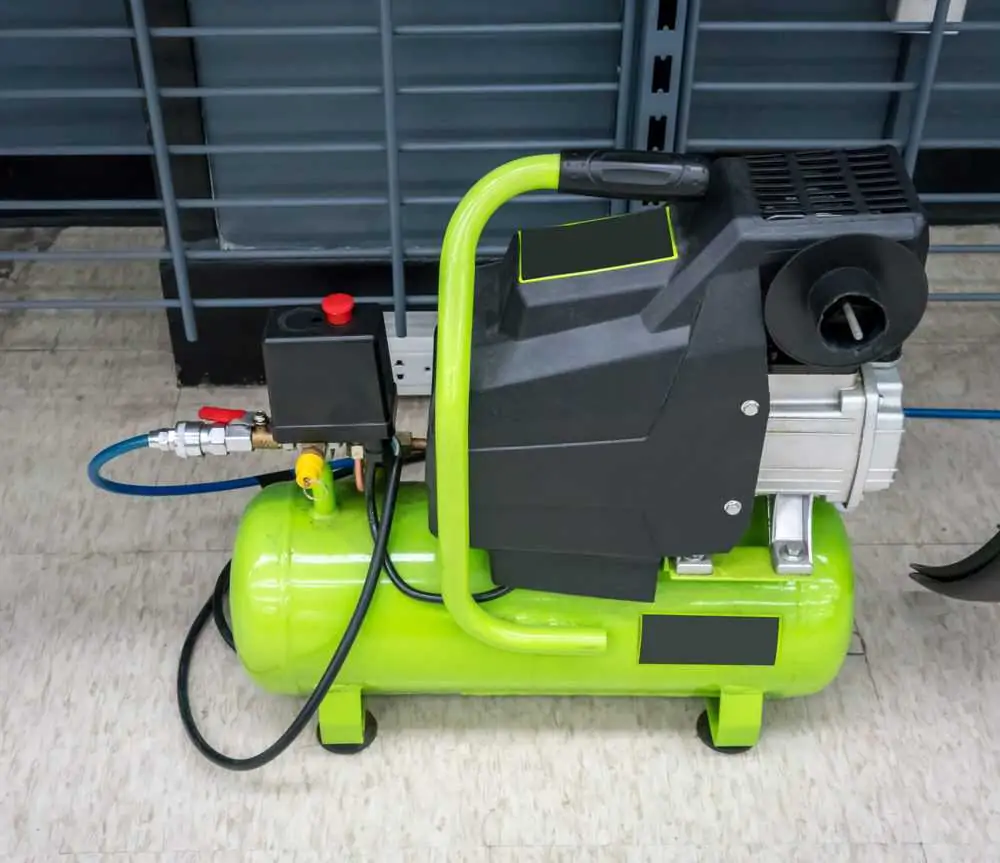
Our Top Picks

- 2-cylinder cast-iron pump
- 5.0 CFM at 90 PSI
- Dual-voltage 115V/230V motor
- 68 decibel operation
- Lifetime pump warranty
- Oil-free motor

- Oil-free, no upkeep
- 175 max PSI
- Two quick couplers

- 2.5 HP oil-free motor
- 175 max PSI
- 29-gallon tank

- No outlet needed
- 6.5 HP gas engine
- Dual air outlets
- Oil-free, low upkeep
- 4.5 SCFM at 90 PSI
- Carbon-steel tank
Our Review Criteria: Air delivery decides whether a 20-gallon compressor actually runs your tools, so CFM at 90 PSI led every comparison here. We weighed maximum pressure and the reserve it buys between motor cycles, then pump type: an oil-lubricated cast-iron pump trades routine maintenance for a longer working life, while an oil-free design asks less upkeep of you, and that tradeoff shaped the rankings. Noise in decibels and how easily each unit moves rounded out the criteria. We read independent reviews and verified owner feedback alongside the manufacturer data rather than restating a spec sheet. Every recommendation was confirmed currently in stock, and we swap out any model that goes out of production.
Pneumatic tools need a steady supply of pressurized air, and a pancake compressor runs dry the moment you pick up a sander or an impact wrench. A 60-gallon stationary tank fixes that and then eats half your garage.
A 20-gallon air compressor is the size that splits the difference. It stores enough air for automotive and home projects, feeds most tools without the motor cycling every few seconds, and still rolls out of the way when you are done.
The best 20-gallon air compressors are separated by three numbers: air delivery (CFM), max pressure, and noise. Two picks went out of production since the last update, so this guide was rebuilt around units you can buy today, each matched to the job it does best.
What Can I Do With a 20-Gallon Air Compressor?
A 20-gallon air compressor runs impact wrenches, air ratchets, framing and brad nailers, needle scalers, tire inflators, and small LVLP or HVLP spray guns without stalling between trigger pulls. It holds enough air for continuous work and still wheels around a garage or a job site. Here is what this tank size handles well:
- Automotive repair: Run air impact wrenches and ratchets for tire rotations and suspension work.
- Carpentry and framing: Power framing nailers and brad nailers without the motor constantly cycling.
- Surface preparation: Operate air hammers and needle scalers for rust removal.
- Painting projects: Handle small to medium painting tasks with spray guns (LVLP or HVLP).
- General maintenance: Inflate tires, blow off machinery, and clean workspaces.
- Home renovation: Power texture sprayers for drywall or inflate large pool toys in seconds.
One limit is worth knowing before you reach for a blow gun. OSHA restricts compressed air used for cleaning to under 30 psi at the nozzle, and then only with effective chip guarding and personal protective equipment (1). Turn the regulator down for cleanup work and back up for your tools.
How Do You Choose a 20-Gallon Air Compressor?
Start with the air your thirstiest tool needs, which means its CFM rating at 90 PSI, then weigh max pressure, pump type, noise, and where the unit will live. The horsepower number printed on the box is the least useful figure on it.
Product Reviews
Every pick below is in stock today and was weighed on air delivery at 90 PSI, max pressure, pump type, noise, and how easily the unit moves. Two slots changed since the last update because those listings went out of production. Here is what earns each spot.
NorthStar Single-Stage 20-Gallon Air Compressor
Best 20-Gallon Air Compressor for Home Garage

The NorthStar is the pick for a garage compressor you expect to outlast the tools plugged into it. It runs a two-cylinder cast-iron single-stage pump, the same construction shop compressors use, which sheds heat far better than the coated oil-free pumps common at this tank size.
Air delivery is where it earns the spot. It is rated at 5.0 CFM at 90 PSI and 6.0 CFM at 40 PSI, and the 90 PSI figure is the one that decides whether a tool keeps running. At 5.0 CFM it feeds an impact wrench, an air ratchet, or intermittent die-grinder work without long waits on the tank.
The 2 HP induction motor is dual voltage. It ships wired for 115V on a 6 ft cord and can be rewired for 230V by a qualified electrician, which cuts the draw from 15 amps to 7.5 and reduces the voltage sag that dims the lights on startup. The catch is the one every cast-iron unit carries: this is a heavy compressor, and it is not a quiet one.
What We Like
Two-Cylinder Cast-Iron Pump
The cast-iron twin-cylinder pump dissipates heat far better than a coated oil-free pump, so it tolerates long sessions without cooking itself. This is the spec that separates a compressor you replace in five years from one you keep.
5.0 CFM at Real Working Pressure
The rating that matters is quoted at 90 PSI, not at the flattering 40 PSI number, so the tank keeps up with an impact wrench or a ratchet instead of leaving you waiting on the motor to catch up.
Dual-Voltage Motor
Wired for 115V out of the box and rewireable to 230V, so it drops straight into a home garage now and can move to a 240V circuit later without buying a second compressor.
What We Don't Like
Heavy, Loud, and 230V Needs an Electrician
Cast iron and a full-size induction motor mean weight, so this is a stay-in-the-garage unit rather than one you lift into a truck bed. It is not quiet, you will want hearing protection for long jobs, and the 230V conversion is explicitly an electrician’s job rather than a plug swap.
Product Specs
| Motor | 2 HP induction |
|---|---|
| Voltage | 115V/230V dual |
| Max PSI | Not specified |
| Air Delivery | 5.0 CFM at 90 PSI |
| Pump | 2-cylinder cast iron |
| Amp Draw | 15 at 115V / 7.5 at 230V |
Stealth 20 Gallon Ultra Quiet Air Compressor
Best Quiet 20-Gallon Air Compressor
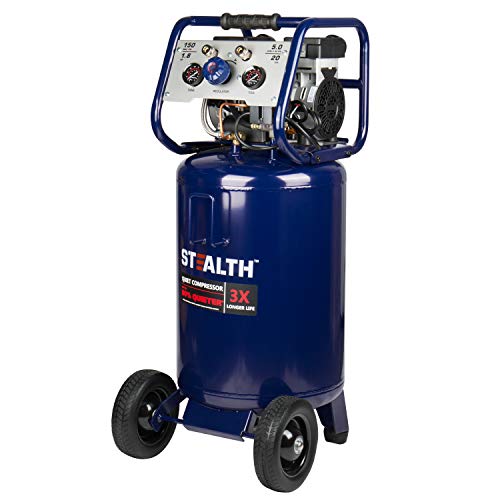
If the compressor lives in a basement, a shared shop, or a garage attached to bedrooms, noise is the spec that decides everything else. The Stealth runs at roughly 68 decibels, close to a normal conversation and quieter than most household vacuums, so the radio stays on and you can talk over it.
It pairs that with a 1.8-horsepower induction motor and an oil-free pump rated at 5 CFM at 90 PSI, which keeps nailers, ratchets, and light air tools fed. The oil-free design also means cold-weather starts and no maintenance schedule, and Stealth backs the pump with a lifetime warranty, which is unusual in this class.
Read that warranty closely. The lifetime coverage is on the pump only, while the rest of the unit carries a standard one-year warranty. It is still a real durability signal, just not the whole-machine guarantee the headline suggests.
What We Like
Genuinely Quiet at 68 dB
Because the decibel scale is logarithmic, 68 dB is not a little quieter than an 80 dB unit, it is dramatically quieter to your ears. That changes whether you can run it indoors, after hours, or near other people without hearing protection.
Lifetime Pump Warranty
Stealth warranties the pump for life, which few competitors do. It signals confidence in the part that usually fails first and lowers the long-term cost of ownership.
Low-Maintenance Oil-Free Design
The oil-free pump starts reliably in the cold, runs on uneven ground, and skips oil changes entirely, which suits a DIYer who wants a plug-and-play tool rather than a maintenance schedule.
What We Don't Like
Warranty Fine Print and Manual Drain
The lifetime warranty covers the pump only; everything else is one year. The tank drain is also manual and bottom-mounted, so you have to remember to bleed the moisture after each use to keep rust out of the tank.
Product Specs
| Motor | 1.8 HP |
|---|---|
| Voltage | 120 |
| Max PSI | 150 (peak) |
| Air Delivery | 5 CFM at 90 PSI |
| Decibels | 68 |
| Warranty | Lifetime pump / 1-year unit |
Craftsman 20-Gallon Oil-Free Air Compressor
Best 20-Gallon Upright Air Compressor

The Craftsman CMXECXA0232043 suits a garage that wants a familiar brand and no pump maintenance at all. Its oil-free pump sits on a vertical 20-gallon tank, so there is no dipstick to check and no chance of oil carrying into the air line, which matters the first day you spray paint or clear coat.
It reaches a 175 PSI max and delivers 4 SCFM at 90 PSI, enough for nailers, staplers, ratchets, and tire work. The tank is fully shrouded, so the regulator and both gauges sit together on one control panel, and two factory quick couplers let a tool and an inflator stay plugged in at the same time.
The honest limit is the pump. It is rated for a roughly 50 percent duty cycle, about 30 minutes of running per hour, and like every oil-free design it will not match cast iron for lifespan under daily heavy use. For a weekend garage and the occasional bigger project, that is a fair line to draw.
What We Like
Truly Maintenance-Free
No oil means no oil changes, no level checks, and no chance of oil contaminating your air, which is the reason to choose it over the cast-iron picks if painting is on your list.
Space-Saving Upright Tank
The vertical, fully shrouded tank takes up little floor space and tucks into a corner cleanly. The built-in control panel keeps the regulator and gauges in one spot.
Two Quick Couplers
Dual factory couplers let you keep two tools, or a tool and an inflator, plugged in at once, which saves the constant fitting swaps that slow down a job.
What We Don't Like
Oil-Free Duty Cycle Limits
The oil-free pump is built around a 50 percent duty cycle, so it needs cool-down time during long, continuous sessions, and it will wear faster than an oil-lubed pump under daily heavy use. It is a strong DIY and light-pro tool rather than an all-day shop unit.
Product Specs
| Motor | 1.8 HP |
|---|---|
| Voltage | 120 |
| Max PSI | 175 |
| Air Delivery | 4 SCFM at 90 PSI |
| Pump | Oil-free, vertical |
| Warranty | 1-year limited |
Klutch 29-Gallon Oil-Free Air Compressor
Best 20-Gallon Air Compressor for Continuous Use

If a true 20-gallon tank keeps running dry on you, the Klutch 29-gallon is the small step up that keeps the footprint manageable. The extra nine gallons of storage stretch run times on air-hungry tools, so the motor cycles less often during continuous work like sanding or extended nailing.
A 2.5-horsepower motor drives it to a 175 PSI max with 5.1 SCFM at 90 PSI, and it runs on a standard 120V outlet, so there is no special wiring to arrange first. The pump is oil-free, which keeps upkeep to draining the tank, and large flat-free tires make a heavier unit easier to reposition.
The compromise is the pump type. Oil-free keeps maintenance low but, like any coated pump, will not match a cast-iron oil-lubed unit for lifespan under daily heavy abuse. For a DIYer or light pro who occasionally needs more air than 20 gallons holds, the bigger tank is a more useful upgrade than chasing a higher pressure number.
What We Like
Bigger Tank, Fewer Cycles
The 29-gallon reserve runs continuous tools longer between motor starts than a 20-gallon tank, which is the single biggest help when you are sanding or nailing for stretches.
Strong Output on a Standard Outlet
2.5 HP and 5.1 SCFM at 90 PSI is solid air delivery, and it all runs off a normal 120V circuit, so there is no electrician visit before your first use.
Easy to Reposition
Flat-free tires and a compact footprint keep a heavier unit movable, so the bigger tank does not trap it in one corner of the shop.
What We Don't Like
Oil-Free Lifespan Tradeoff
The oil-free pump keeps maintenance simple but will wear faster than a cast-iron oil-lubed pump under daily heavy use. If you run a compressor hard every day, an oil-lubed unit is the longer-term buy; for periodic bigger jobs, this is the right balance.
Product Specs
| Motor | 2.5 HP |
|---|---|
| Voltage | 120 |
| Max PSI | 175 |
| Air Delivery | 5.1 SCFM at 90 PSI |
| Tank | 29 gallon |
| Pump | Oil-free |
Albott 6.5 HP Gas-Powered Air Compressor
Best Gas-Powered 20-Gallon Air Compressor
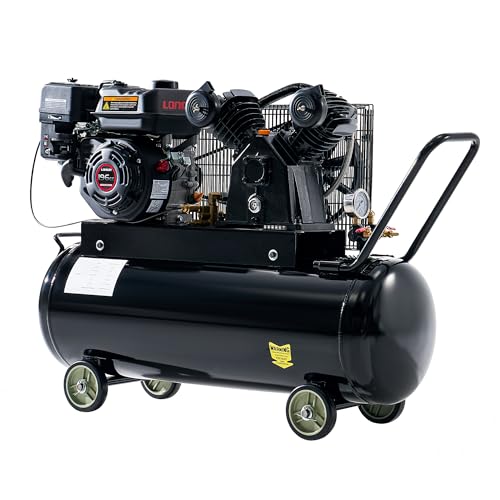
Every other compressor here needs an outlet. The Albott runs on gasoline, which is the entire reason to own one: it goes to a remote site, an outbuilding with no circuit, or a property where a cordless tool taps out halfway through the job.
A 6.5 HP gas engine drives a heavy two-cylinder cast-iron pump into a 20-gallon horizontal tank. Reinforced cast-iron cylinders and frame are meant for the knocking around a service truck delivers, dual 1/4 inch NPT outlets let two tools run at once, and an automatic safety valve handles pressure control.
The tradeoffs come with gas power. Its 115 PSI ceiling is the lowest here, so the reserve drains faster on a thirsty tool. The engine produces exhaust, so it is outdoor-only, and it needs fuel and engine-oil checks that no electric unit on this list asks for. This is a job-site tool, not a closed-garage one.
What We Like
No Outlet Required
Gas power frees it from extension cords and breaker limits entirely, which is the reason to buy it: it runs on a remote site or an outbuilding where an electric unit simply cannot.
Cast-Iron Two-Cylinder Pump
Reinforced cast-iron cylinders and a two-cylinder pump are built for construction-site abuse rather than weekend garage duty, and cast iron sheds the heat a gas engine keeps feeding into it.
Dual Air Outlets
Two 1/4 inch NPT outlets mean two tools, or two people, work off the same tank without swapping fittings in the middle of a job.
What We Don't Like
Loud, Outdoor-Only, and Needs Fuel
A gas engine produces exhaust, so it can only run outdoors, and it is loud enough that hearing protection belongs nearby. It also needs gasoline and engine-oil upkeep, and its 115 PSI maximum is the smallest reserve among the picks that publish a max pressure, so it suits job sites far more than a home garage.
Product Specs
| Engine | 6.5 HP gas |
|---|---|
| Tank | 20 gallon |
| Max PSI | 115 |
| Air Delivery | Not specified |
| Pump | Cast-iron 2-cylinder |
| Power | Gasoline |
VEVOR 20-Gallon Oil-Free Air Compressor
Best Budget 20-Gallon Air Compressor
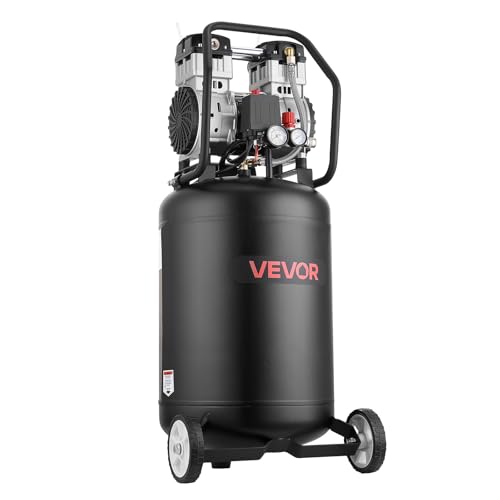
VEVOR built its name on getting the core specs right without the brand premium, and the 20-gallon oil-free unit follows that pattern. A 2-horsepower motor delivers 4.5 SCFM at 90 PSI and reaches its 125 PSI max in under four minutes, which covers tire inflation, nailing, ratchets, and light spray work in a home shop.
The tank is 2.75mm carbon steel with a powder-coated finish for corrosion resistance, and the oil-free pump keeps maintenance down to draining the tank. At roughly 91 pounds on two wheels with a pull handle, it is one of the easier units here to reposition or load.
It is a value tool, and a couple of details show it. The 125 PSI ceiling is the lowest of the picks that publish a max pressure, so the reserve drains faster on a thirsty tool, and reviewers note the factory petcock drain valve is clumsy enough that some owners swap in a ball valve. For what it costs, those are minor concessions.
What We Like
Strong Air Delivery for the Price
4.5 SCFM at 90 PSI from a budget unit is genuinely useful, covering most DIY pneumatic tools and even light spray work that lower-output compressors stall on.
Easy to Move
At around 91 pounds with real wheels and a pull handle, it is one of the more portable units here, which matters if it shares space or travels between a garage and a driveway.
Corrosion-Resistant Tank
The 2.75mm carbon-steel, powder-coated tank resists rust better than thinner budget tanks, which directly affects how long a low-cost compressor lasts.
What We Don't Like
Lower Pressure and a Clumsy Drain
At 125 PSI max, it stores less reserve air than the 150 to 175 PSI units, so the motor cycles more often on thirsty tools. Several owners also call out the generic petcock drain valve as awkward and swap it for a ball valve.
Product Specs
| Motor | 2 HP |
|---|---|
| Voltage | 120 |
| Max PSI | 125 |
| Air Delivery | 4.5 SCFM at 90 PSI |
| Weight (pounds) | ~91 |
| Pump | Oil-free |
| Product | Best | Motor | Max PSI | Air Delivery | Pump | Power |
|---|---|---|---|---|---|---|
| NorthStar 20-Gallon Air Compressor | Home Garage | 2 HP | Not specified | 5.0 CFM at 90 | Cast iron, 2-cylinder | 115V/230V |
| Stealth Ultra Quiet Air Compressor | Quiet | 1.8 HP | 150 | 5 CFM at 90 | Oil-free | 120V |
| Craftsman 20-Gallon Air Compressor | Upright | 1.8 HP | 175 | 4 SCFM at 90 | Oil-free | 120V |
| Klutch 29-Gallon Air Compressor | Continuous Use | 2.5 HP | 175 | 5.1 SCFM at 90 | Oil-free | 120V |
| Albott Gas Air Compressor | Gas-Powered | 6.5 HP | 115 | Not specified | Cast-iron 2-cyl | Gasoline |
| VEVOR 20-Gallon Air Compressor | Budget Pick | 2 HP | 125 | 4.5 SCFM at 90 | Oil-free | 120V |
How To Use a 20-Gallon Air Compressor
Running a compressor is straightforward, but a few steps protect both the tool and you. The basic sequence:
- Check the oil: On an oil-lubricated model, confirm the level on the dipstick or sight glass before the first run of the day.
- Connect the hose: Snap your air hose into the coupler and tug it to confirm it locked in place.
- Power up: Plug into a grounded outlet (or start the engine on a gas unit) and switch it to “On” or “Auto.”
- Let it fill: Wait for the motor to cut off on its own, which means the tank hit max pressure.
- Set the regulator: Dial the regulator to the PSI your tool needs, usually around 90 PSI.
- Drain after use: Open the bottom drain valve to release condensation and stop the tank from rusting from the inside.
How Long Can a 20-Gallon Air Compressor Tank Last?
A maintained 20-gallon air compressor lasts 10 to 30 years, and the pump type sets which end you land on. An oil-lubricated pump commonly runs 20 to 30 years because the oil bath cushions the internal wear, while an oil-free pump generally gives 10 to 15 years of homeowner-level service before the coating gives out.
Moisture decides more than either number. Compressed air condenses water inside the tank every time you run it, and draining that water after each use prevents the internal corrosion that ends most compressors long before the pump wears. A tank left wet rusts from the inside where you cannot inspect it, which is why the drain valve is the one maintenance step nobody should skip.
20-Gallon Air Compressor FAQs
Under Pressure?
The right 20-gallon air compressor is the one whose CFM at 90 PSI clears your thirstiest tool, and everything after that is a preference. For a garage tool you run hard and keep for years, the cast-iron NorthStar is the durable buy. If it shares space with people, the 68-decibel Stealth earns its spot. On a budget, the VEVOR covers the basics; for stretches of continuous work, the larger Klutch 29-gallon cycles less; and when there is no outlet, the gas Albott is the only one that runs.
Match the CFM first, then weigh noise, pump type, and portability. Get that order right and the compressor disappears into the background while you work.